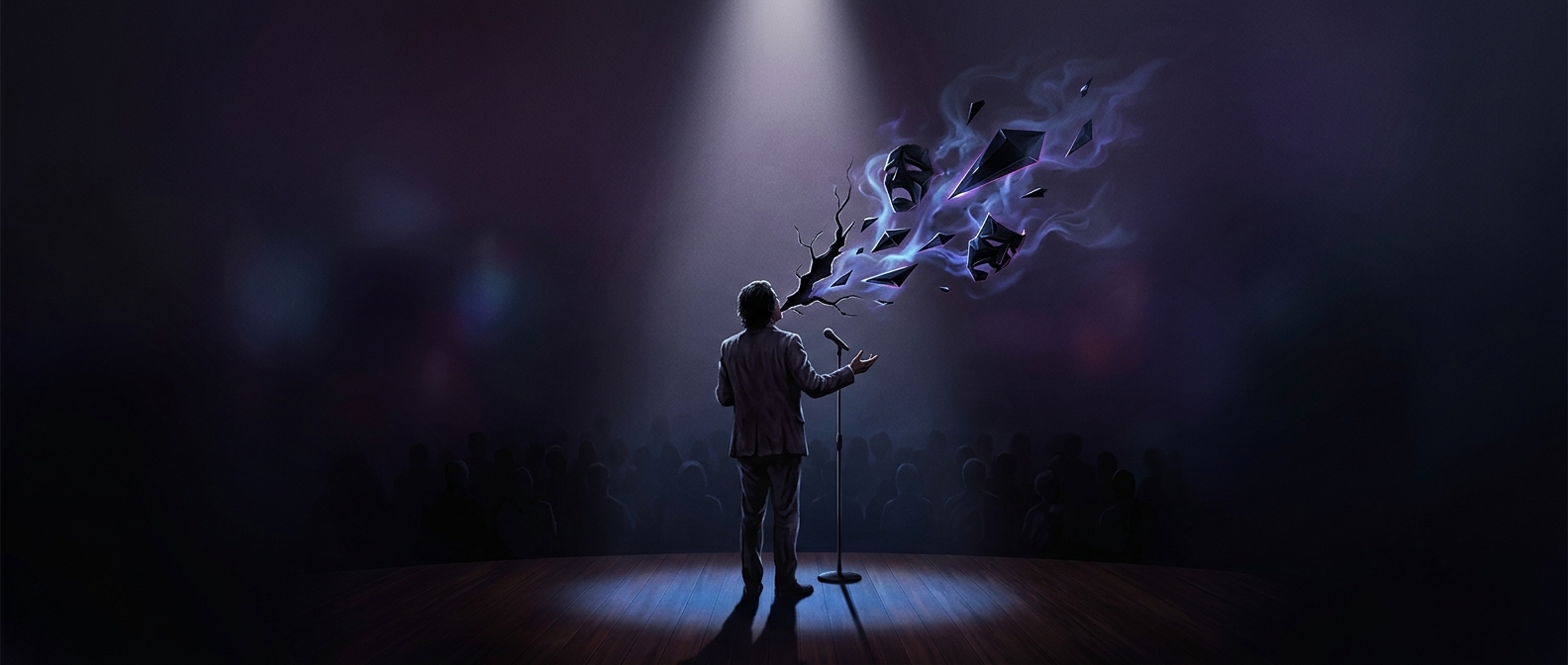
How humor can restore a sense of agency
Painful experiences can leave people feeling that others see them only through what happened: as fragile, embarrassing, or in need of pity. Telling a joke about the experience can shift the interaction. The person who lived it chooses which detail to share, how to frame it, and when to move on. That small act of control can make the story feel less like a label imposed from outside and more like something they can handle on their own terms.
Humor can also change how a difficult memory feels in the moment. A comic frame introduces some psychological distance: instead of being entirely inside the hurt, a person can briefly observe it, shape it into a story, and notice its absurd or unexpected parts. The pain may remain, but it is no longer the only thing happening in the room.
The audience matters
A joke can signal, “I’m willing to talk about this, but I’m choosing the terms.” It may ease tension for both the speaker and listeners, making a subject easier to approach. But the signal is not always clear. Some listeners may mistake humor for proof that the person is fine, or assume the joke gives them permission to tease, too.
That is why joking about pain is not automatically a sign of recovery—or a reliable way to measure how much someone is hurting. It can be a useful form of expression when it feels freely chosen. If someone uses humor because direct conversation feels unsafe, or because they feel expected to keep everyone else comfortable, the joke may conceal as much as it reveals.
The difference often shows up afterward: a person who chose the joke may feel more at ease or more understood; one who felt pushed into it may feel exposed. The laugh can open a door, but it does not decide what the speaker is ready to say next.