Why mountains can feel like thresholds
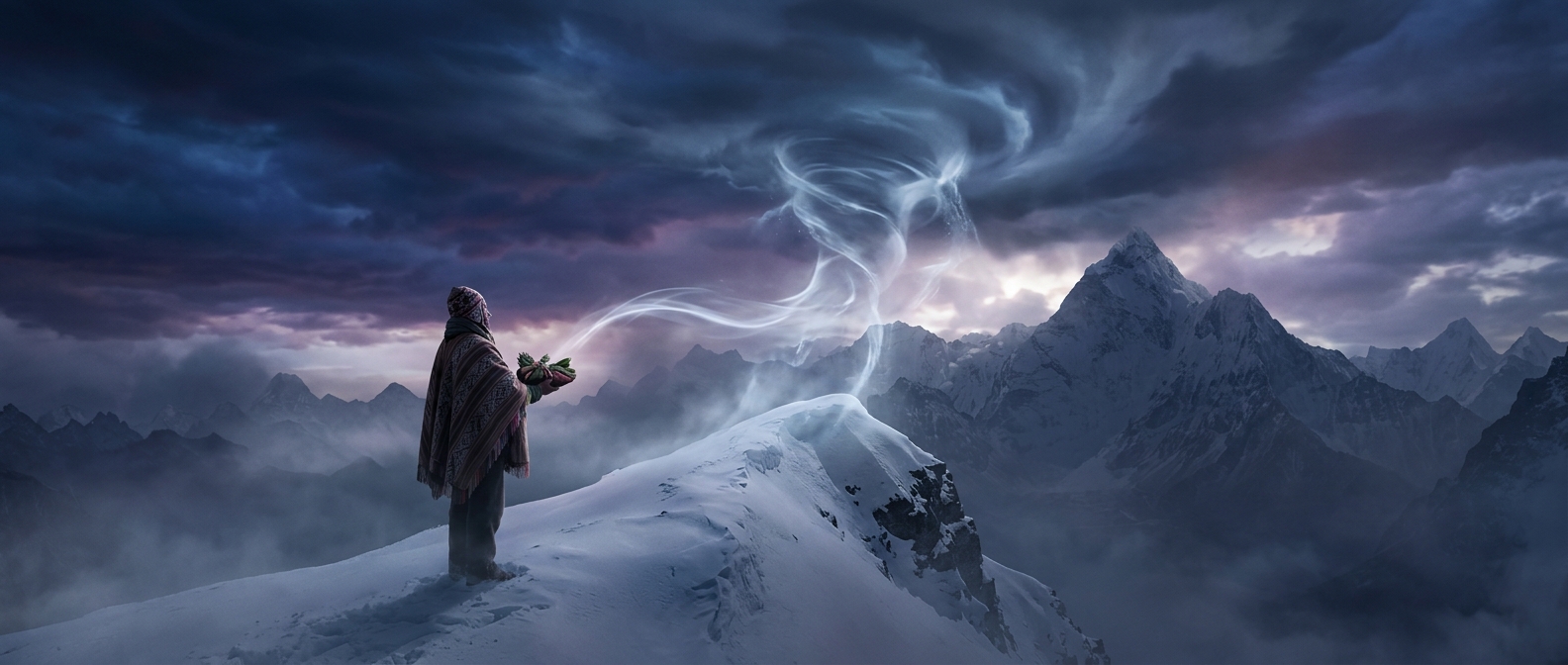
Mountains invite spiritual meaning partly through their physical setting. A summit stands above familiar landscapes, and the climb separates it from everyday routines. In many traditions, that visible passage upward becomes a way to imagine movement between the human world and the sacred. The mountain is not merely a backdrop: its height, isolation, and difficulty can make arrival feel like crossing a boundary.
What thin air can do to perception
At high elevation, lower air pressure means each breath delivers less oxygen to the body than it would at sea level. The body responds with changes in breathing and circulation. During adjustment—or when someone climbs too quickly—people can develop headache, dizziness, nausea, fatigue, or trouble concentrating. These sensations can alter how vivid or unusual a moment feels, especially when exhaustion, cold, exertion, and expectation are also in play.
That offers a possible bodily contribution to some intense high-altitude experiences, not a single explanation for them. People interpret sensations through the beliefs and stories they bring to a place; the same physical strain can be understood as spiritual, frightening, or simply unpleasant.
A powerful setting, not a guaranteed revelation
The combination is memorable: a demanding ascent, a landscape that seems to open toward the sky, and a body working under unfamiliar conditions. Traditions give that encounter shared meaning, while physiology may shape its intensity. Neither the altitude nor the spiritual interpretation alone accounts for every experience. At a summit, the meaning often comes from how the place, the climb, and the person meet.