A Gift in a Relationship, Not a Weather Tool
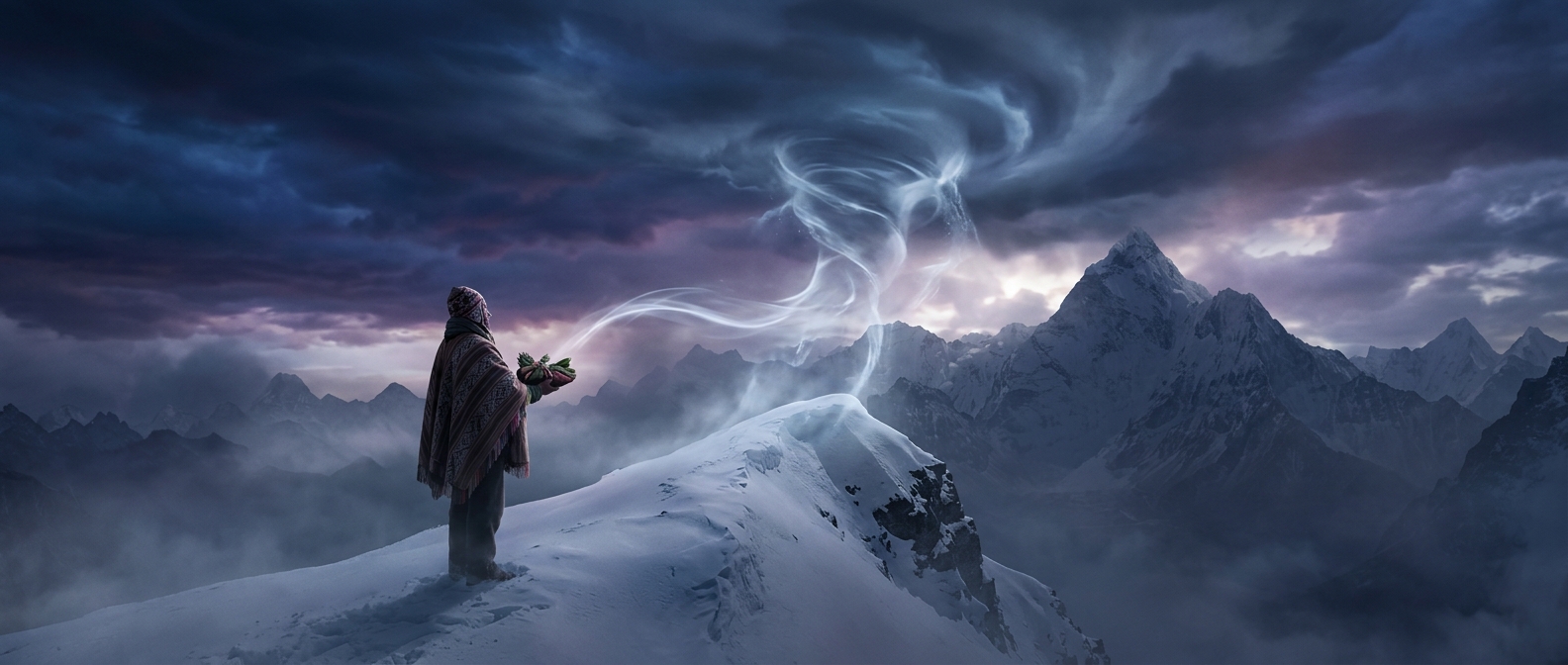
In many Andean traditions, mountains are more than landmarks: they are powerful beings with whom people can maintain a relationship. Ritual specialists may carry coca leaves and other offerings to high places as an act of reciprocity—giving something meaningful in return for protection, fertility, or well-being. The bundle is therefore not simply a request delivered to a remote spirit; it expresses an ongoing obligation between people and the landscape they depend on.
Coca leaves have long held ceremonial and social importance in the Andes. Their value in an offering comes from that cultural meaning, not from a claim that the leaves can physically alter clouds or wind.
Why Carry the Offering Upward?
A snow peak makes the ritual encounter tangible. The climb places the offering at the mountain itself, in a setting where storms, snow, and meltwater are immediate parts of life. For communities exposed to harsh weather, those forces can affect travel, animals, crops, and water supplies. Addressing a mountain spirit gives this uncertainty a social and moral dimension: people can seek balance through respectful action, even when they cannot command the weather.
The practice does not replace an account of how storms form. It reflects a way of interpreting environmental risk in which human conduct and the natural world belong to the same relationship. The bundle left on a high slope is a small, visible act of that connection.