Why ritual goods are sold alongside everyday wares
A market stall selling powders, roots, figures, or offerings is not simply a shop for unusual objects. In some West African settings, these goods serve people who consult practitioners for help with problems they understand as both practical and spiritual: illness, conflict, protection, luck, or a difficult relationship. The market brings together materials that may be hard to find elsewhere and the knowledge of how a particular tradition uses them.
There is no single West African system behind these practices. Traditions differ by community, religion, and practitioner, and similar-looking objects can have different meanings. A bundle or figure is not necessarily a charm by itself; its significance may depend on the words, preparation, and ritual surrounding it.
How an object becomes part of a request
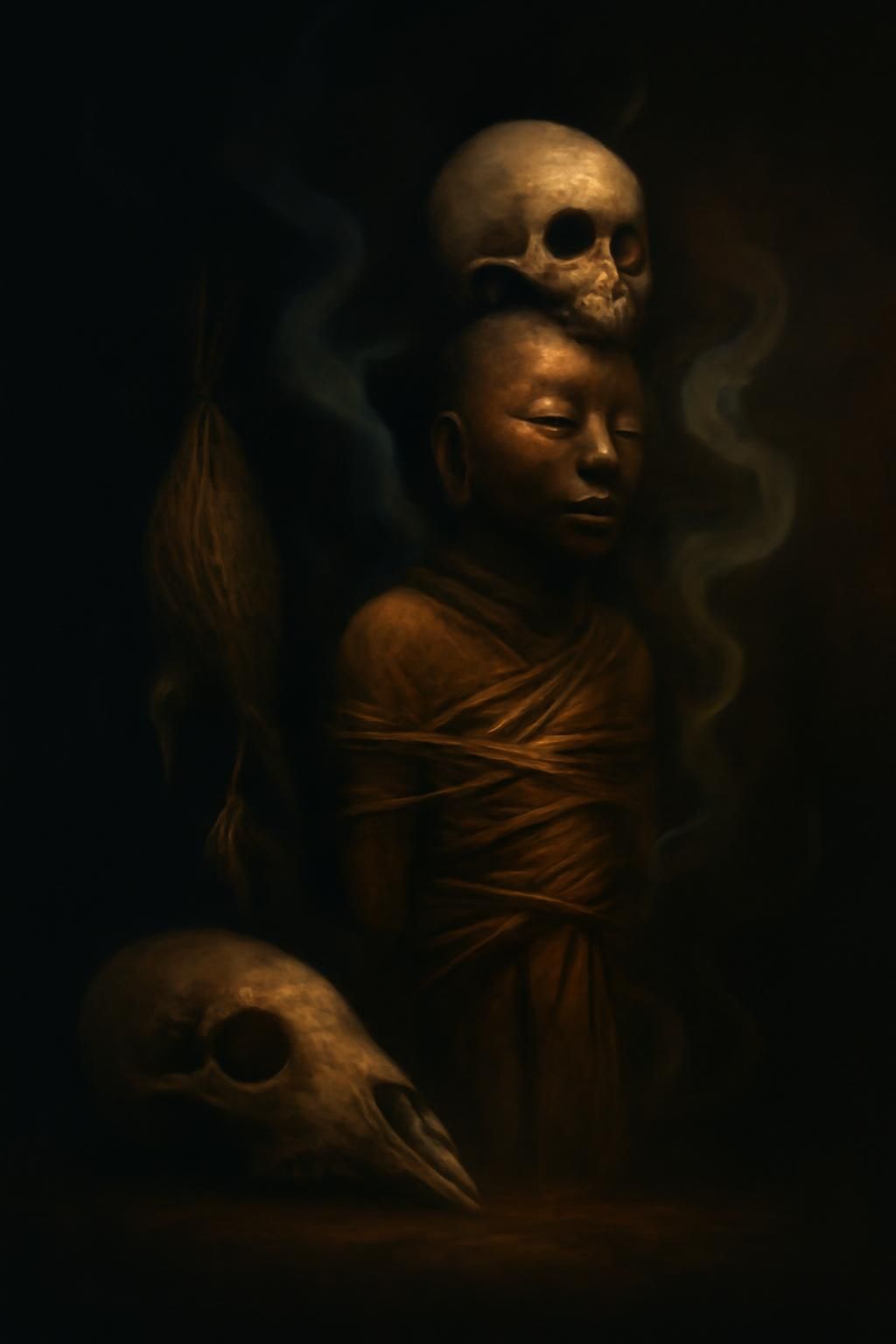
Ritual materials often make an intention tangible. Grinding an ingredient into powder, wrapping cloth around a figure, or leaving an offering at a crossroads turns an abstract request into an action directed toward spiritual powers. In some traditions, a crossroads can carry meaning as a place of passage or encounter, making it a fitting site for an offering. The precise meaning depends on the tradition and the person performing the rite.
This helps explain why buyers may seek guidance as well as ingredients. Choosing and preparing an item is part of a larger practice, not a universal recipe with guaranteed results. The market’s significance lies in the relationship between material, ritual, and belief—not in the object alone.