The Body as a Ritual Map
In tantric practice, nyāsa means “placing” or “assigning.” A practitioner touches parts of the body while reciting prescribed Sanskrit sounds, treating each point as a place where a deity, sacred power, or mantra can be ritually established. The gesture is not simply a reminder to think about a divine figure: within the ritual’s own framework, it consecrates the body as a site of divine presence.
How Sound and Touch Work Together
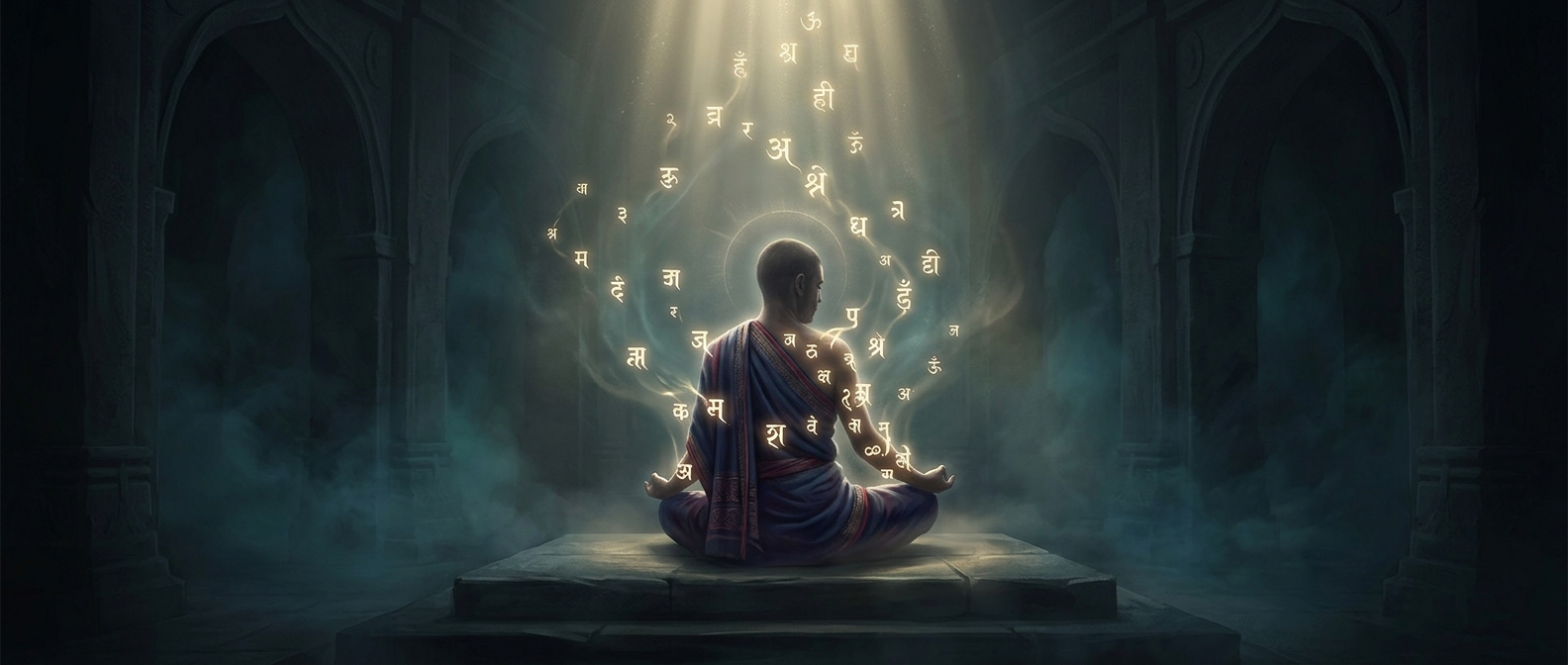
A nyāsa sequence links three things: a spoken syllable, a location on the body, and a sacred identity. The practitioner might touch a hand, the head, or the chest while voicing the sounds assigned to that part. Repeating the sequence turns an abstract arrangement of divine powers into a bodily one that can be enacted through movement and speech.
Abhinavagupta, the influential Kashmiri Shaiva philosopher and ritual theorist, discusses such practices in a tradition where the body is not treated as an obstacle to spiritual life. Instead, it can serve as a structured field of sacred power. The syllables are therefore not interchangeable: their placement matters because the ritual maps a particular divine order onto particular bodily locations.
A Cosmos Made Present
This mapping joins the practitioner’s body to a larger sacred world. Rather than imagining the cosmos as distant, nyāsa makes it present through a sequence the practitioner performs with their own hands and voice. The ritual’s central move is to make the body itself the place where sacred order is installed. That helps explain why precise syllables and precise touches matter: together, they transform a human body into a ritually configured one.