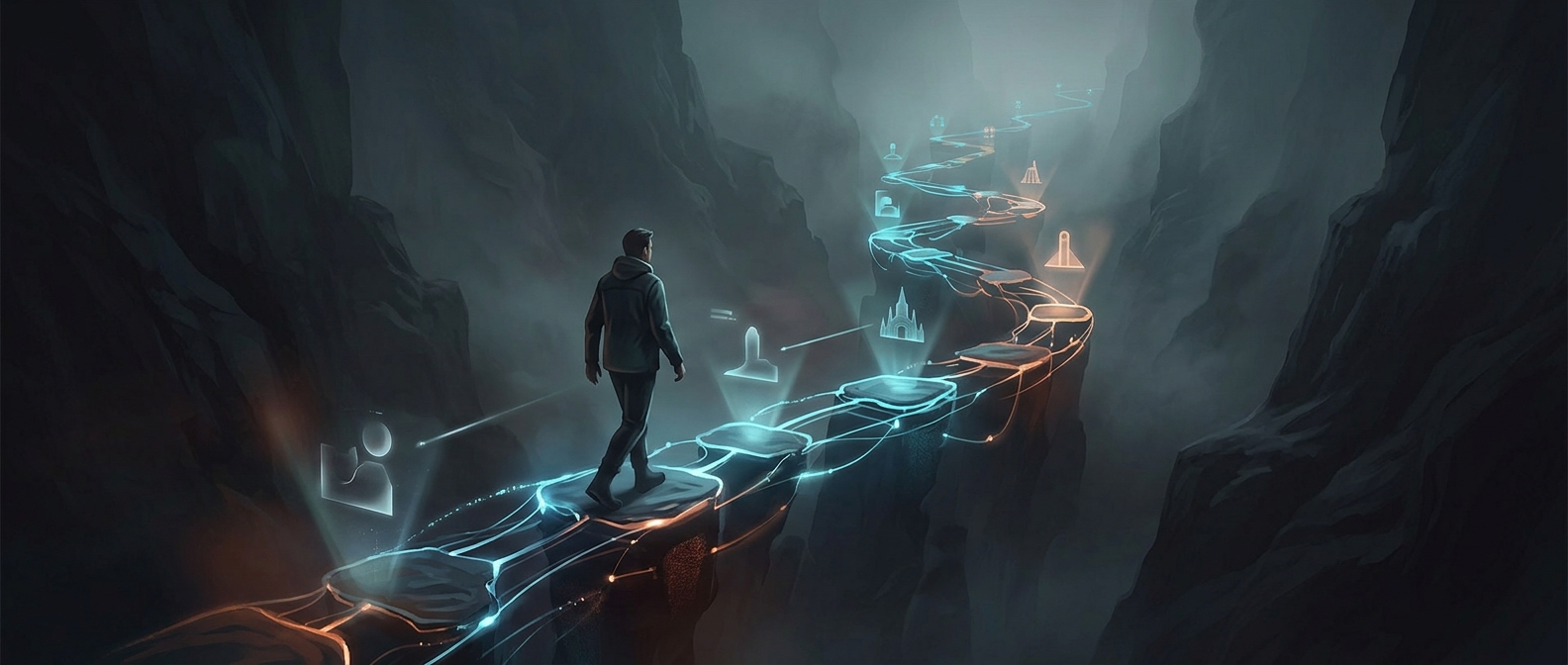
Why Turn-by-Turn Routes Depend on Memory
A route described as “left at the pharmacy, right at the bridge” is more than a picture of the area. It is an ordered sequence of actions, each tied to a landmark. To follow it, you must recognize where you are, retrieve the next instruction, and keep track of what comes after it.
That makes route-following a form of sequential memory: remembering steps in the order they need to happen. A landmark acts like a cue. Seeing the pharmacy prompts the left turn; reaching the bridge signals the next decision.
How One Missed Turn Disrupts the Sequence
The instructions are linked to particular places. If you miss the pharmacy turn, you may no longer encounter the bridge in the expected way. The next instruction—“right at the bridge”—has lost its anchor, so you must work out whether the route can still be resumed or whether you need to retrace your path.
This is different from recognizing a place on a map. A map gives an overview, letting you compare locations and choose another way. A memorized route instead guides you through a chain of decisions, one cue at a time. It can be efficient when each landmark is easy to spot, but it offers less flexibility if a turn is missed or a landmark is obscured.
Why Routes Can Feel Fragile
While traveling, attention is divided among watching the surroundings, moving safely, and recalling the next step. If the next landmark does not appear where expected, the traveler has to pause and reconstruct the sequence from what has already happened.
That is why a familiar route can still become confusing after one wrong turn: the memory may preserve the instructions, but those instructions depend on arriving at the right cues in the right order.