Why the Way Back Up Is the Real Test
A trail descending into the Grand Canyon can feel manageable at first: gravity helps, and the river below makes a clear destination. But every step down adds elevation that must be regained on foot. The return climb is sustained work, often on exposed switchbacks, after hours of walking in heat.
That timing matters. Hikers may begin the ascent tired and short on water, just when their bodies need more effort to move uphill. Heat makes it harder to cool down through sweating; losing too much fluid can bring weakness, dizziness, confusion, or collapse. A person who feels fine near the river can deteriorate well before reaching the rim.
A Canyon Trail Is Not a Casual Stroll
The rim and river are separated by a vast change in elevation, and the trail’s curves can make progress seem slower than expected. The river is a destination, not a halfway point: reaching it does not mean the difficult part is over. Visitors who plan around distance alone may underestimate how much climbing the return requires.
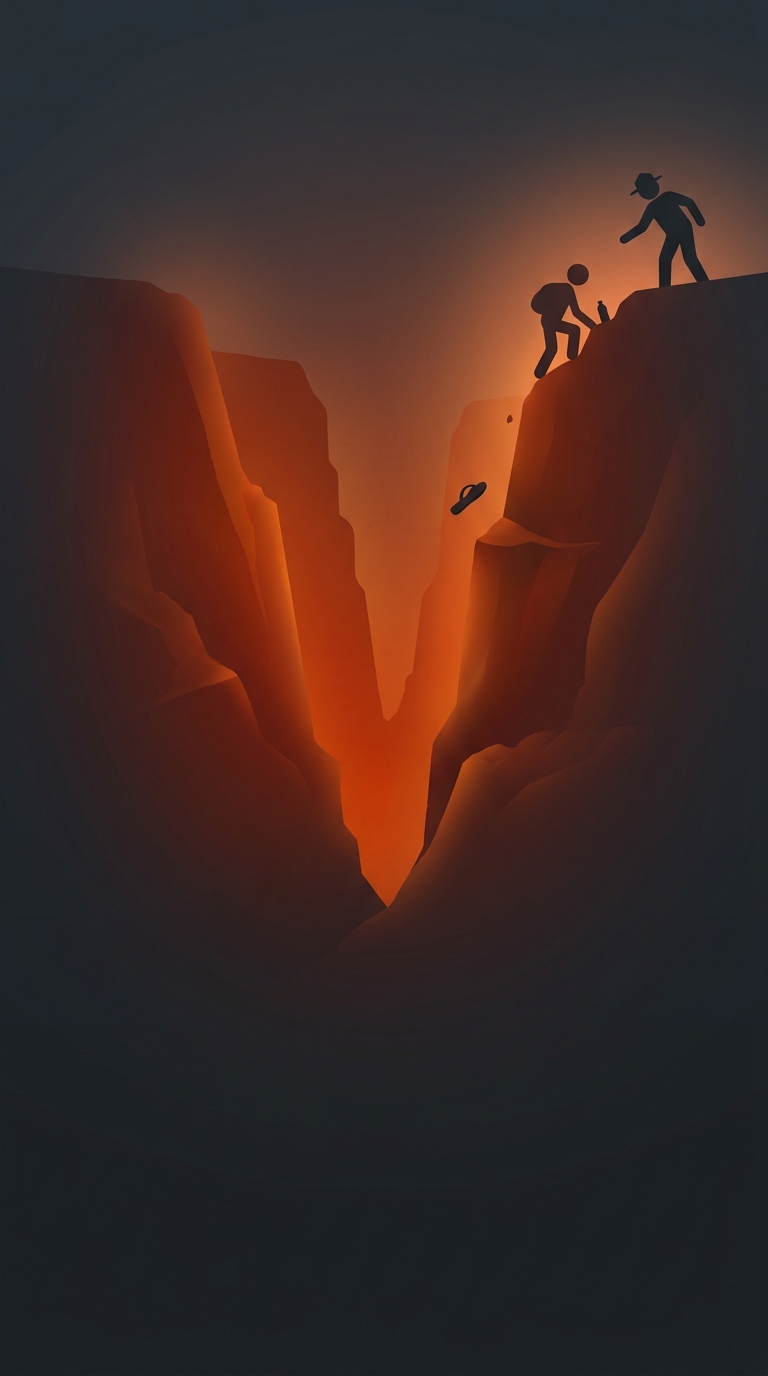
Footwear and water affect whether a hiker can keep moving safely. Flip-flops offer little protection or stability on uneven, rocky ground, while one small bottle cannot reliably cover a long, strenuous outing in hot conditions. Rangers’ warnings are meant to prevent a predictable trap: an easy-feeling descent that leaves too little strength, water, or daylight for the climb out.
In the canyon, getting down is only half the route—and often the easier half.