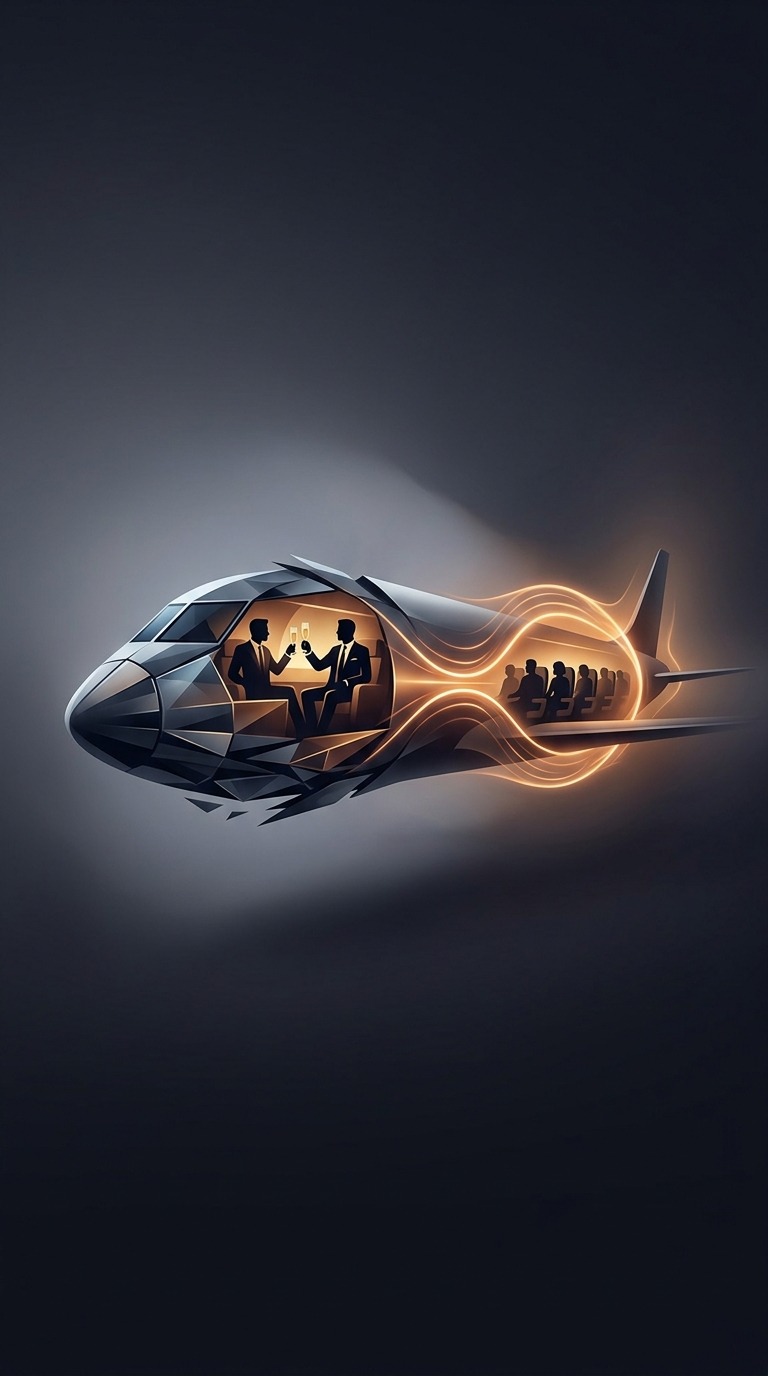
Cabin class is not a crash-safety system
A first-class seat buys space and service, not a separate protective structure. Passengers in the same aircraft generally share its main safety features: the fuselage, seat belts, and evacuation routes. In a severe accident, survival depends far more on what happens to the aircraft and how quickly people can get out than on the fare paid.
Some retrospective analyses of crashes have found higher survival rates among passengers seated toward the rear, including in middle seats. That pattern is not a dependable rule for every accident. A forward impact, a side impact, a fire, or damage that blocks an exit can change which part of the cabin is safest.
Why a seat’s position can matter
In a frontal collision, the nose and forward cabin may absorb more of the initial damage, while passengers farther back may face less direct crushing. But the same rear section can be dangerous in a different impact, and a seat near a usable exit can matter more than its distance from the cockpit. Aisle access, smoke, debris, and whether the aircraft remains intact all shape the chance of escape.
Middle seats may show up favorably in some crash reviews partly because they offer a buffer from the aircraft’s outer walls, but the evidence does not make them a universal safest choice. The most useful takeaway is more modest: premium seating does not confer a survival advantage, and no cabin location guarantees one. Pay attention to the safety briefing and identify nearby exits; in an evacuation, knowing where to go can matter more than where the ticket placed you.