A walkway held beyond the rim
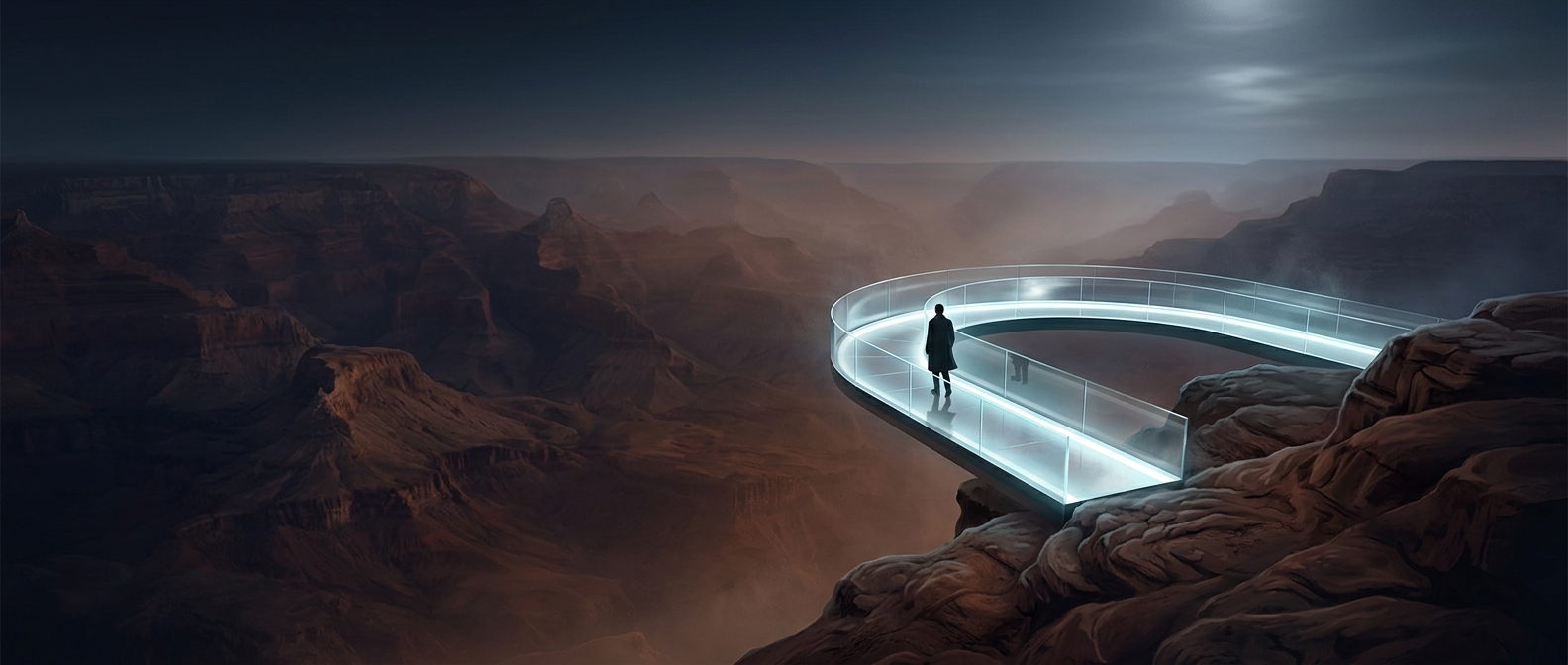
At Grand Canyon West, the Skywalk’s horseshoe-shaped path projects out from the canyon edge rather than resting on ground beneath it. Its steel frame carries the structure’s weight back toward the rim, while thick glass forms the parts visitors walk across and look through. That arrangement makes the view feel unusually exposed: instead of seeing the canyon only from a lookout, visitors can stand over open space and look down through the floor.
The glass is structural, not simply a transparent window laid over an ordinary deck. It must bear the weight of visitors while remaining clear enough to preserve the view. Steel provides the larger supporting framework; the glass surface turns that framework into a place people can walk.
The view changes with your position
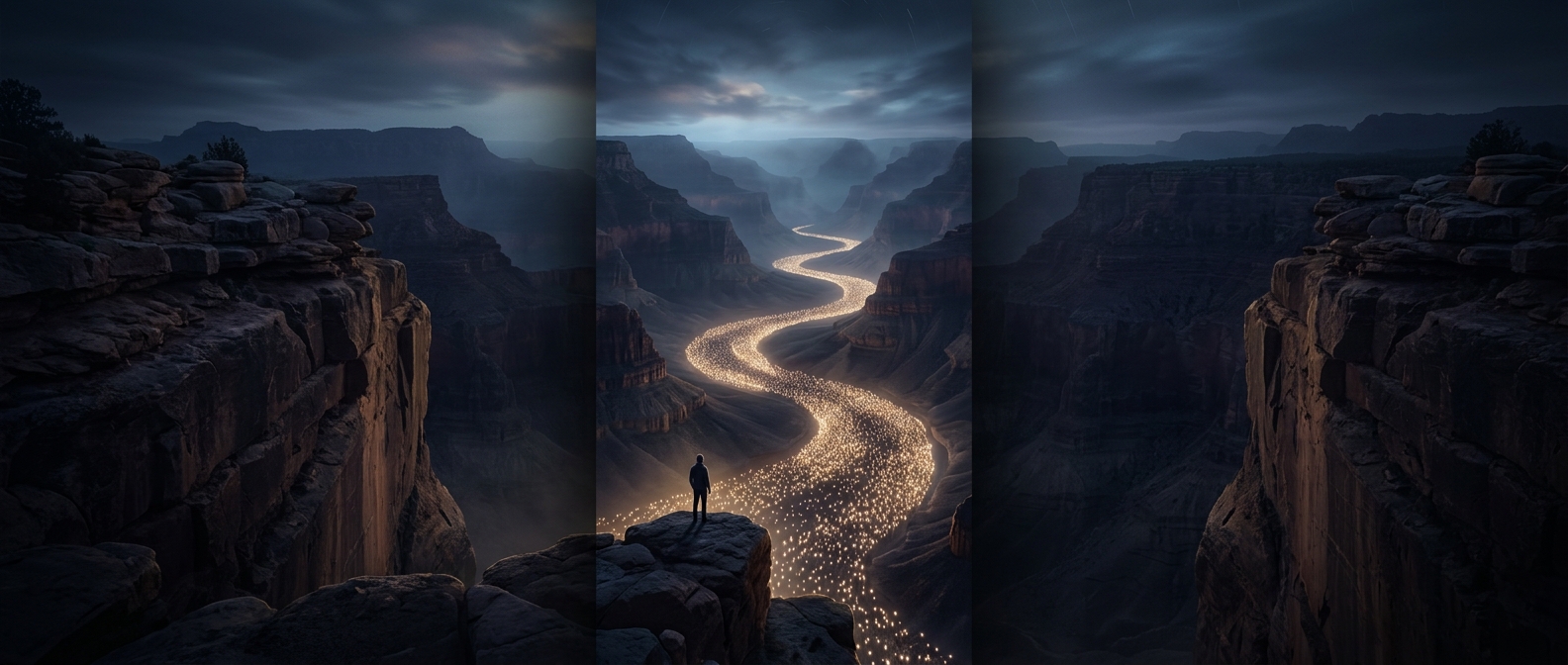
From the rim, the canyon’s depth is framed by rock and distant landscape. On the Skywalk, the floor itself becomes part of the view. Looking down can make the drop feel closer than it does from solid ground, even though the walkway’s safety depends on the structure beneath and around the glass—not on the visitor’s balance or courage.
The experience is also managed as a paid attraction, not an unrestricted extension of the canyon trail. That distinction matters: the Skywalk turns a dramatic vantage point into a designed visitor experience, where the transparent floor is both the engineering challenge and the reason people come.