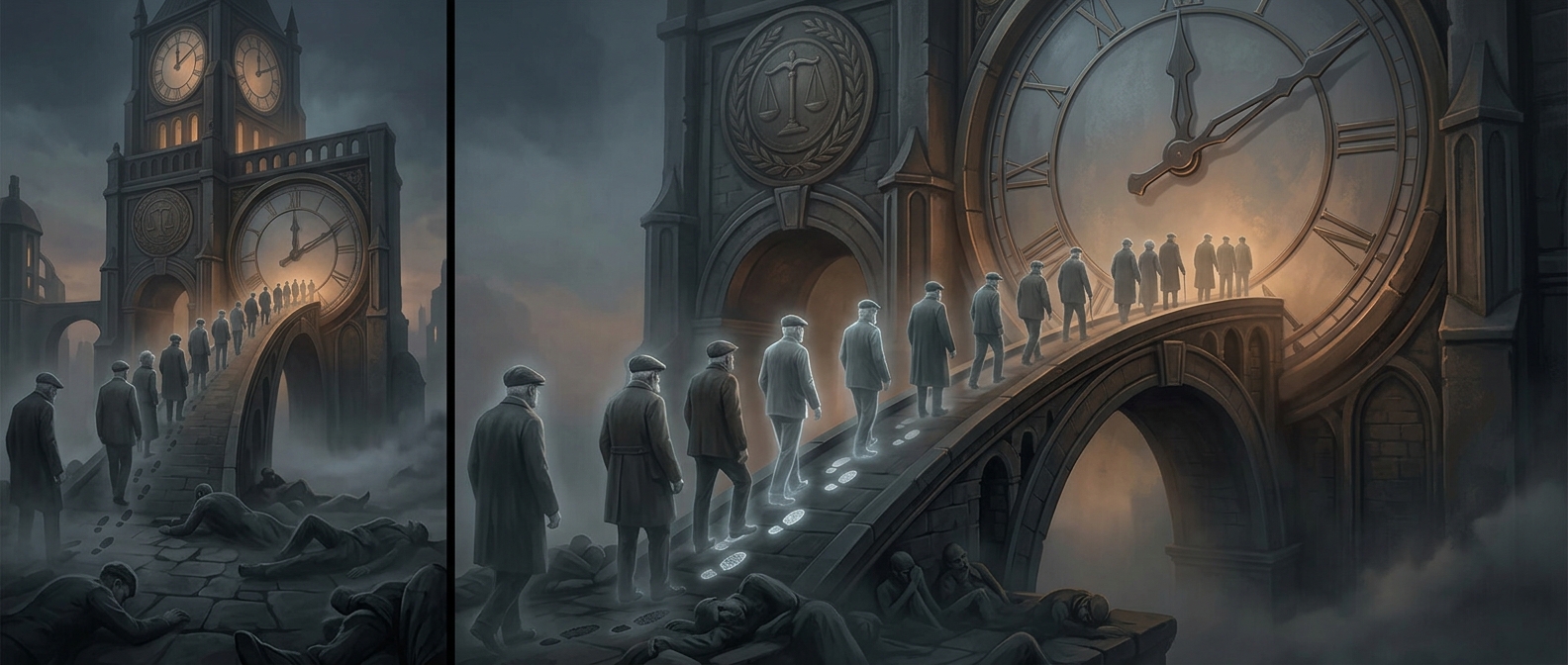
When a Household Lost Its Earner
Before retirement pensions became familiar, a pension could address a different crisis: the death of someone whose wages supported a family. A widow might lose not only her spouse but the household’s main source of cash, while still facing rent, food costs, and the care of children. Payments helped bridge that sudden gap.
Support Tied to a Spouse’s Work
These benefits were generally organized around the deceased person’s employment or service, rather than the widow’s age. The worker’s role created an expectation of support for dependents; after his death, a regular payment could continue some income to the surviving household. In that sense, the pension was a form of protection against the financial consequences of death—not a reward for leaving the workforce.
That arrangement also reflected the period’s assumptions about family finances: the husband was often treated as the provider, and the wife as someone economically dependent on him. A widow’s claim therefore commonly rested on her relationship to the worker, not on a record of her own paid employment.
A Different Meaning of “Pension”
The word now often calls to mind money paid to someone after a career ends. But pension systems have also served as social insurance: a way to spread the cost of risks that can abruptly deprive a household of income. As retirement benefits expanded, the familiar image of an older person receiving a pension could obscure those earlier survivor benefits.
The practical distinction is simple: one payment supports a person after work; the other helps a family keep going when its earner never comes home.