How attention helps end a meal
Eating is guided by more than hunger in the stomach. As a meal unfolds, the brain registers its flavors, textures, and progression, then uses that information alongside bodily signals to judge whether enough has been eaten. A screen competes for some of the attention needed to build that record.
When the meal is less noticeable, it can also be less memorable. That matters because the sense of having eaten is part of what helps curb later eating. Research on distracted eating has found that people may consume more during a screen-focused meal, and sometimes feel less satisfied afterward.
Why the fork keeps moving
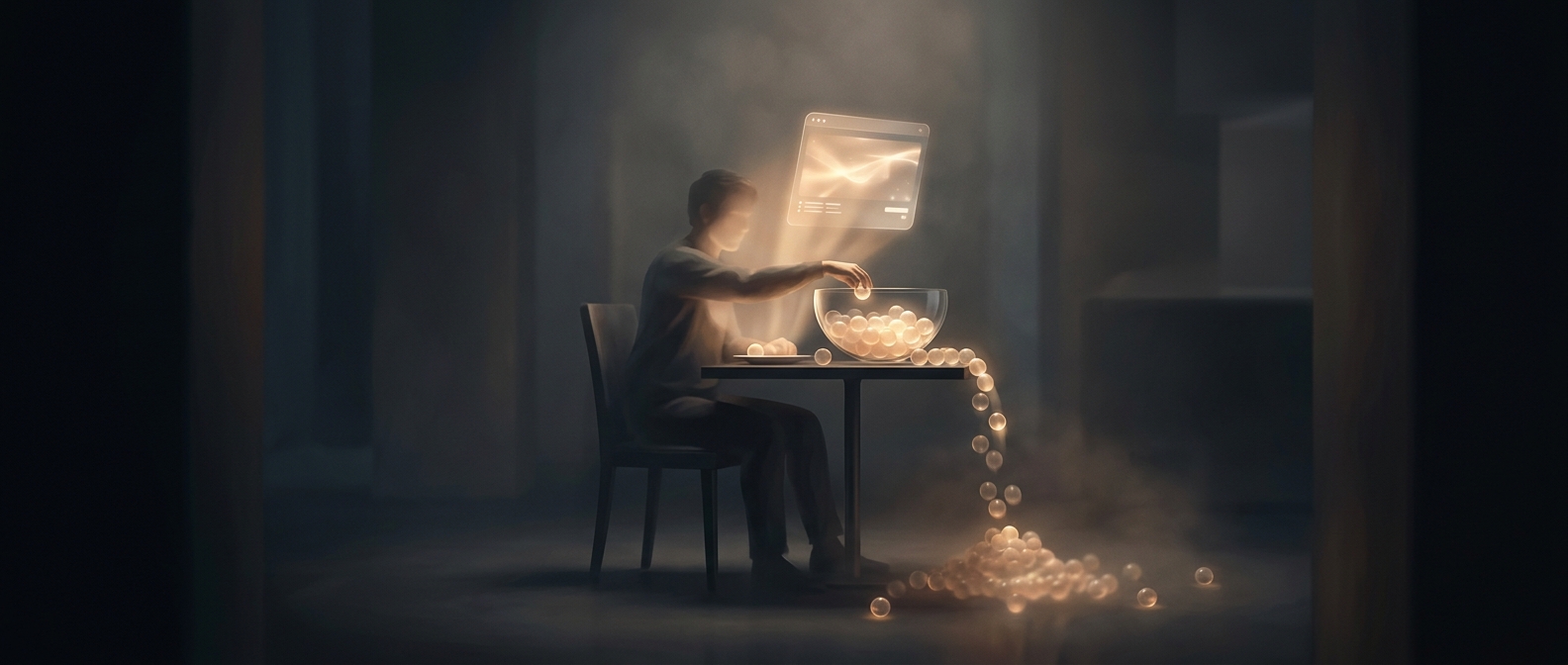
A screen does not need to make food taste better or directly increase appetite. It can simply make each bite less prominent: attention is on the plot, game, or scrolling, while the meal becomes a background activity. The usual cues that might prompt a pause—another bite tasting less interesting, the plate getting emptier, or a growing sense of fullness—are easier to miss.
The effect is not automatic or identical for everyone. Hunger, portion size, and the kind of food still matter. But when eating happens on autopilot, the stop point may arrive later than it would with attention on the meal. A small practical change—pausing the screen or setting the food aside between bites—makes it easier to notice what the meal feels like before reaching for more.