How “Ps” Became a Single Mark
In colonial trade, merchants often kept accounts in Spanish pesos, a widely used currency in the Americas. A common written abbreviation was Ps: the P stood for peso, and the s marked the plural pesos. In a ledger filled with repeated prices and totals, writing the two letters separately took time.
A Shortcut Made by the Pen
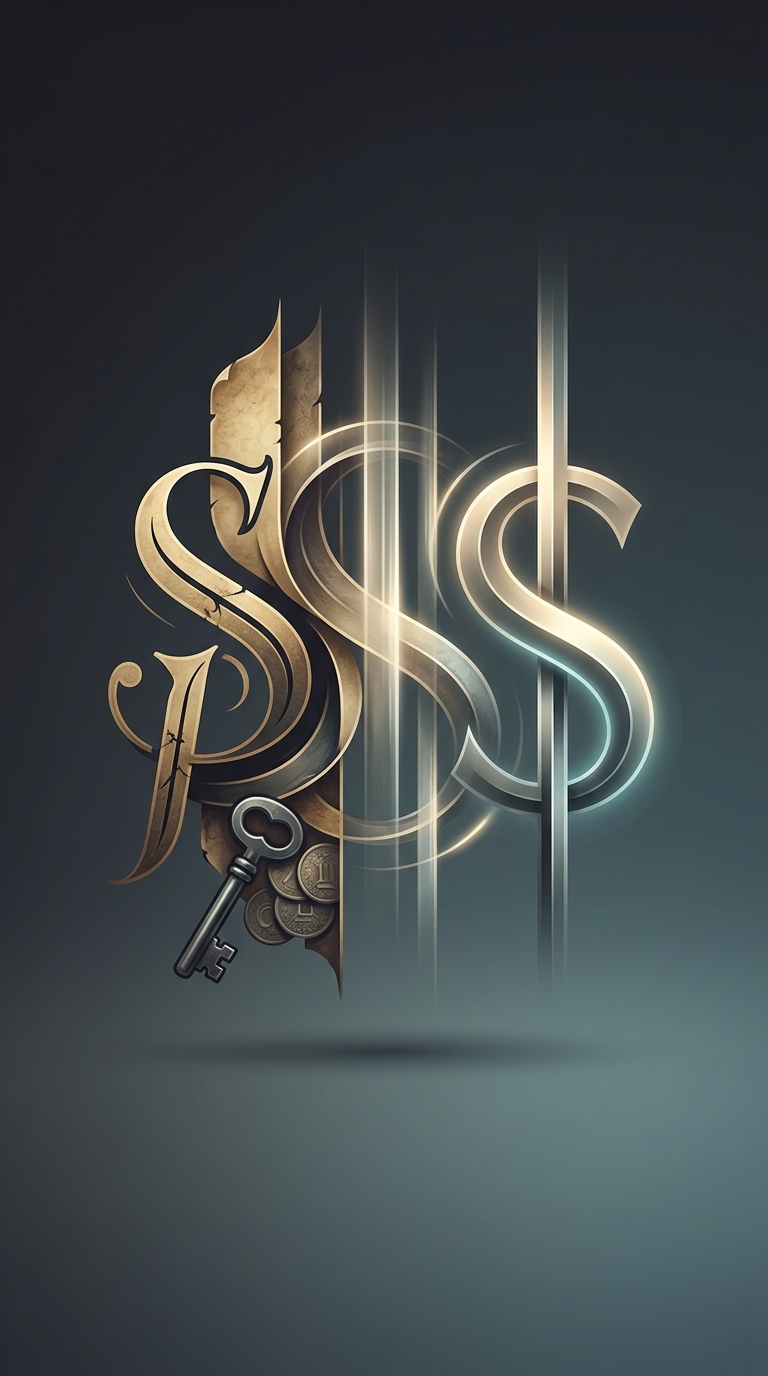
A writer could save a stroke by placing the P over the s. As the letters were drawn through one another, the P’s rounded loop could shrink or vanish into the S’s curves. What remained was a compact mark that could be written quickly while still signaling a peso amount.
The change was practical rather than decorative. Handwritten account books favored shortcuts that were easy to repeat, and this overlapping form let merchants record sums without spelling out the currency each time. As the mark was copied and standardized in print, its connection to the original letters became harder to see.
Why the Origin Is Easy to Misread
The finished symbol looks like an S crossed by vertical strokes, so it is natural to imagine it began as the initials U and S. But the peso abbreviation offers a more direct path from ordinary bookkeeping to the familiar sign: two letters compressed in the course of writing. The dollar sign’s shape, in this account, preserves the trace of a hurried entry in a merchant’s ledger.