Why raised headlights disturb the airflow
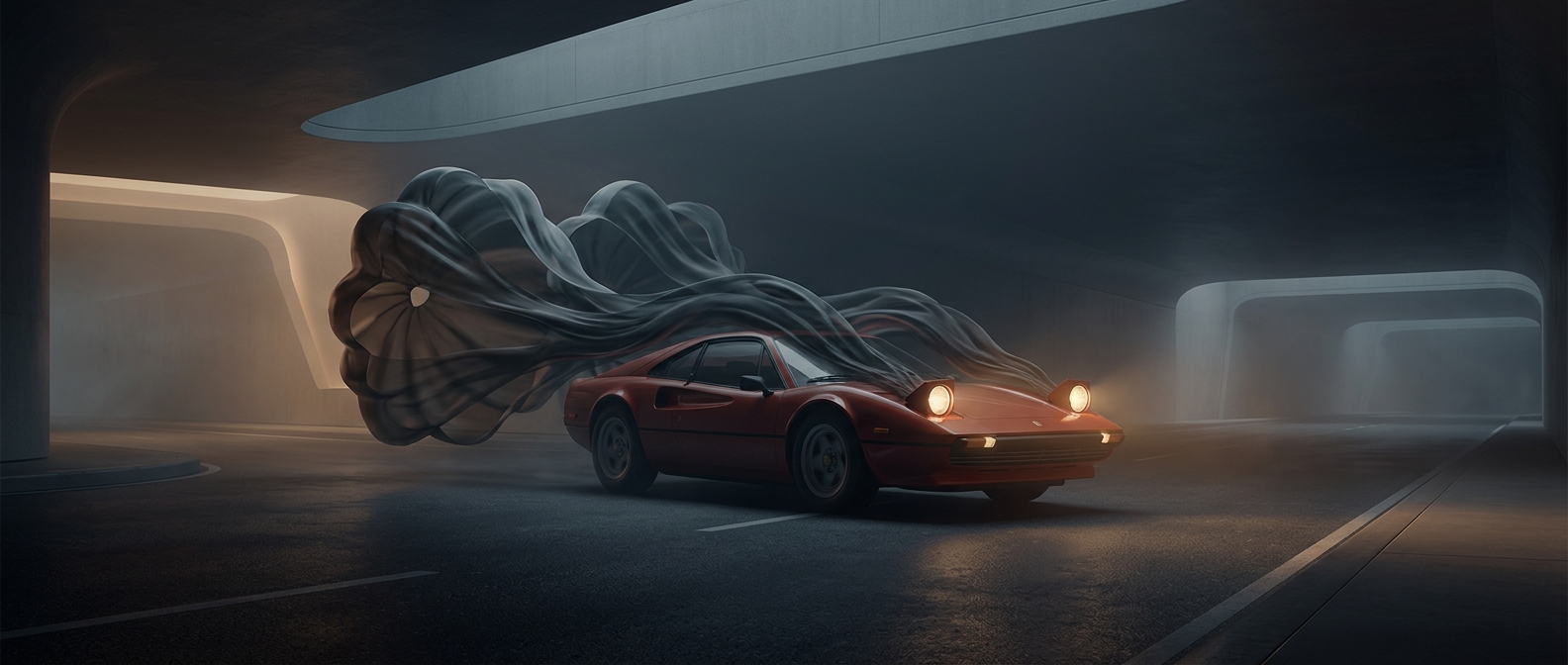
A pop-up headlight changes the car’s shape at the moment it rises. Instead of sliding smoothly over the hood, air meets a lamp projecting into the stream. Some of that air is forced around the housing; some separates from the surface and swirls behind it. The resulting wake—an unsettled pocket of air—raises pressure drag, the force that pushes against a moving car.
The effect grows with speed. The engine must spend more power pushing through the added resistance, and the turbulence can also bring extra wind noise. A small bump may seem harmless, but a car’s body is designed as a connected surface: a protrusion in one spot can disturb airflow beyond the lamp itself.
Retracting them helps, but does not erase every trace
When the lamps fold away, their raised housings stop acting like little barriers, and a flush cover lets air pass more cleanly over the body. That can reduce the drag and turbulent wake compared with driving with the lights up. It does not mean the air literally retains a memory of the headlights. Any remaining disturbance comes from the car’s actual shape—such as covers, gaps, or surrounding bodywork—not from the lamps’ previous position.
That is the tradeoff built into the design: the same mechanism that lets the front of a car look smooth with the lights hidden makes it aerodynamically clumsy when they are exposed. At highway speed, a headlight can become more than a styling detail; it becomes a small obstacle the engine has to keep pushing through the air.