How map spacing keeps a chase moving
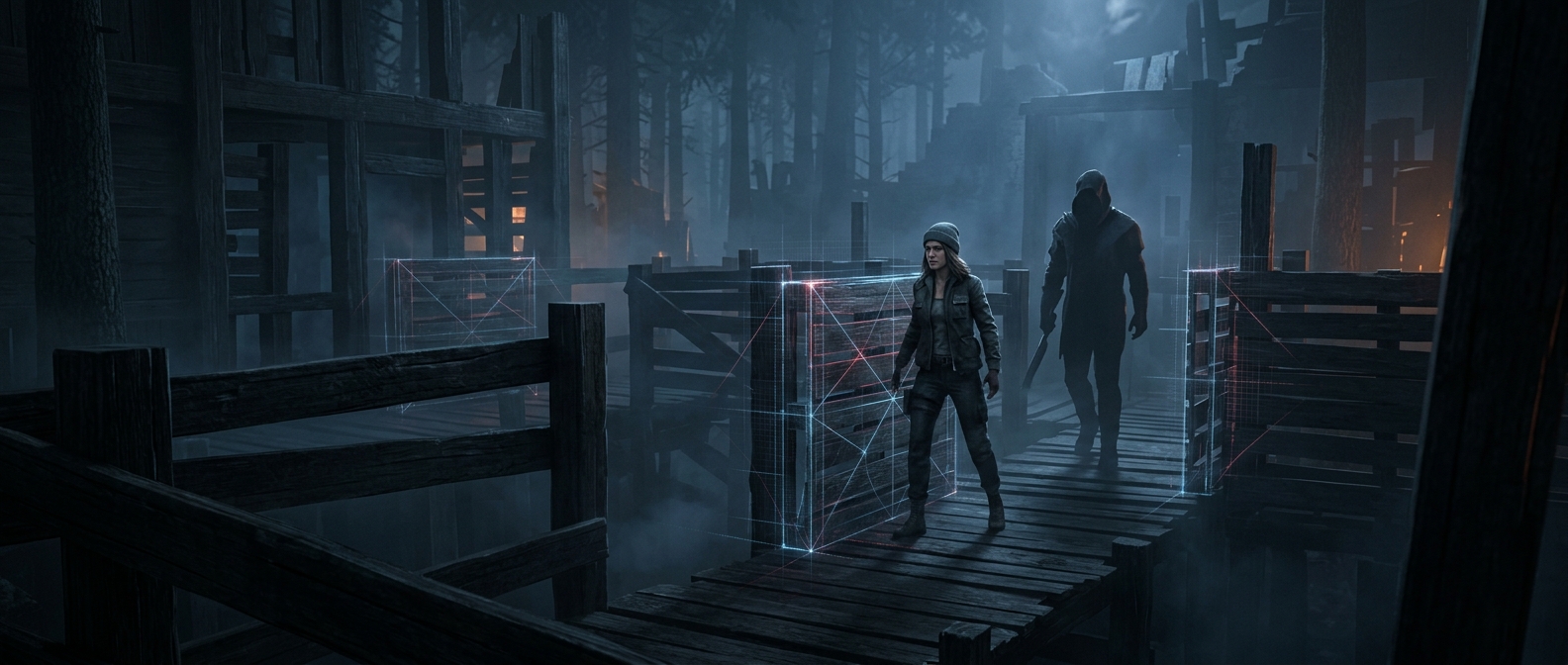
A pallet can briefly turn a chase into a circuit. A survivor drops it to block the killer, then runs around nearby obstacles and may vault through an opening to make the killer take the longer route. If another strong obstacle sits close by, the survivor can sometimes leave one loop and continue at the next, keeping the killer running without committing to a risky escape.
Dead by Daylight’s map generation limits how tightly certain useful features can cluster. Vaulting points—openings survivors can climb through—and breakable objects are kept at minimum distances from one another. That spacing makes it harder to link several defensive structures into one uninterrupted route.
The tradeoff is in the layout
The rule doesn’t remove pallets or make every chase short. It shapes the gaps between opportunities: a survivor may still use a pallet effectively, but reaching the next useful structure can require crossing more exposed ground. That gives the killer a chance to close distance or force a decision, while leaving the survivor room to use the map’s obstacles and timing.
The result is a layout constraint with a direct effect on play. Instead of letting one especially favorable cluster dictate a chase indefinitely, the map is designed to make that protection run out—and to make the next few steps matter.