Why a Wheel Spin Is So Hard to Call
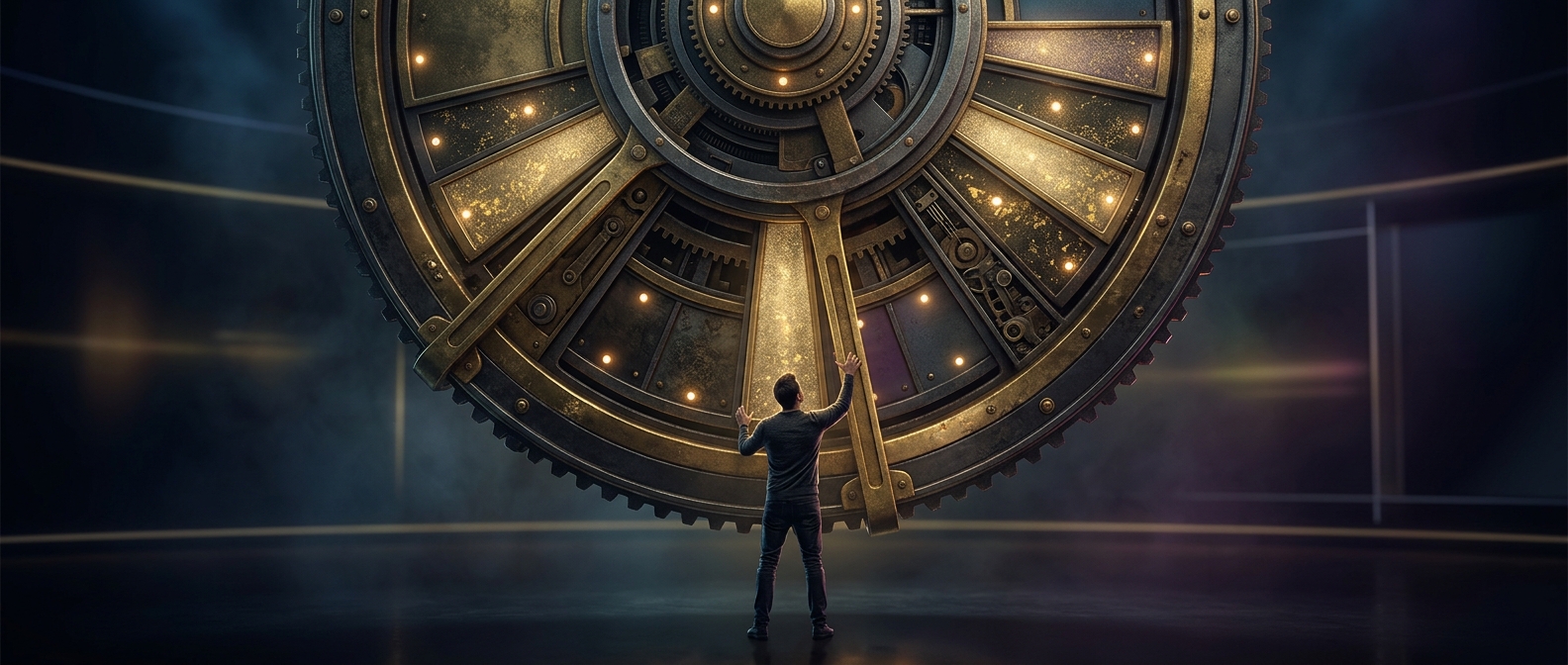
A wheel does not choose a wedge at random in the strict sense: its stopping point follows from how it was spun. But a player cannot control that outcome precisely. A small difference in the wheel’s speed, the force of the spin, or the moment it meets the pegs can shift where it stops. The pegs and flapper—the part that clicks over them—add more small interactions as the wheel slows.
That makes the result difficult to predict from one spin to the next. Seeing the wheel pass several wedges gives a player little reliable information about where it will finally settle. The physical process has rules; the tiny differences that determine the outcome are simply hard to judge or reproduce.
Why Bankrupt Feels Like Bad Luck
The chance of landing on Bankrupt depends on how much of the wheel it occupies and on how the wheel actually moves—not just on how many wedges there are. But when many wedges pass beneath the flapper, the final stop can feel almost arbitrary. Bankrupt also stands out because it can wipe away a player’s accumulated winnings, making an unlucky stop feel more consequential than an ordinary miss.
So the surprise comes from two things at once: a stopping point that is hard to foresee and a wedge with a sharp penalty. The wheel may be following the same physical rules every time, but from a player’s perspective, the click that ends a turn can still feel like a sudden reversal.