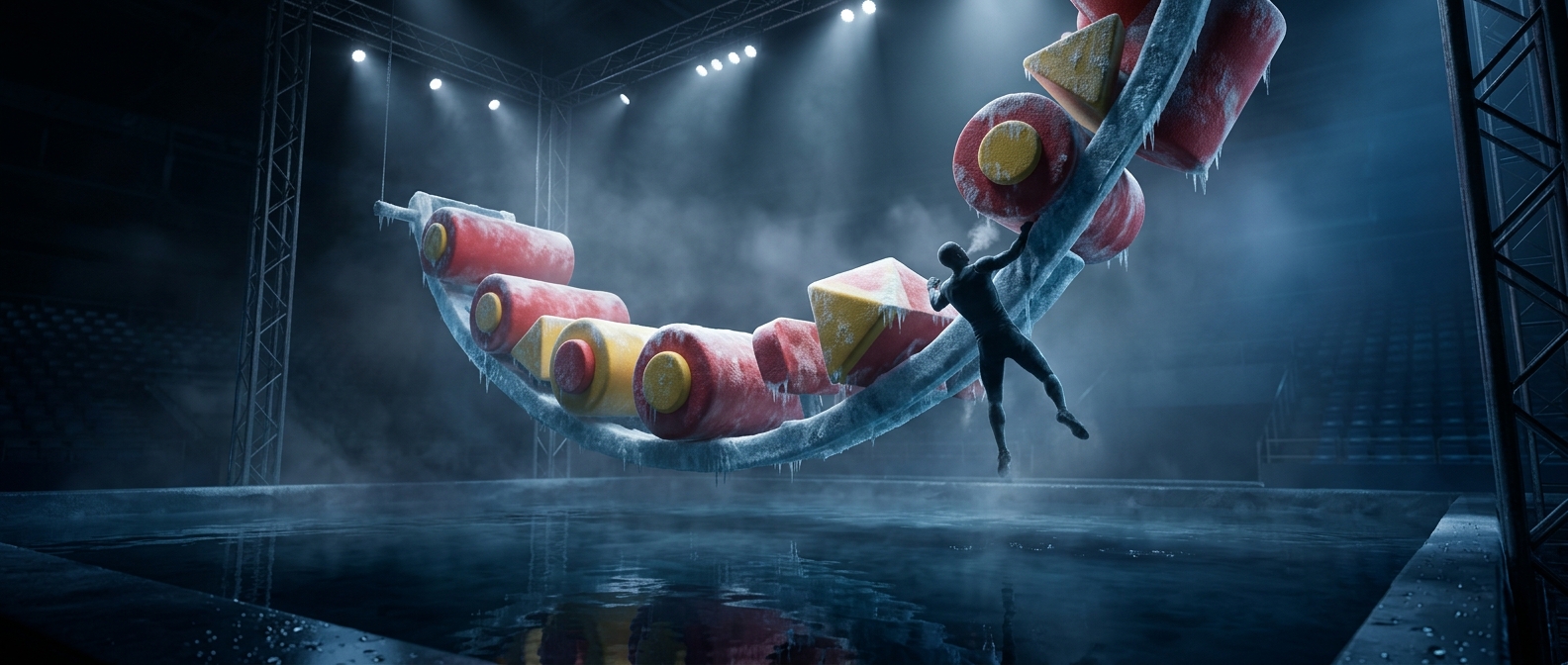
Cold turns an obstacle into a body-level challenge
A slick course already demands balance and timing. Near-freezing water adds a second problem: the body reacts before a contestant can think through the obstacle. Sudden cold can trigger a sharp inhale and make muscles tense; wet, muddy footing also makes it harder to plant a steady step. Contestants must manage those reactions while moving, rather than simply solve the course in comfortable conditions.
The discomfort changes the performance
That extra physical stress can disrupt rhythm. A contestant reaching for a foothold may hesitate, flinch, or overcorrect, and a small loss of balance can send them into the water. The cold therefore works less like a hidden mechanical trick than a pressure multiplier: the obstacles remain visible, but they become harder to approach calmly and consistently.
For television, those immediate reactions are legible. A gasp, a scramble, or a sudden collapse communicates the difficulty without explanation, while the muddy water makes each spill part of the spectacle. The temperature is not just scenery; it helps turn a familiar task—crossing an obstacle—into a contest between deliberate movement and the body’s reflex to recoil.