Why a plastic chip needs careful control
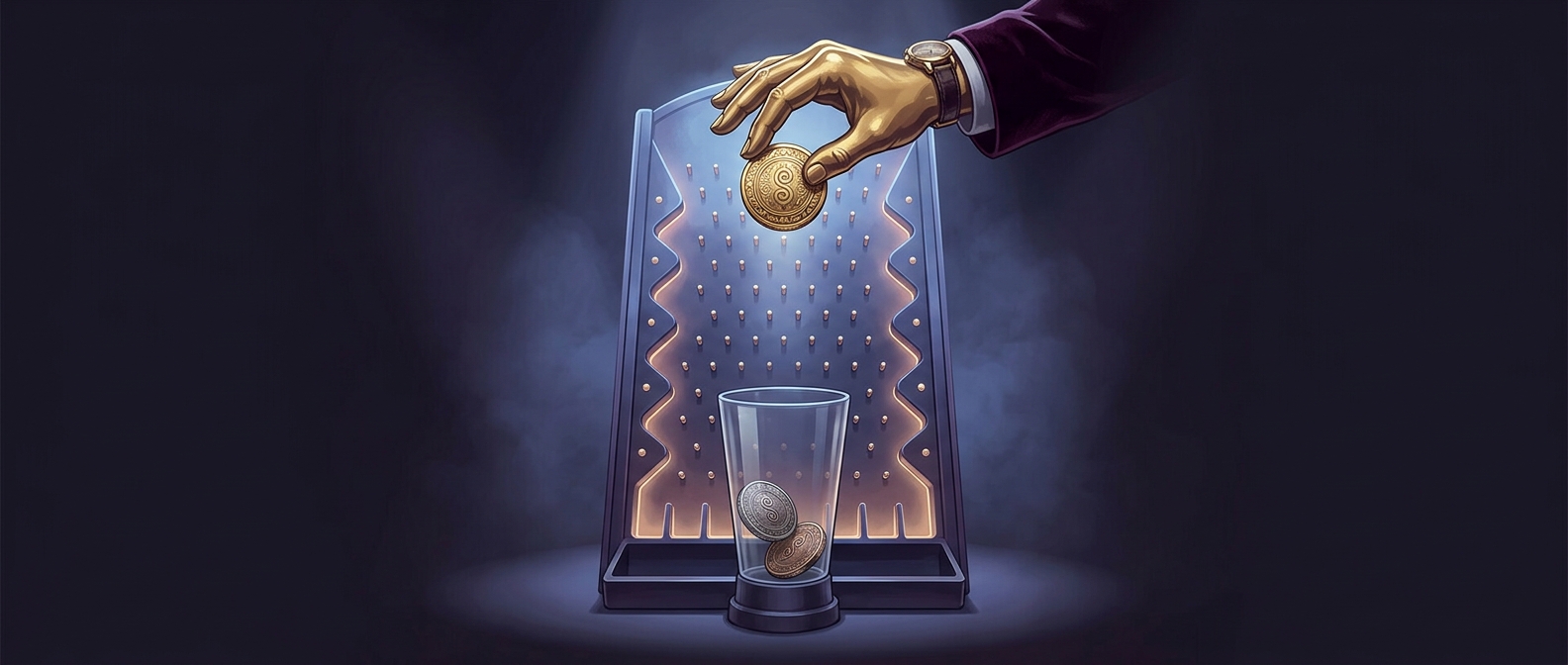
In Plinko, a chip is released at the top of a pegged board and ricochets downward before landing in a prize slot. Its route is unpredictable: each peg can deflect it left or right, and small differences in the chip’s movement can affect where it ends up.
That makes the physical pieces part of the game, not just props. Keeping the official chips together helps ensure that the ones used onstage remain the intended pieces. A substitute that differed in weight, thickness, or edge shape could behave differently as it bounced through the board.
The small object behind a big moment
The chips’ modest material can make the security seem surprising, but their significance comes from what happens when they hit the board. Each drop is a visible, suspenseful event, and the slot where a chip lands determines its result. Controlling the pieces helps protect the consistency—and credibility—of that moment.
So the lock and key are less about the plastic itself than about preserving the game’s physical setup: when a chip starts its fall, it should be one of the official pieces the board and show are built around.