Why Ordinary Objects Make Compelling Challenges
A tissue, a ping-pong ball, or a plastic cup comes with no special equipment or expertise attached. Viewers already know what these things are supposed to do, so the suspense shifts to a different question: can someone control them well enough to do something awkward, precise, or unexpectedly difficult?
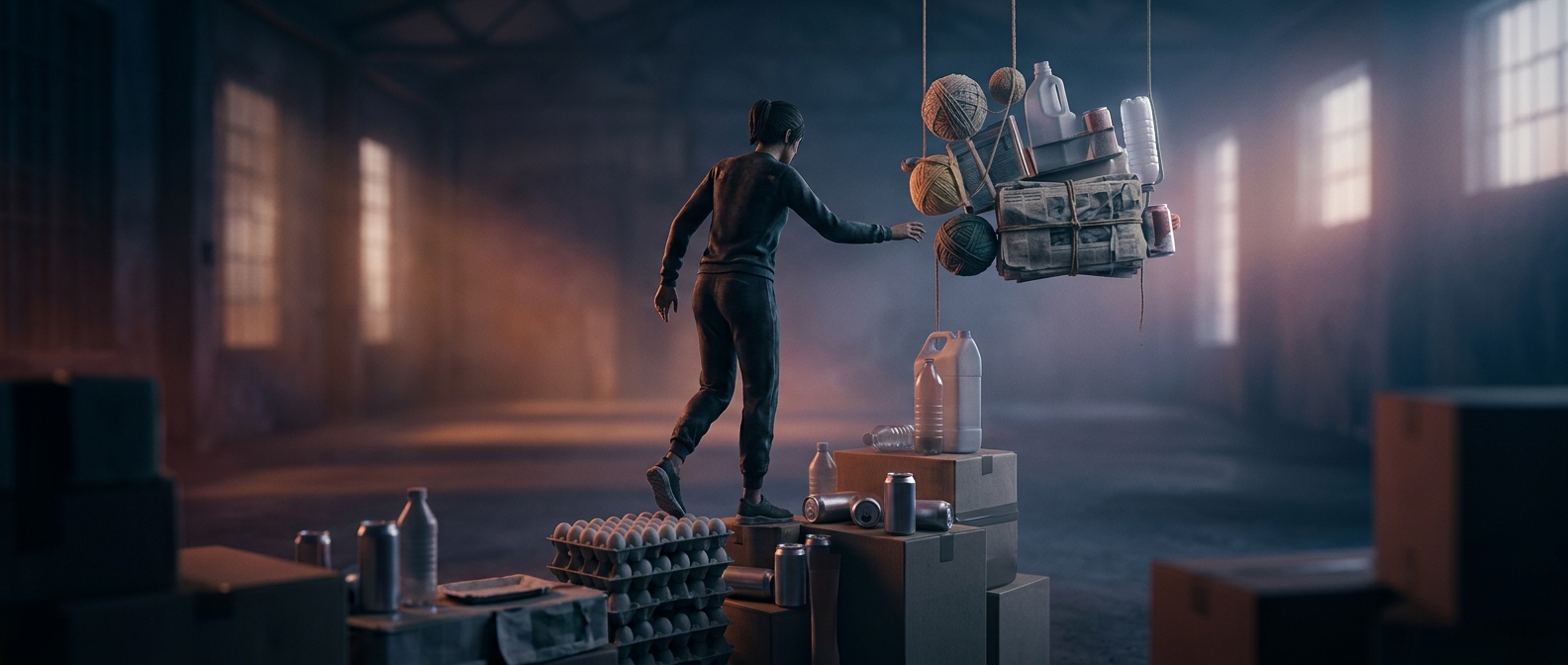
That familiarity also makes the challenge easy to read from across a room. A stack of cans either holds together or collapses; a ball either lands where it needs to or does not. The audience can follow the attempt without learning complicated rules, and each wobble or near miss becomes part of the action.
The Design Is in the Mismatch
These games rely on a mismatch between an object’s everyday purpose and the task assigned to it. A cup is simple to pick up, but a pile of cups can demand careful timing and balance. Lightweight objects may be easy to move yet hard to control. Small changes in pressure or angle can undo a sequence that looked nearly complete.
That makes household props useful for televised competition: they are recognizable, visually clear, and capable of producing failure as well as success. The tension comes not from the objects being rare or powerful, but from seeing how much concentration an ordinary object can require once the clock and the prize are in view. A soda can becomes a spectacle when the whole room is waiting to see whether the next one will stay put.