What the coiled serpent represents
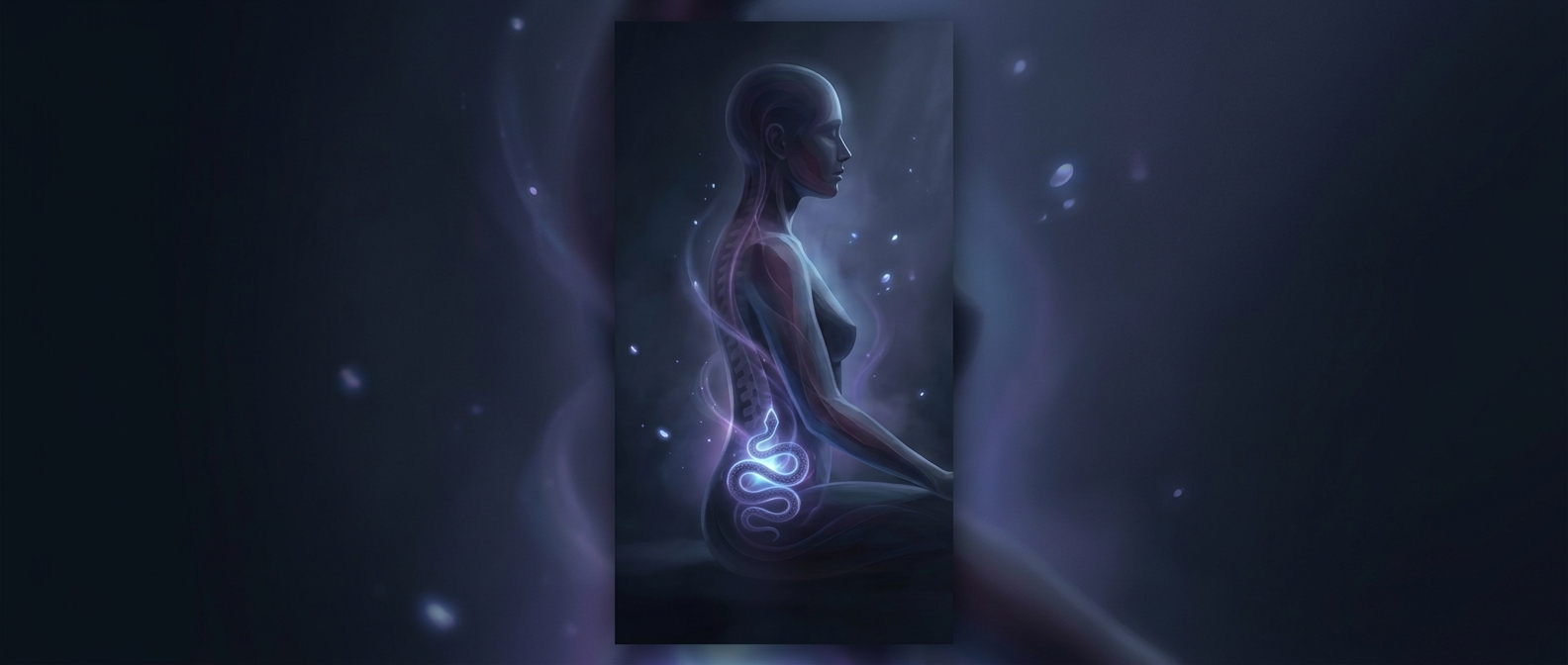
In yogic traditions, kundalini is a way of describing latent spiritual potential. The image of a serpent resting at the base of the spine makes that potential feel both concentrated and alive: coiled energy can be released, then directed. It is a symbolic teaching image, not a claim that a literal snake or measurable force lies inside the body.
Awakening as a path, not a jolt
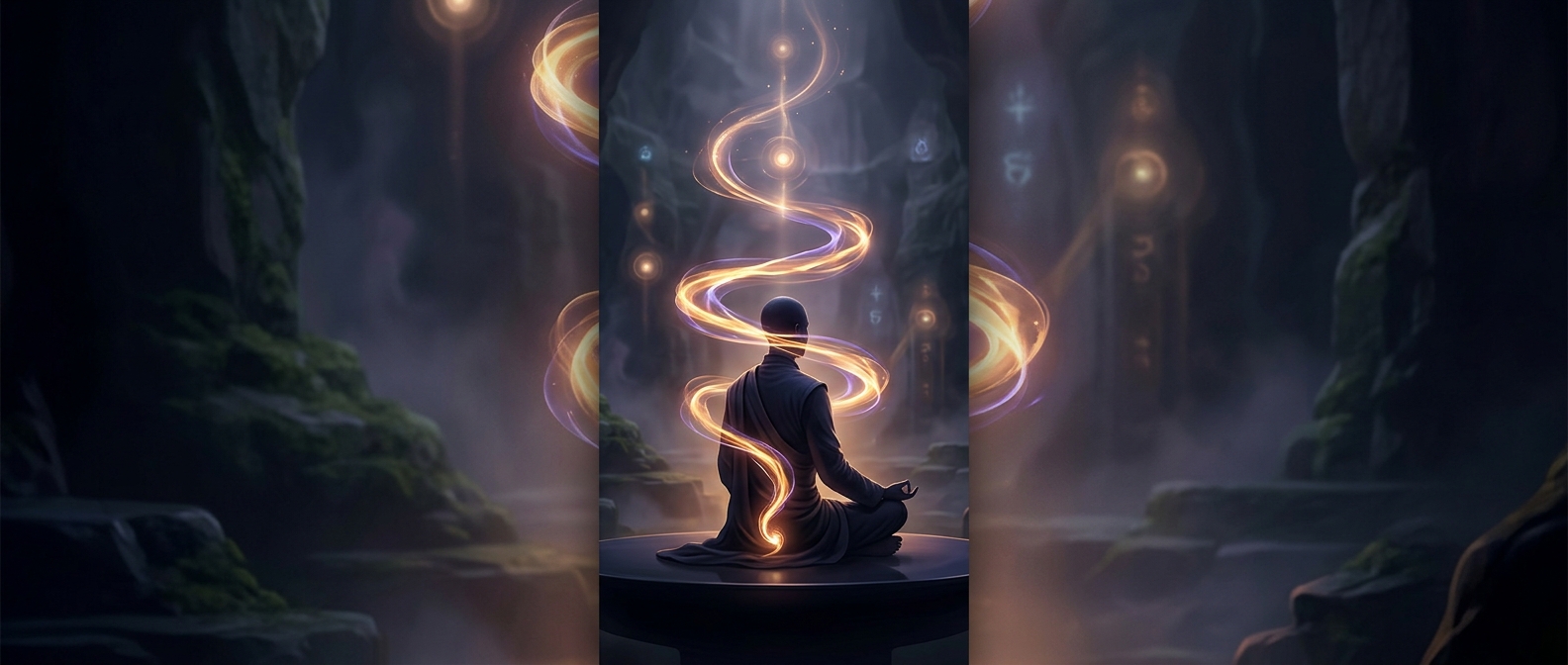
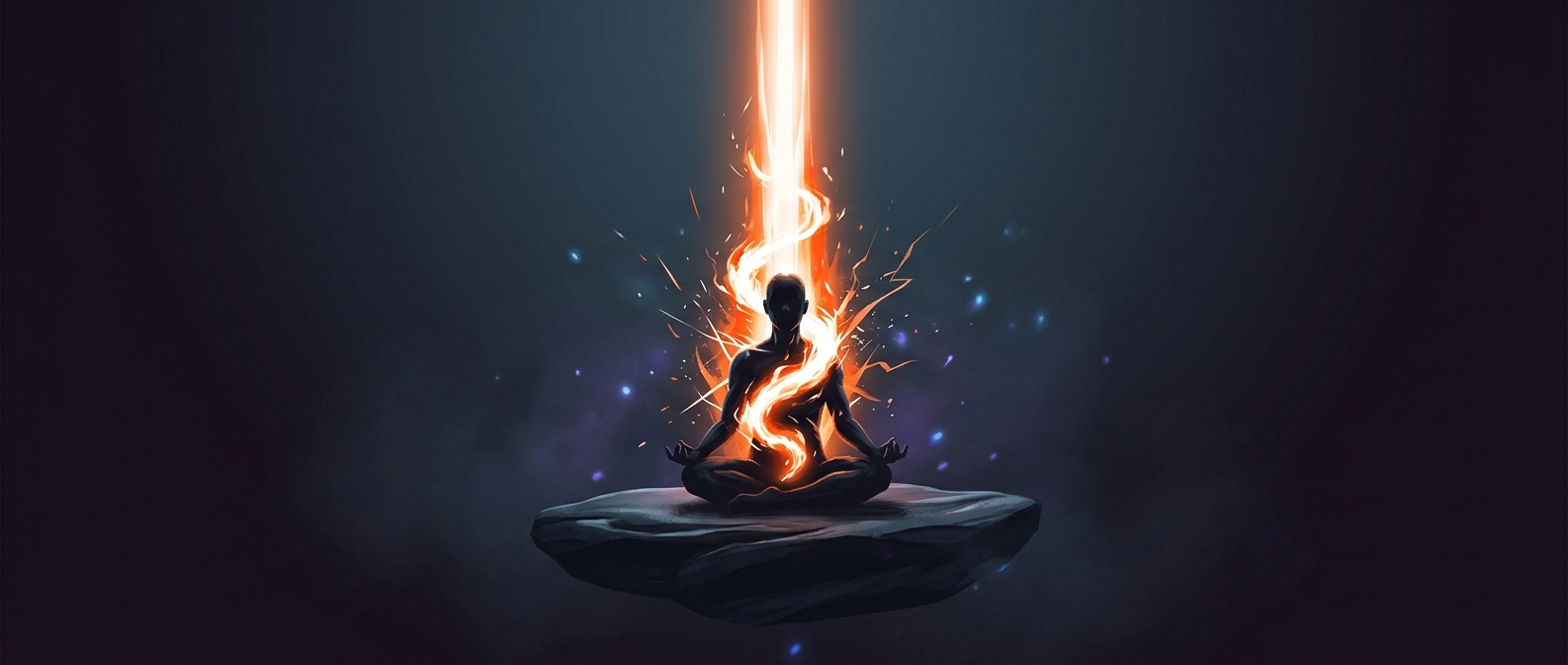
Practitioners may use meditation, breath control, chanting, or disciplined bodily practices to cultivate what they understand as kundalini. The serpent’s upward movement represents a gradual transformation: attention and spiritual awareness are said to rise through the body’s subtle centers, often called chakras. These centers belong to a traditional spiritual map, rather than to anatomy in the medical sense.
The image also implies guidance and restraint. Awakening is not simply acquiring more power; the energy must be directed through practice and interpreted within a larger spiritual framework. In that sense, kundalini describes both a hoped-for inner change and the discipline believed to make that change meaningful.
Why the image endures
A coiled force offers a memorable way to express the idea that a person may hold capacities not yet realized. The ascent turns that invisible possibility into a story of movement—from dormant potential toward expanded awareness—without requiring the tradition’s spiritual map to be mistaken for a physical one.