Why a Sand Mandala Is Made to Disappear
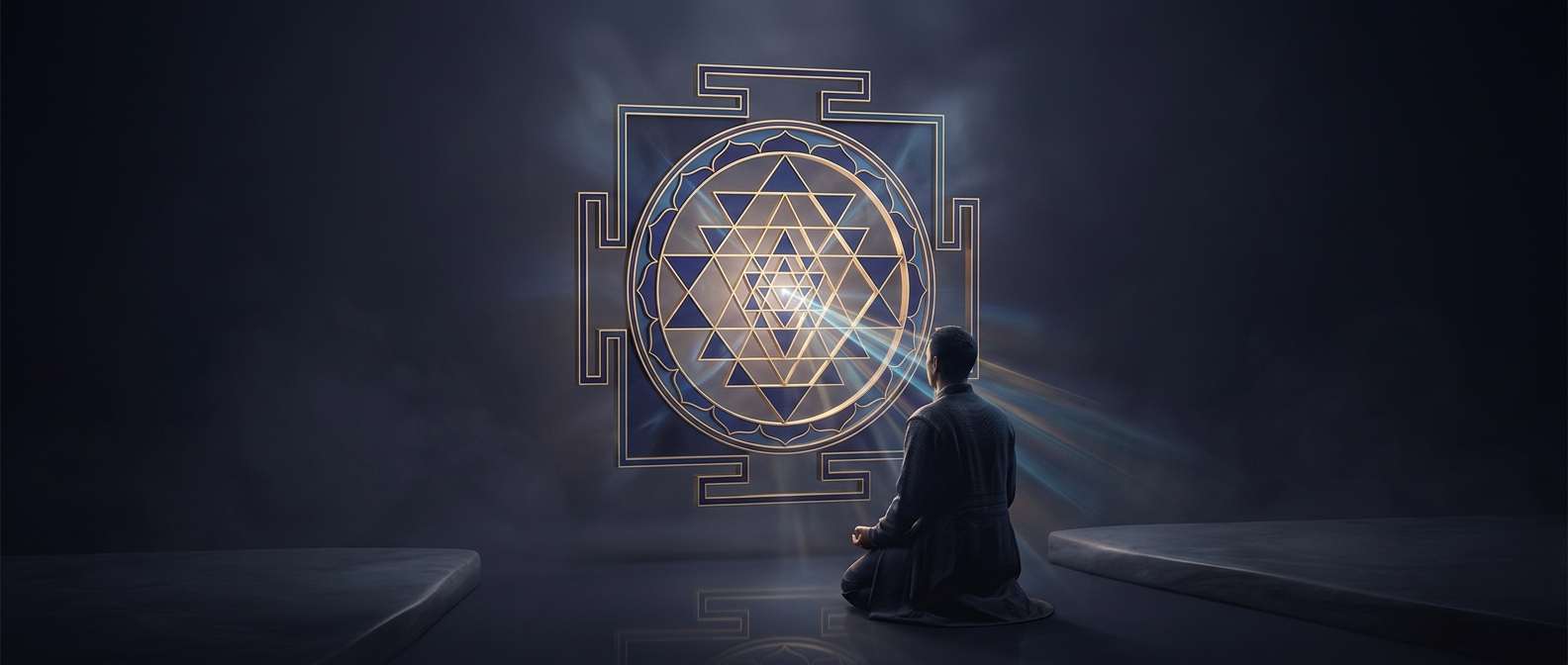
A Kalachakra sand mandala is not meant to survive as a finished artwork. In Tibetan Vajrayana Buddhism, a mandala is a sacred diagram that represents a realm of awakened beings and the ordered path into it. The Kalachakra version depicts a palace-like cosmos associated with the Kalachakra teaching; its many figures and precise geometry give monks a structure for ritual practice and visualization.
Precision as a Form of Practice
Monks build the design by releasing colored sand from narrow metal funnels, placing it in carefully measured lines and fields. The slow work demands concentration and coordination, but its purpose is more than producing an intricate image. The diagram makes an elaborate religious world visible and gives practitioners a focus for contemplation. Its rules matter: each color, shape, and position belongs to a larger symbolic arrangement.
The Dissolution Completes the Ritual
After the mandala has served its purpose, monks sweep the sand inward, undoing the ordered design. This ritual dissolution expresses impermanence: even something beautiful and painstakingly made does not remain fixed. The gathered sand is commonly carried away and released into flowing water, extending the act beyond the worktable rather than treating the image as ordinary refuse.
That ending changes what the labor means. The goal is not to preserve a perfect object, but to create it with care and then let it go. The mandala’s final form is therefore not the intricate picture alone; it is the complete sequence of making, contemplating, and dissolving it.