Why a Bicycle Needs More Than Balance
A bicycle does not stay upright through balance alone. As it begins to tip, its front wheel can turn slightly toward the direction of the fall, helping the bike move back underneath the rider. The rider also steers by shifting weight and leaning—but on an ordinary bike, the handlebars provide the fastest, most precise way to correct the wheel’s direction.
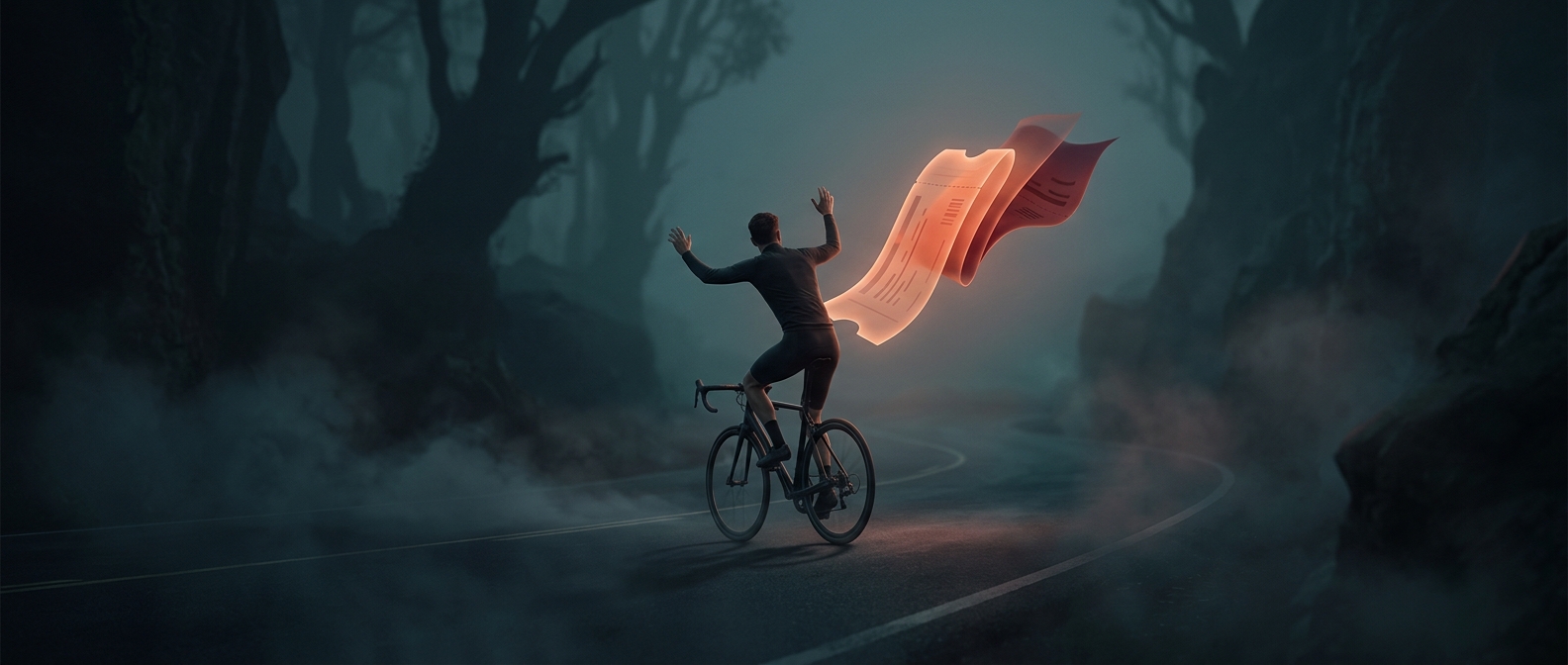
With both hands off the bars, those corrections become harder. A bump can knock the front wheel off line, and the rider has less ability to counter the jolt immediately. At speed, even a small steering error can carry the bike into a curb, another vehicle, or a patch of rough pavement.
Control Includes Braking
The handlebars are also where most bicycle brakes are operated. A rider who must first reach for the bars may lose valuable time when a car stops, a pedestrian steps out, or the road surface changes. That is why traffic rules often focus not simply on whether a rider can stay upright, but on whether the rider can maintain control and respond to hazards. The exact rule—and whether hands-free riding can earn a citation—depends on local law.
The practical risk is not that every hands-free ride ends in a fall. It is that the rider gives up quick access to steering and braking precisely when the situation stops being predictable. A smooth, empty stretch may make the choice look effortless; a pothole or sudden stop can turn it into a control problem in an instant.