Why the Collarbone Breaks in a Fall
The clavicle, or collarbone, is the only bony bridge connecting each arm to the trunk. It runs from the breastbone to the shoulder blade, holding the shoulder out from the chest so the arm can move freely. When a person lands on an outstretched hand or directly on a shoulder, force can travel through this bridge.
The bone is shaped like a shallow S and is relatively slender. Its middle portion has less support from surrounding joints and ligaments than either end, making it a frequent fracture site. A sudden impact can bend the clavicle beyond what it can withstand, often snapping it near the middle.
A Break Can Change the Shoulder’s Position
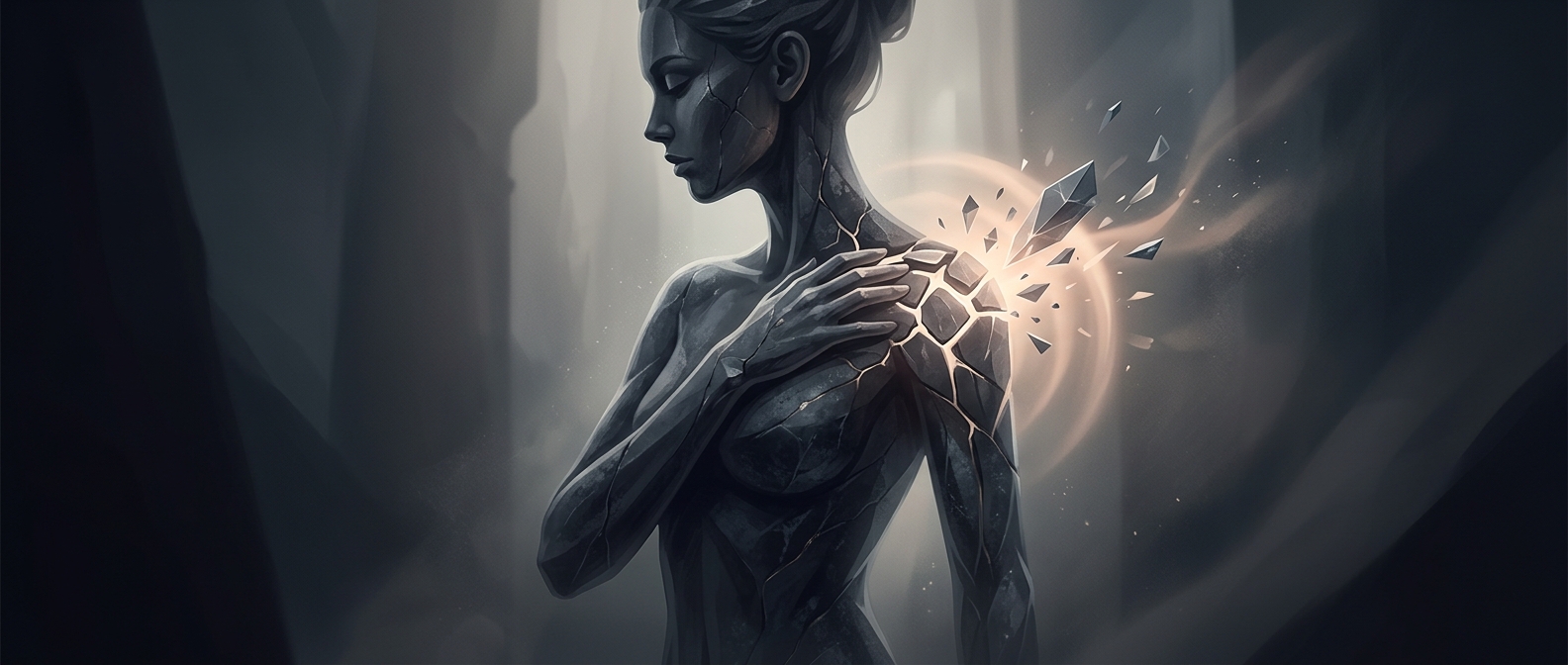
The clavicle helps keep the shoulder aligned and provides a stable base for arm movement. If it breaks, the shoulder may sag or shift forward because the bone no longer braces it against the chest. Pain and difficulty lifting the arm follow—not because the shoulder joint itself has necessarily been damaged, but because its support has been disrupted.
A fracture is not a deliberate safety feature, and it does not guarantee that the shoulder or nearby structures will be spared. But the clavicle’s position in the force pathway helps explain why a fall can break this narrow bone before causing a more extensive injury to the shoulder complex. The collarbone’s apparent vulnerability comes with a practical consequence: even a break in a small bone can temporarily make ordinary reaching and lifting difficult.