Why Neapolitan Pizza Cooks in About 90 Seconds
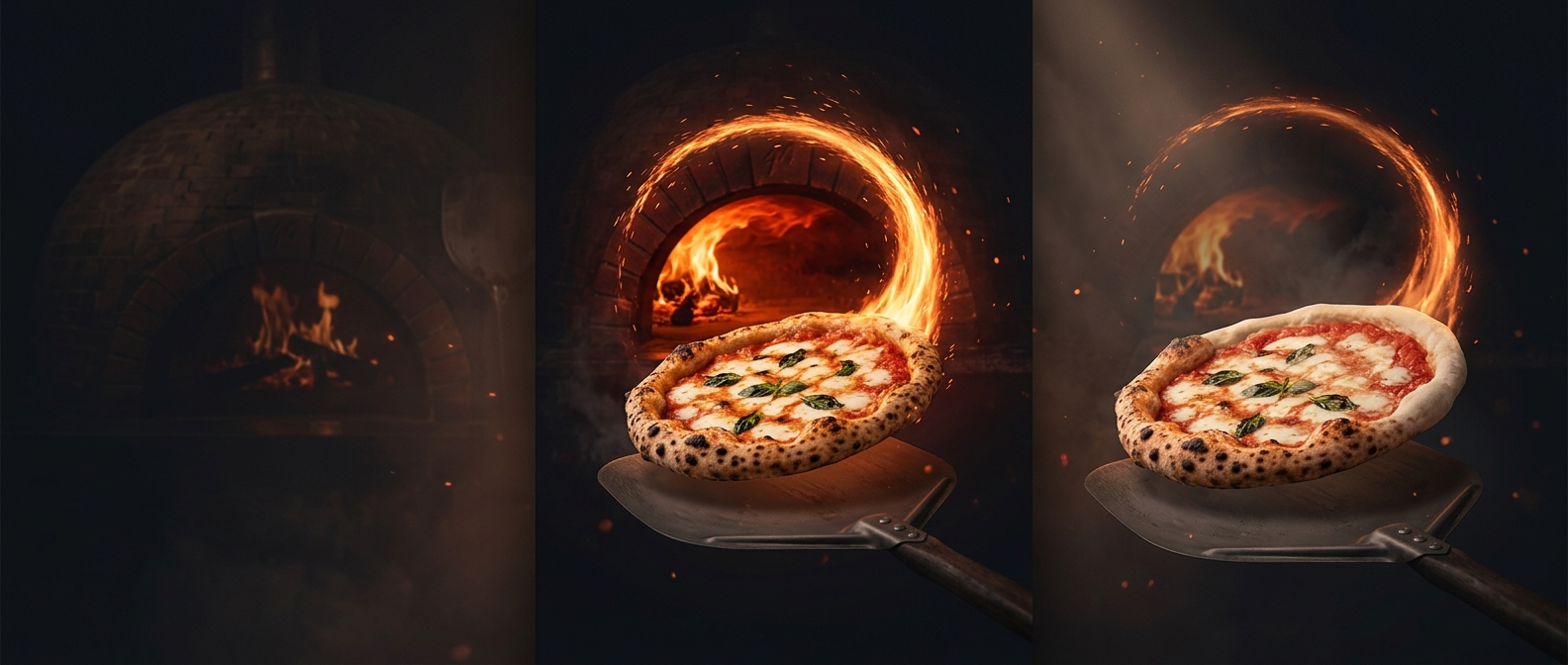
A Neapolitan pizza is built for a very hot, fast bake. In a wood-fired oven, flames heat the dome and floor; the dome radiates heat down onto the toppings while the hot cooking surface browns the dough underneath. That combination cooks the pizza far faster than a conventional home oven can.
The dough helps make the speed possible. It is stretched thin in the middle, with a puffier rim, so the center cooks quickly while the edge expands and develops dark, blistered spots. A thin layer of sauce and a modest amount of cheese also keep the middle from becoming too wet and heavy before the crust sets.
The Oven Shapes the Pizza
At this heat, seconds matter. A pizza maker turns the pie during baking so one side does not sit too long near the flame. The result is a soft, flexible center and a browned rim—not the uniformly crisp, dry crust produced by a longer bake at lower heat.
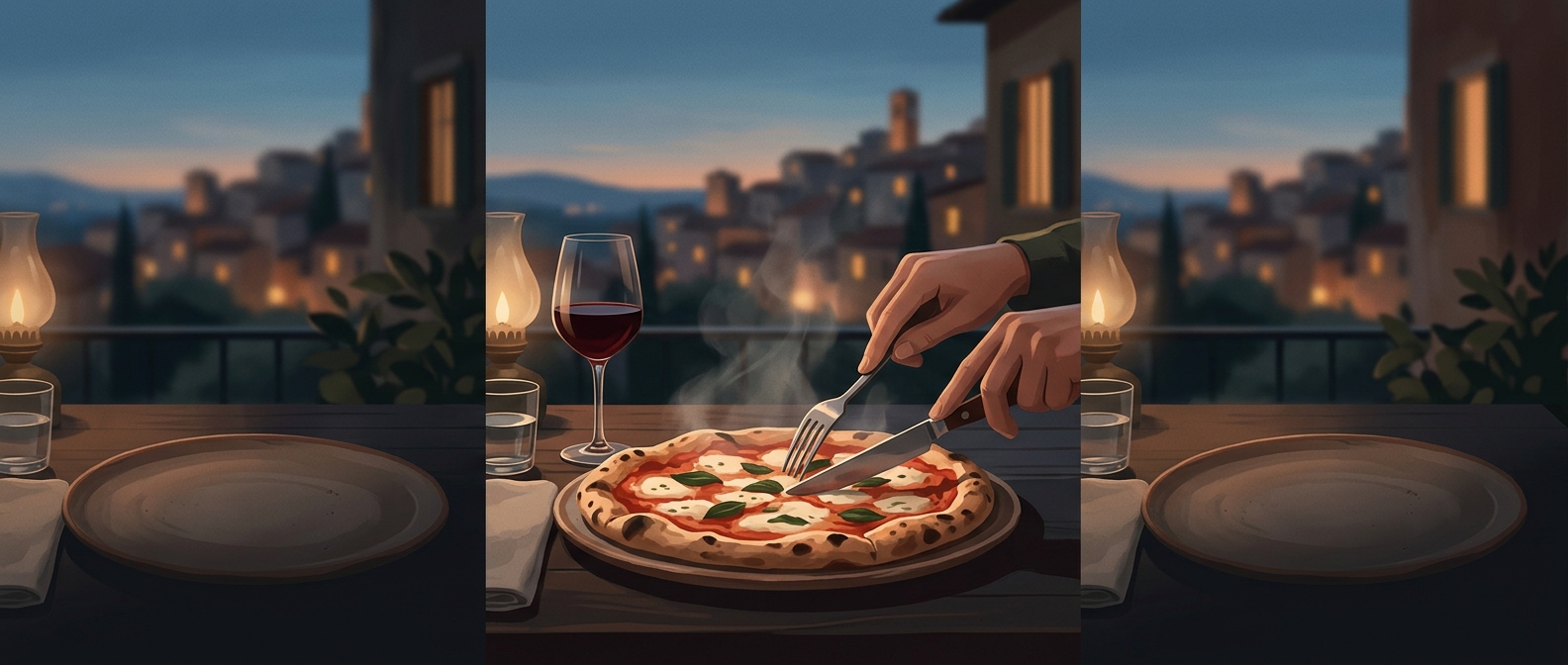
That texture is part of the experience of ordering pizza in Naples: it is meant to be eaten fresh from the oven, while the center is tender and the rim still warm. The brief bake is not just a shortcut; it is the final step in a style designed around intense heat, quick handling, and serving the pizza immediately.