Why Petra’s most famous façade got its name
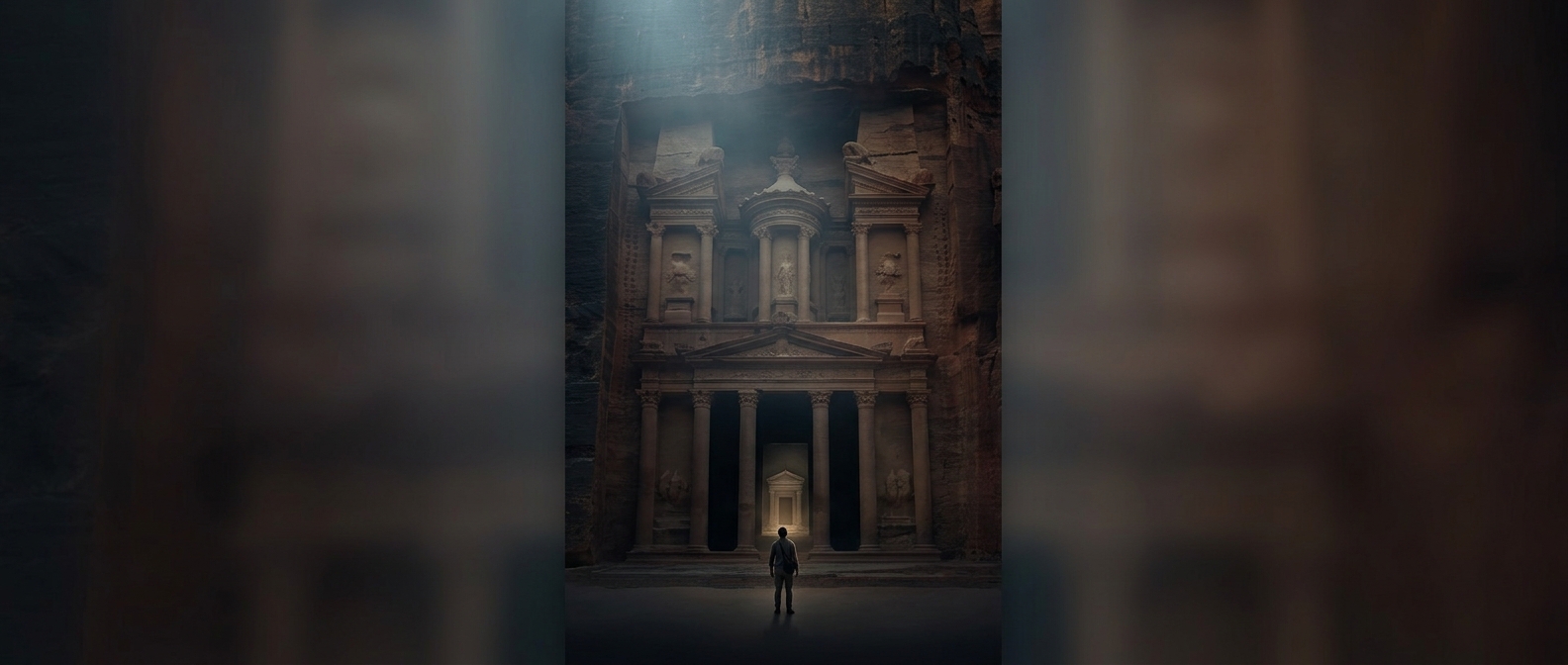
The monument now called the Treasury is known in Arabic as Al-Khazneh, or “the Treasury.” The name grew from a local story that treasure was concealed in the large stone urn high on its façade. But the urn is carved from the same rock as the building; it is not a separate container. The nickname stuck, even though the structure’s likely purpose was funerary.
A tomb shaped out of the cliff
The Nabataeans, who made Petra a major city and trading center, cut monumental façades directly into sandstone cliffs. Rather than assemble a building from blocks, their artisans removed rock to reveal columns, pediments, and other architectural details. Behind the Treasury’s elaborate exterior are interior chambers—not the maze of vaults its name might suggest.
The façade’s grandeur makes sense as a public face for a burial monument: it marked a lasting presence in the landscape and displayed the skill and resources of the people who commissioned it. The contrast is striking. From the narrow approach, the carved front looks like the entrance to a palace or a storehouse; step inside, and the story is less about hidden riches than about how Petra’s builders turned a cliff into a monumental tomb.