Built for the hardest part of a launch
A launch suit has to do more than protect an astronaut inside a spacecraft. If a rocket problem forces an early escape, or a capsule comes down in the ocean, the crew may be waiting in open water for rescuers. The suit is designed to make that wait safer—and the people in it easier to find.
Why the color matters at sea
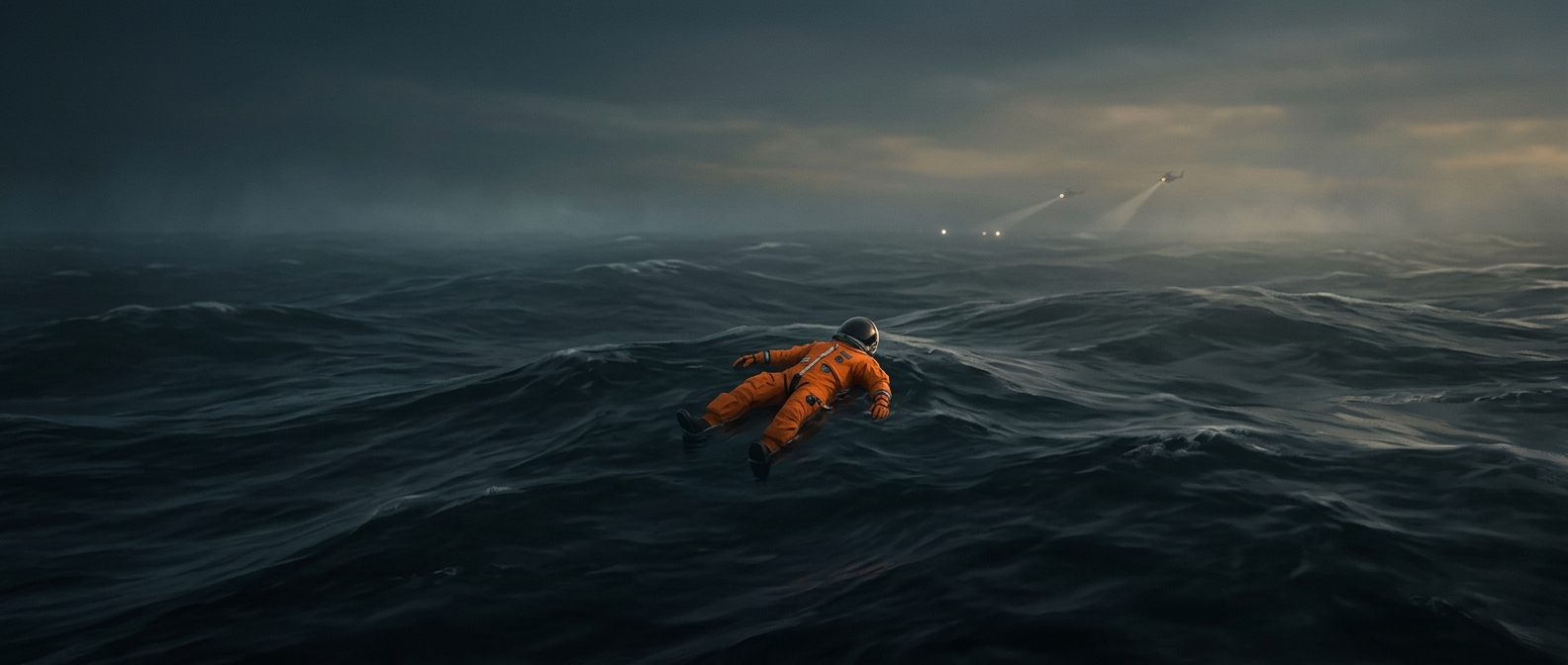
Orange is conspicuous against the dark blue or gray of open water. From an aircraft or rescue boat, a small person can be difficult to distinguish from waves, shadows, and floating debris. A bright suit creates a strong patch of color that rescuers can scan for, especially when distance and rough conditions make other details hard to see.
That visibility is useful precisely when the capsule is no longer the only thing to locate: after an emergency escape, astronauts may be separated from it or partly obscured by the sea. The suit turns each crew member into a human-sized visual marker.
Protection while help is on the way
The same garment also helps protect against cold and supports flotation. Those features matter because a water landing is not the end of the emergency; astronauts may need to stay warm and keep their airway clear until recovery crews reach them. The suit does not replace a rescue operation, but it gives rescuers more time and a clearer target.
Its bright color is therefore not just a tradition or a stylistic choice. It is a practical part of a chain of survival: help the wearer endure the wait, and make that wearer easier to spot from far away.