A Build Can Turn Waiting Into a Work Break
A long compile is more than a computer being slow: it marks a stretch when a programmer has handed the next step to the machine. The compiler checks source code, translates it, and combines the resulting pieces into a program that can run. In a large project, those pieces may depend on one another, so changing a shared component can force many others to be rebuilt before the new executable is ready.
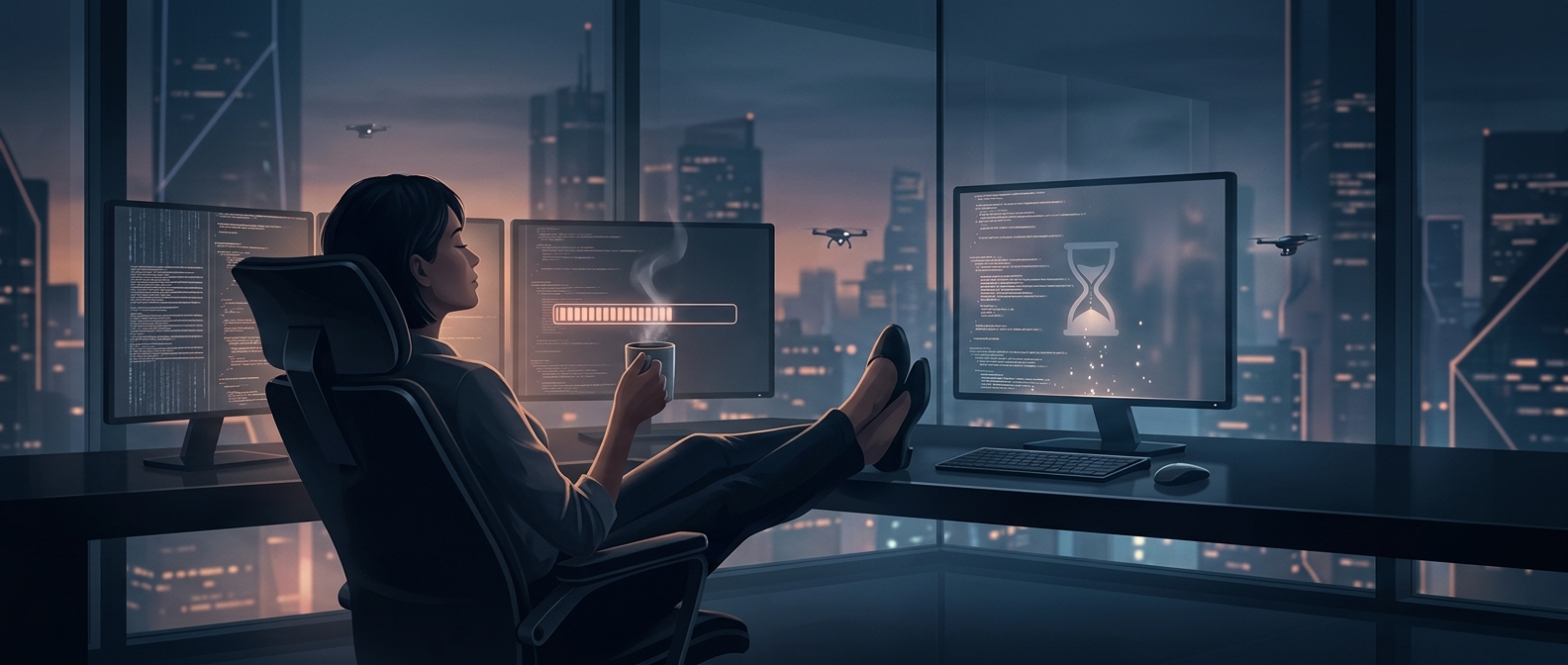
That pause has an awkward advantage. Programming often requires holding a problem in mind—how a change affects other parts of the system, or why a bug appears only under certain conditions. A build that cannot be hurried gives the developer a socially acceptable reason to stop staring at the code for a moment. Stepping away can make it easier to return with fresh attention, rather than immediately making another speculative edit.
The Best Break Is One You Can Resume
The wait is not necessarily empty. Developers may read compiler errors, inspect a related file, or tackle a small task that can be interrupted when the build finishes. But starting something absorbing is risky: the program may be ready before the person is, and the mental switch back can cost more time than the pause saved.
Build tools reduce this burden by reusing results for unchanged code, a method called incremental compilation. Instead of rebuilding everything after every edit, the system rebuilds only what the change affects. So the celebrated long wait is also a sign of a practical tradeoff: big projects need extensive checks, while developers need quick feedback to stay in flow. When a build does take a while, the chair-spin is funny because it turns a technical bottleneck into a tiny, enforced break.