A rock’s texture belongs to the model, not its place in the world
A 3D rock is a mesh: a collection of connected surfaces that gives the object its shape. A texture adds visible detail—such as color, shading, and the look of stone—to those surfaces. The texture is generally prepared for the model itself, rather than created only for the parts that will remain visible after the rock is placed in a level.
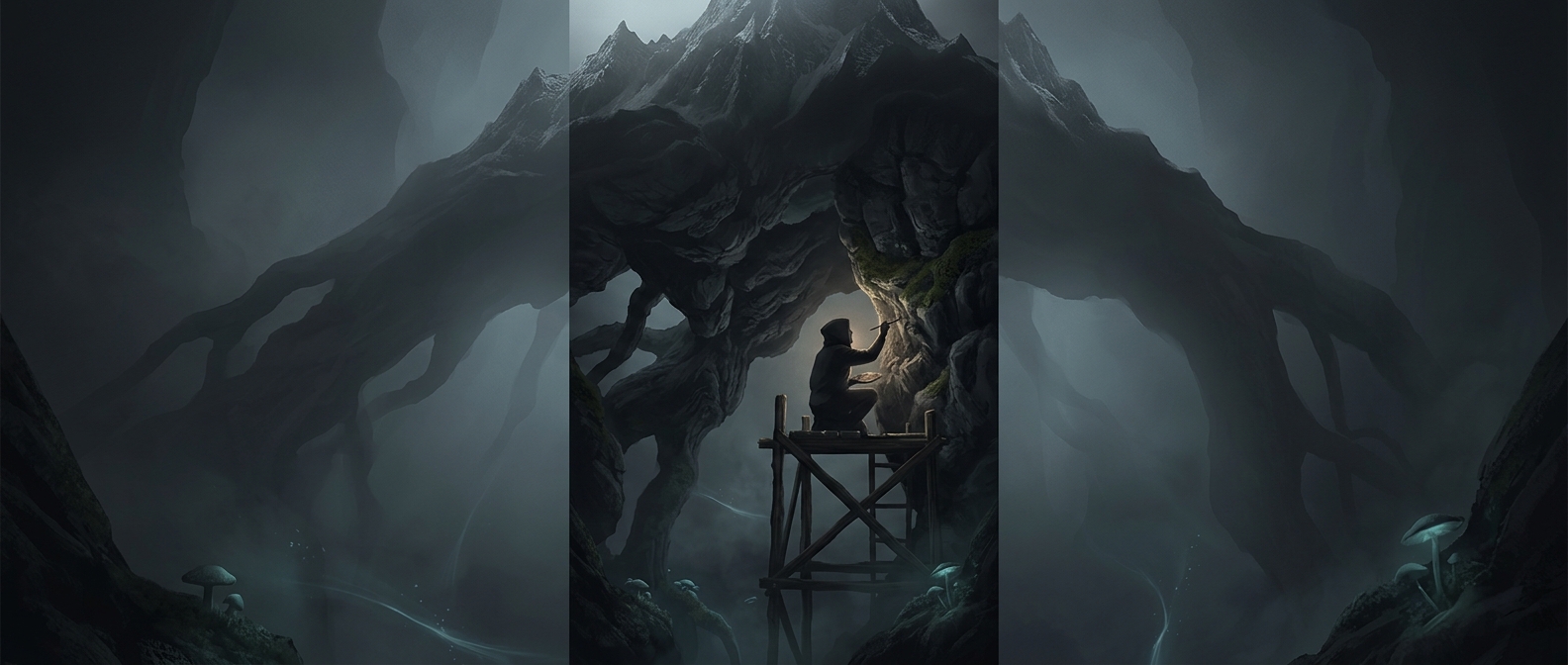
That distinction helps explain why an underground face could receive the same kind of hand-painted attention as an exposed one. The artist works on a complete asset; the game world later determines where that asset sits. A surface that ends up below the terrain is still part of the model, even if ordinary play never brings it into view.
The hidden work is a byproduct of making complete assets
For players moving through Skyrim normally, the ground hides those undersides. Seeing them requires leaving the playable space with console commands. Their existence is less a secret feature than a small trace of the production process: someone painted detail onto geometry without tailoring every brushstroke to what players could see.
That does not mean every invisible surface received equal effort, or that the artists had a particular reason for painting these exact faces. It shows how a finished game can contain work that disappears once an asset is installed in its intended setting. The rock looks like part of the landscape; beneath the landscape, its painted surface is still there.