A guessing game built for the airwaves
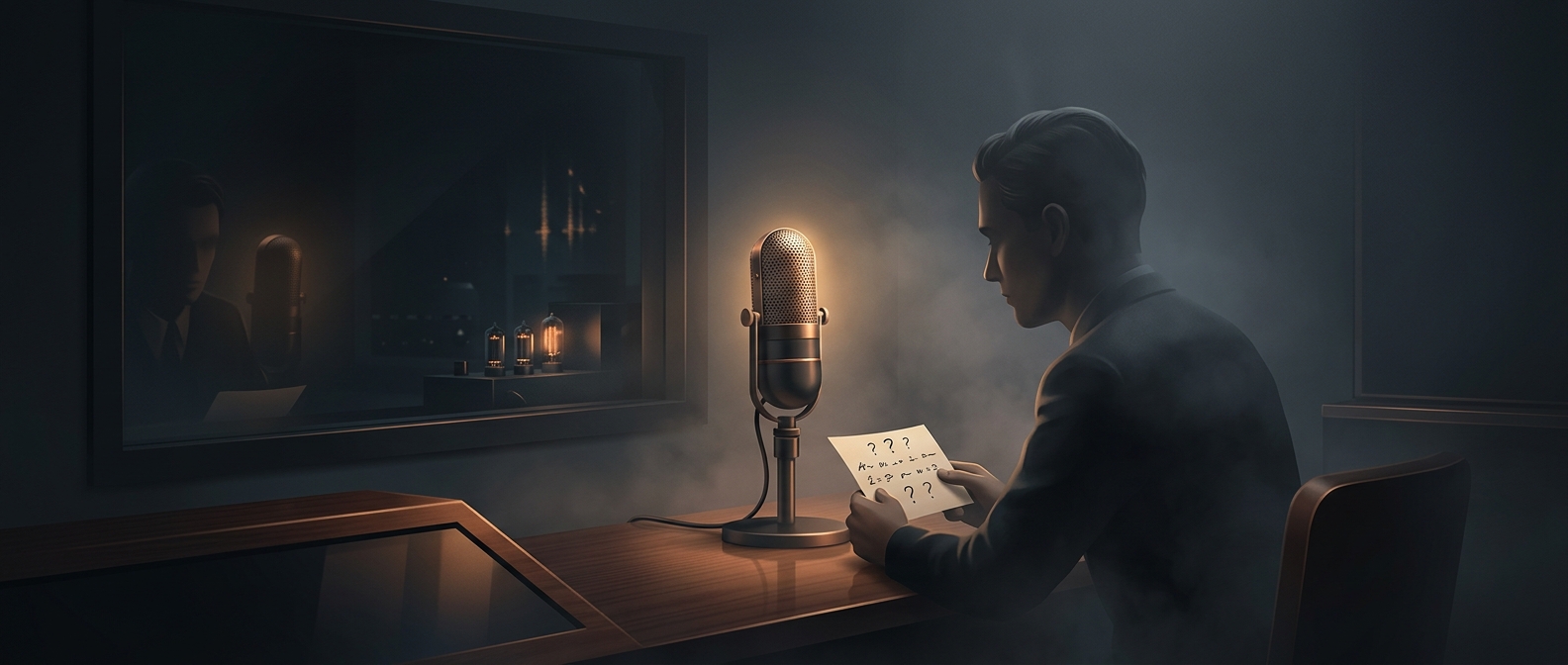
On the radio, Twenty Questions turned a simple rule into a small mystery. One person secretly chose a person, place, or thing; a panel tried to identify it by asking questions that could be answered “yes” or “no.” With only twenty chances, each question had to narrow the possibilities: “Is it alive?” could eliminate whole categories, while a more specific question could bring the answer within reach.
Listeners could play along without seeing a board or handling pieces. They heard the clues arrive one at a time and could test their own guesses against the panel’s. The format made the audience’s imagination part of the entertainment: a single hidden answer could be approached from many directions.
From broadcast performance to handheld play
Radio gave the game personalities, pacing, and suspense. A toy had to make the same core exchange work without a roomful of panelists or a live host. The essential design was already compact: one secret answer, a limited number of questions, and the logic of gradually ruling things out.
That portability helps explain the game’s long life across very different media. The broadcast made each round a shared performance; the handheld version made the same guessing challenge something one person could carry and play. The format traveled because its main resource was not elaborate equipment, but the questions players could think to ask.