A Dog Mistaken for a Killer
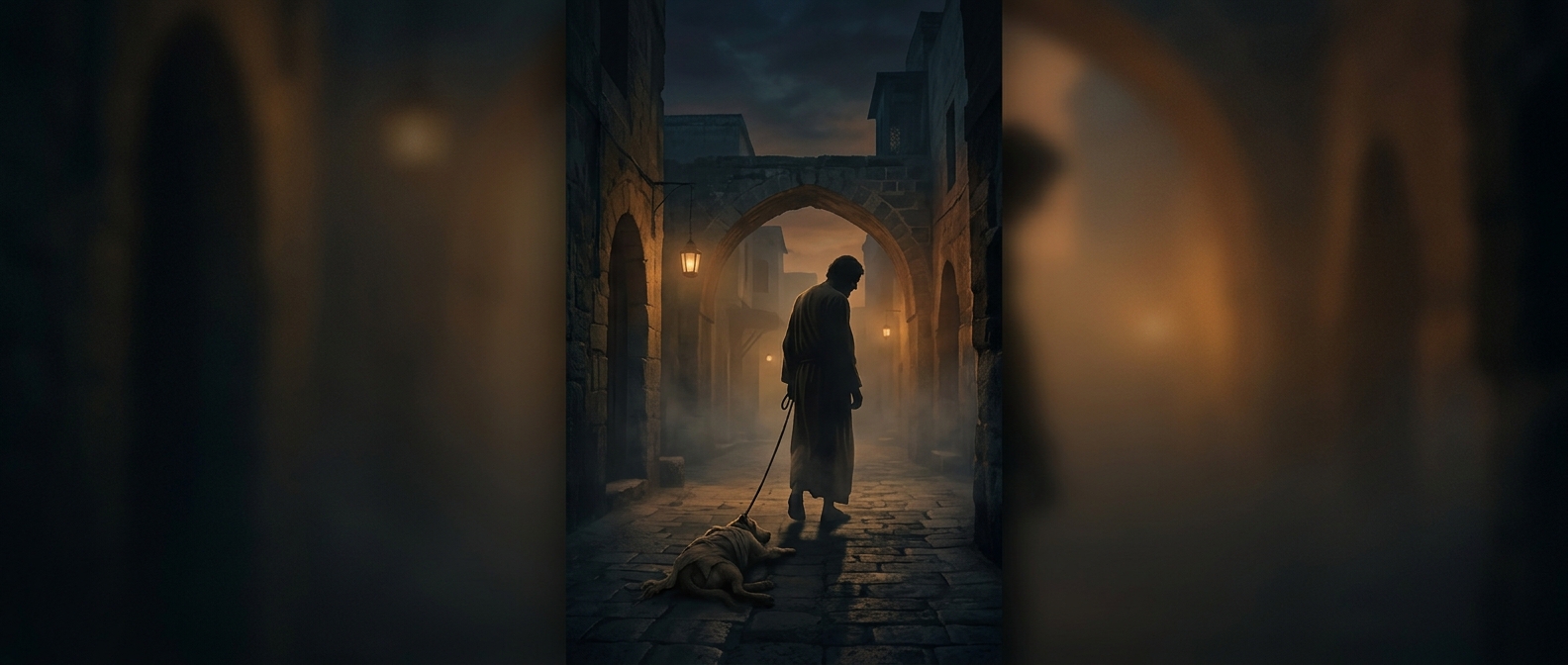
The story of Guinefort survives in a thirteenth-century account by the Dominican inquisitor Stephen of Bourbon. In it, a nobleman leaves his infant in the care of a greyhound. Returning to find the room bloodied and the dog’s muzzle red, he assumes the animal has attacked the child and kills it. Then he discovers the baby unharmed and a dead snake nearby: the dog had apparently defended the infant.
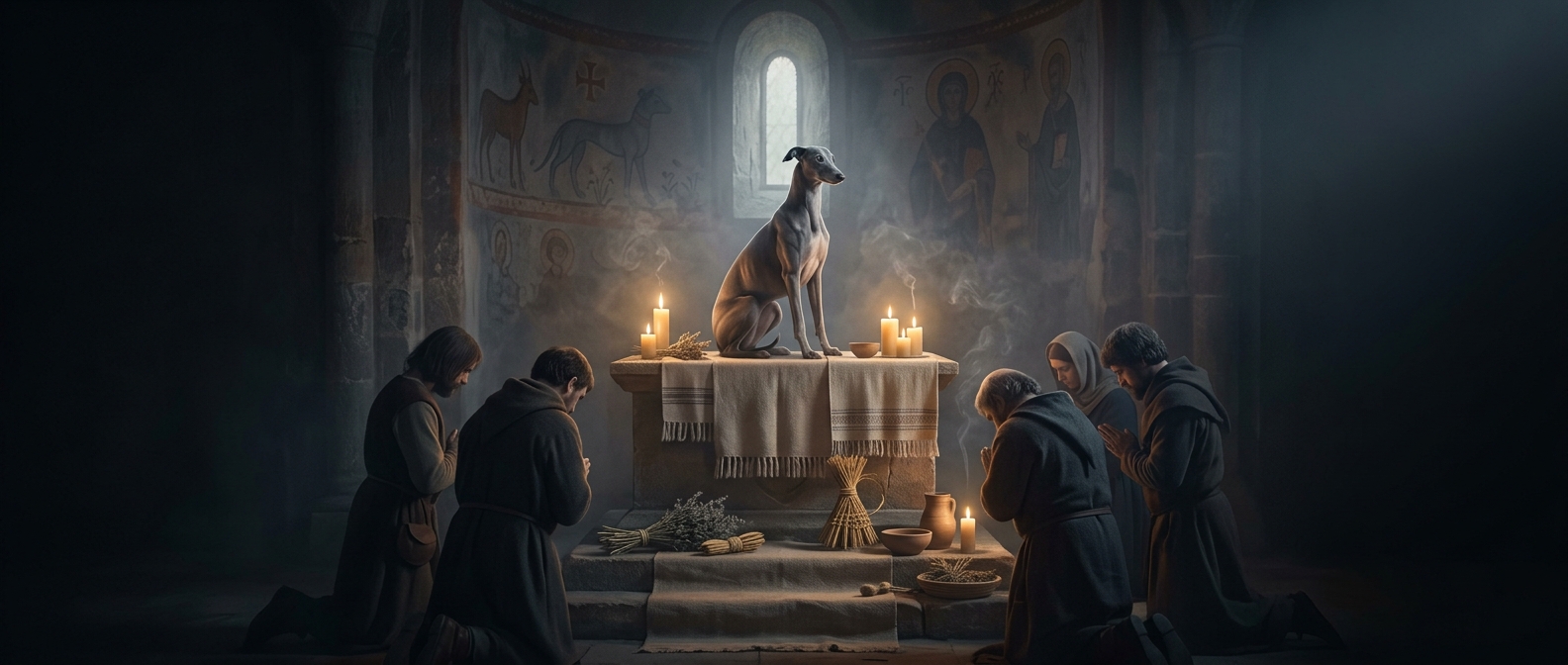
The tale explains the villagers’ reverence, but it is a reported legend, not evidence that the events happened exactly as told. Guinefort was not an officially canonized human saint. People treated the dog’s burial place near Villars-les-Dombes, in what is now eastern France, as a place of special power.
Why Families Came to the Grave
The devotion was tied especially to the danger of losing young children. Families brought sick infants to the site and performed rites intended to protect or heal them. In a world where childhood illness could be frightening and remedies limited, Guinefort’s story offered a vivid guardian: an animal whose loyalty had been misunderstood, but whose sacrifice was finally recognized.
That local practice troubled church authorities. Stephen of Bourbon condemned it as superstition and described efforts to stop the rites and destroy the site. The clash was not simply about whether a dog could be a saint; it was also about who had authority to define legitimate religious devotion. Guinefort’s lasting significance lies in that tension: villagers made a protector out of a dog, while the church tried to draw a firm boundary around whom people could revere.