Why Venice’s Canal Routes Became a Battleground
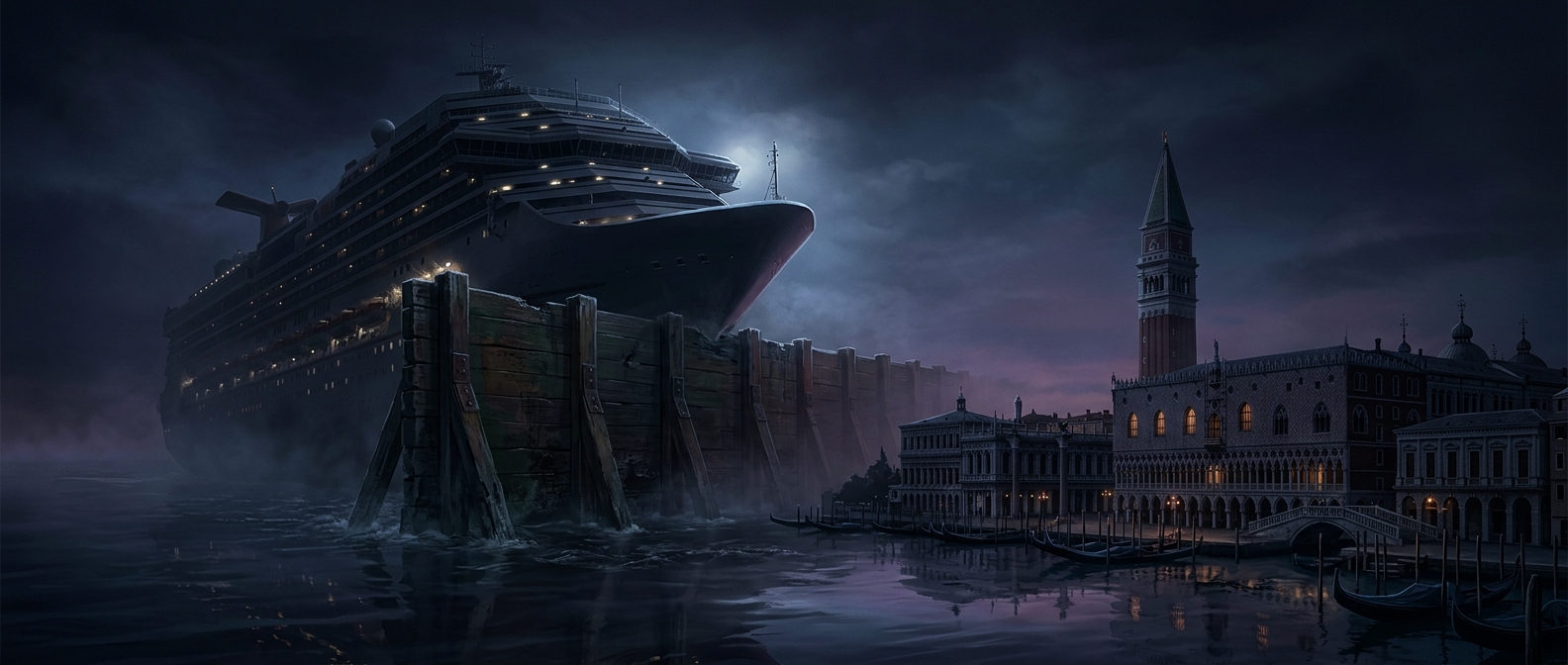
A giant cruise ship does more than pass through a view. Its hull pushes water aside, and the displaced water has to move somewhere. In Venice’s confined waterways and lagoon, that movement can produce wakes and changes in water level that reach vulnerable banks and historic structures.
Repeated waves can loosen sediment and wear away the edges of canals. That matters in a city whose buildings stand on foundations supported by wooden piles driven into soft ground. The ships were also so large beside the historic center’s monuments that their passage raised concerns about both physical impacts and the strain of bringing mass tourism through a fragile urban setting.
Moving Ships Away from the Historic Center
The restrictions were intended to keep the largest vessels out of the most sensitive routes, rather than to stop cruise travel altogether. That distinction matters: ships still need access to the port, but reaching it without crossing the heart of Venice requires different routes and infrastructure.
Changing those routes is a difficult tradeoff. A longer or less direct approach can reduce the ships’ presence near historic sites, while shifting traffic elsewhere creates new demands on the lagoon and port. The core issue is not simply a ship’s appearance on the skyline; it is how much water its passage moves, and where that movement is concentrated.
Why the Wake Matters
Venice’s foundations have endured centuries of changing water, but repeated disturbance can add pressure to an already delicate setting. A cruise ship’s wake is a brief event; the concern is its cumulative effect on canal banks and the historic fabric beside them. That is why keeping the biggest ships away from the center became a matter of protecting the city’s physical setting as well as its celebrated views.