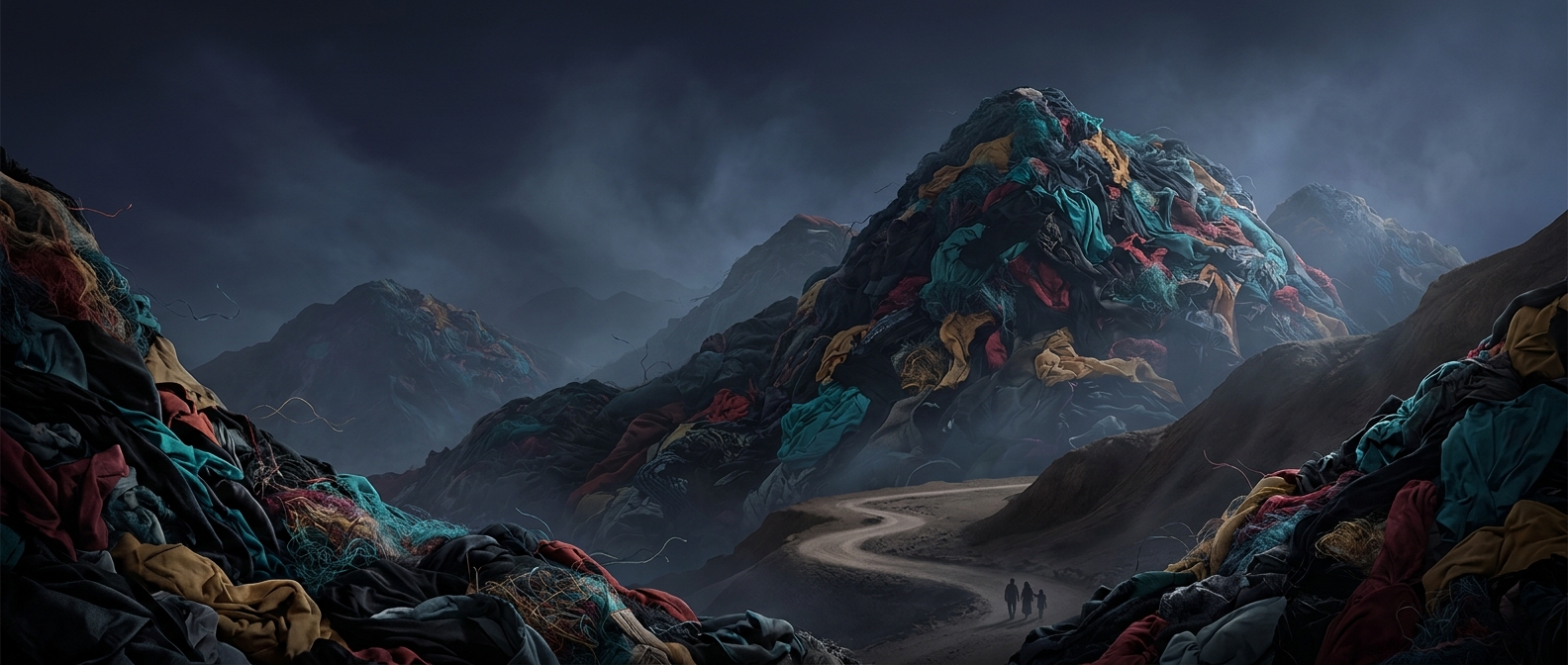
Why unwanted clothes end up in the desert
The clothing mountains in Chile’s Atacama are the last stop in a trade that begins with far more garments than local buyers can use. Secondhand clothes and surplus stock arrive in bulk, then get sorted for resale. The pieces with a marketable style and condition can be sold or sent onward; the rest may be too damaged, outdated, or cheap to justify the cost of sorting, transporting, and selling them.
That calculation is central to fast fashion’s waste problem. A garment can have little resale value even when it is still wearable: moving and handling it costs money, and buyers may not want it. When the cheapest option is to discard it, the environmental bill is shifted away from the businesses that made and moved the clothing.
Why the piles are so persistent
Many discarded garments contain synthetic fibers—plastics such as polyester—or blends of different fibers. These materials do not readily break down, and separating a blend into recyclable materials can be difficult. Recycling is not a simple matter of turning every unwanted shirt into a new one; the fabric must be suitable, identifiable, and economical to process. When those conditions are missing, clothes can remain waste rather than feed a new production cycle.
In the dry desert, the piles are strikingly visible, but visibility is not the same as easy cleanup. The volume, low value of individual garments, and difficulty recycling mixed textiles make removal and processing costly. The desert becomes a dumping ground when the price of handling a garment properly is higher than the price of abandoning it.