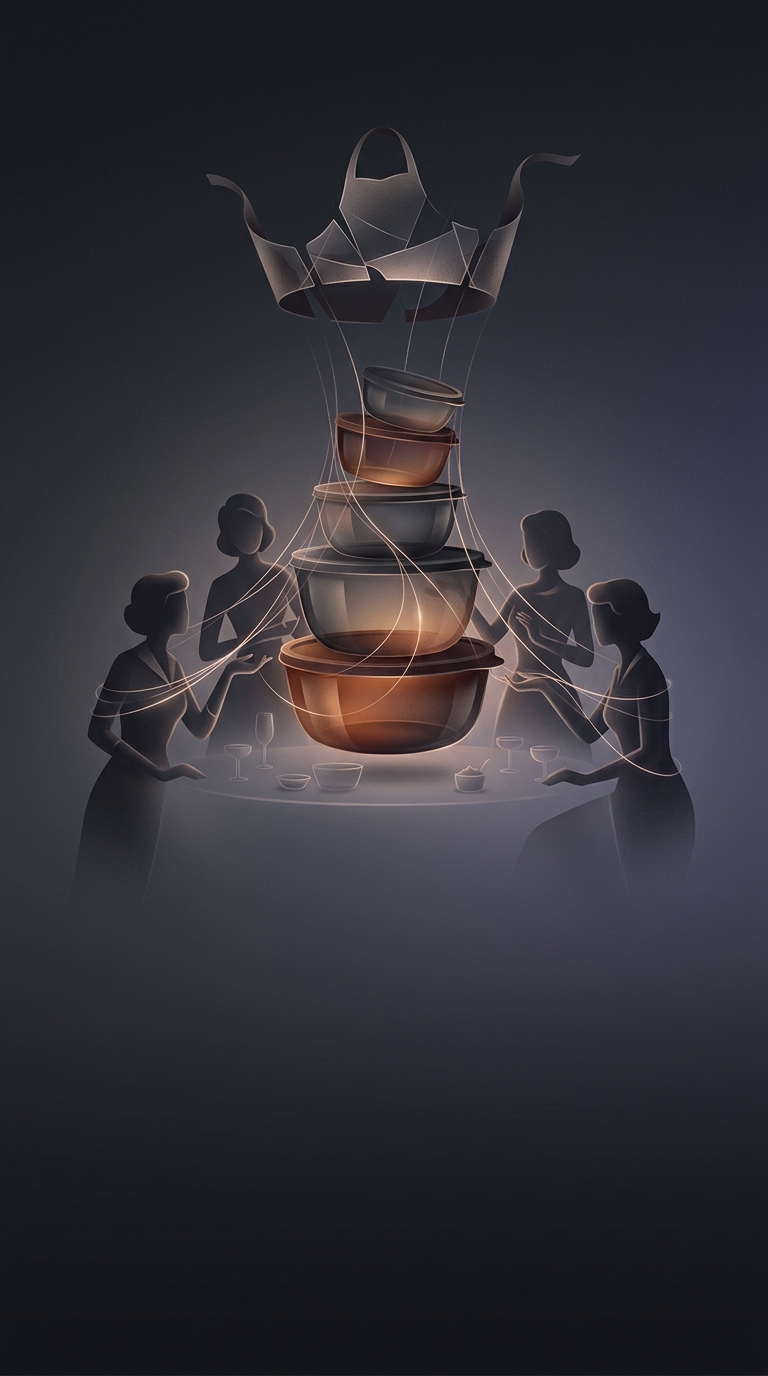
How a Living Room Became a Sales Channel
A Tupperware party changed the setting in which a customer had to make a decision. In a shop, a shopper could browse, decline help, and leave. At a friend’s home, the seller was also the host—and the guests were part of one another’s social circle. Turning down a purchase could feel less like rejecting a product and more like disappointing someone who had invited them over.
That social pressure was not a side effect of the format. The home gathering made personal relationships part of the selling process. A host invited prospective buyers, while a demonstration gave them a reason to handle the products and ask questions in a relaxed setting. The company could reach customers without relying on a conventional store, and the host’s social ties helped bring in the next group of buyers.
Hospitality and Selling Worked Together
The arrangement offered a benefit to the host, too: Tupperware parties commonly rewarded hosts with products or other incentives tied to the event’s sales. That made the invitation easier to extend and gave the host a reason to encourage purchases. The guests, meanwhile, were buying in a setting where courtesy and commerce overlapped.
This is the key economic mechanism: the party lowered the company’s dependence on storefronts and paid advertising by using a customer’s home and relationships as its sales infrastructure. But it also shifted some of the cost of refusing onto guests, who had to navigate both the offer and the friendship behind it.
The result was a sales system in which a living-room visit could do the work of a shop—and where “no thanks” could feel much more personal than it did at a cash register.