The Quest Is Built Around the Player, Not the Villager
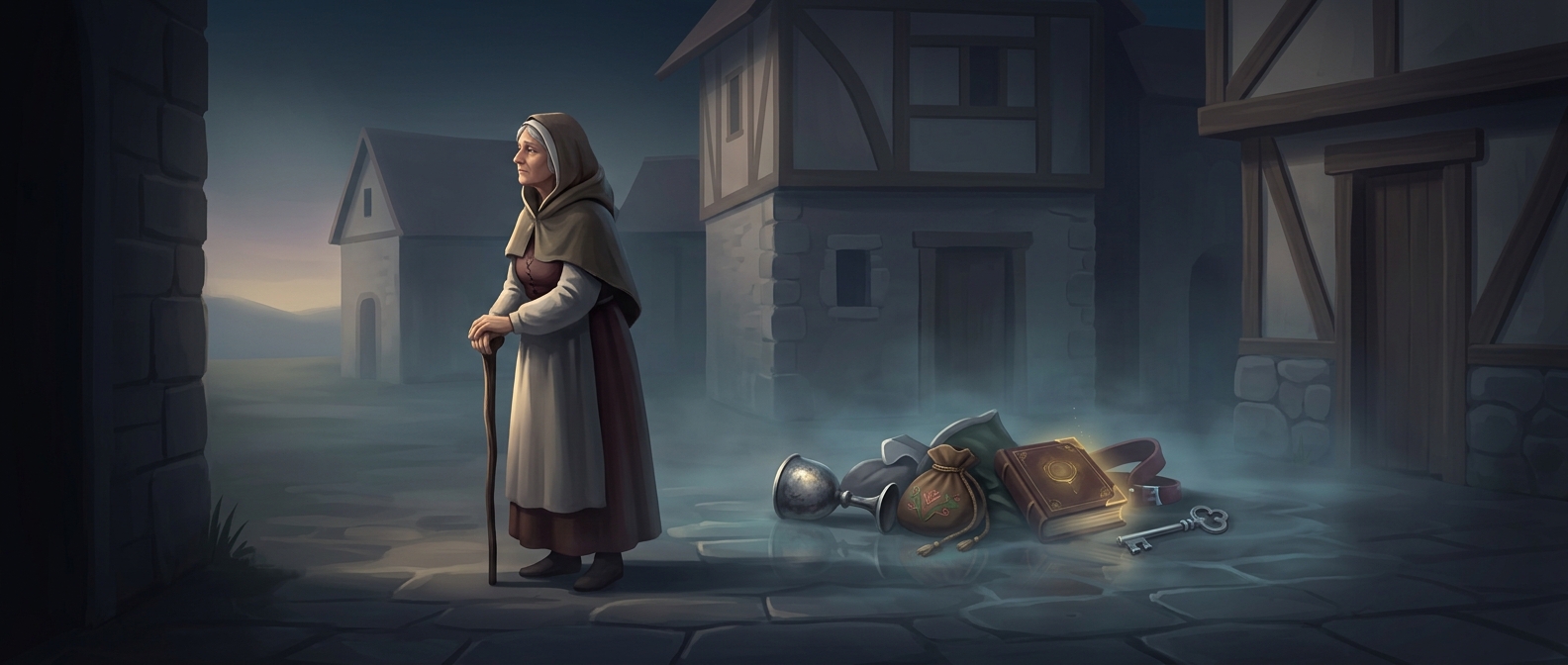
A game villager who asks for help finding a nearby item usually is not searching the world and failing to notice it. The request is a quest state: a scripted condition that tells the game what the villager says, what the player should retrieve, and what reward follows. Unless the game has specifically been built to let that character detect and collect the object, its physical closeness to home does not matter to the villager’s behavior.
That separation makes quests predictable. The item can sit in the world as a visible object, while the villager’s dialogue remains tied to whether the player has accepted or completed the task. The character is not necessarily “seeing” the scene as a person would; the game is tracking a limited set of programmed facts.
Why Make the Player Fetch It?
The errand gives the player a reason to leave home, explore a location, or encounter an obstacle. If the villager simply walked outside and picked up the item, the quest—and the player’s role in it—could end before it began. Even a nearby object can become a useful objective when the game makes its recovery depend on player action.
The reward also helps signal that the task is meant to be worthwhile, not that the villager has made a careful calculation about distance or effort. Games often prioritize a clear loop—request, retrieval, reward—over simulating every character’s practical judgment. The result is a small but revealing mismatch: the item is close in the world, while the quest remains unfinished until the player does something about it.