A Big Picture From a Small Box
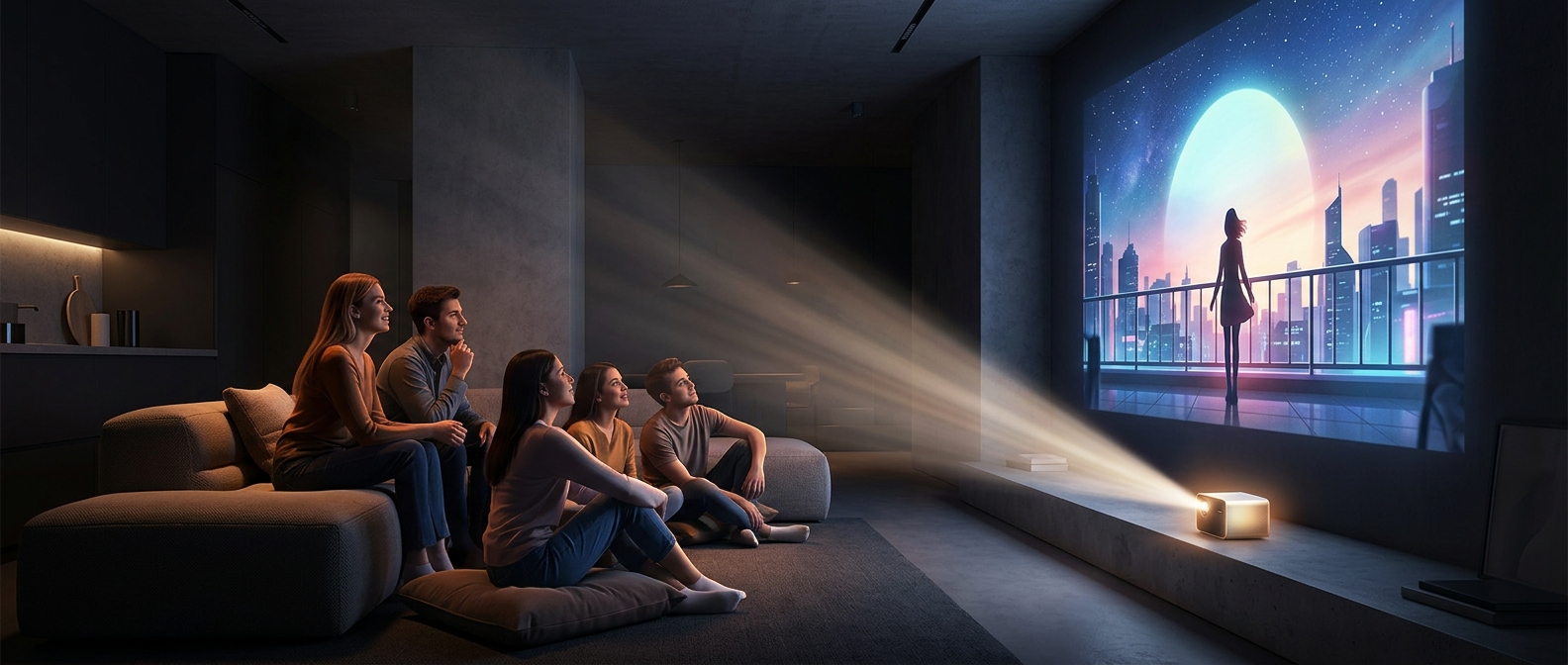
A projector does not create a screen so much as illuminate one. Its lens spreads an image across a wall or other surface, so a compact device can produce a picture far larger than its own body. When movie night is over, the projector can be put away instead of occupying a permanent stretch of wall or furniture.
That space-saving trick depends on placement. With many small projectors, moving the unit farther from the wall makes the image larger, but also dimmer; a short-throw model can make a large picture from closer up, though the lens design matters. A crooked setup can leave the image trapezoid-shaped, so some models use digital correction to square it up—often by shrinking or reshaping the picture slightly.
The Room Becomes Part of the Screen
Projectors work best when their light is not competing with much else. Daylight and bright lamps wash out the image because the wall reflects both the projected picture and the room’s light. A plain, light-colored wall can work, but its texture, color, or unevenness may show through; a dedicated screen gives the image a more consistent surface.
There is a practical tradeoff behind the appeal: a tiny projector is easy to store and share, but it cannot make every room behave like a dark theater. For a crowded apartment, that can still be a worthwhile exchange—one device can turn a temporary patch of wall into a gathering place, then disappear when the room needs to be a living room again.