Turning pen strokes into words
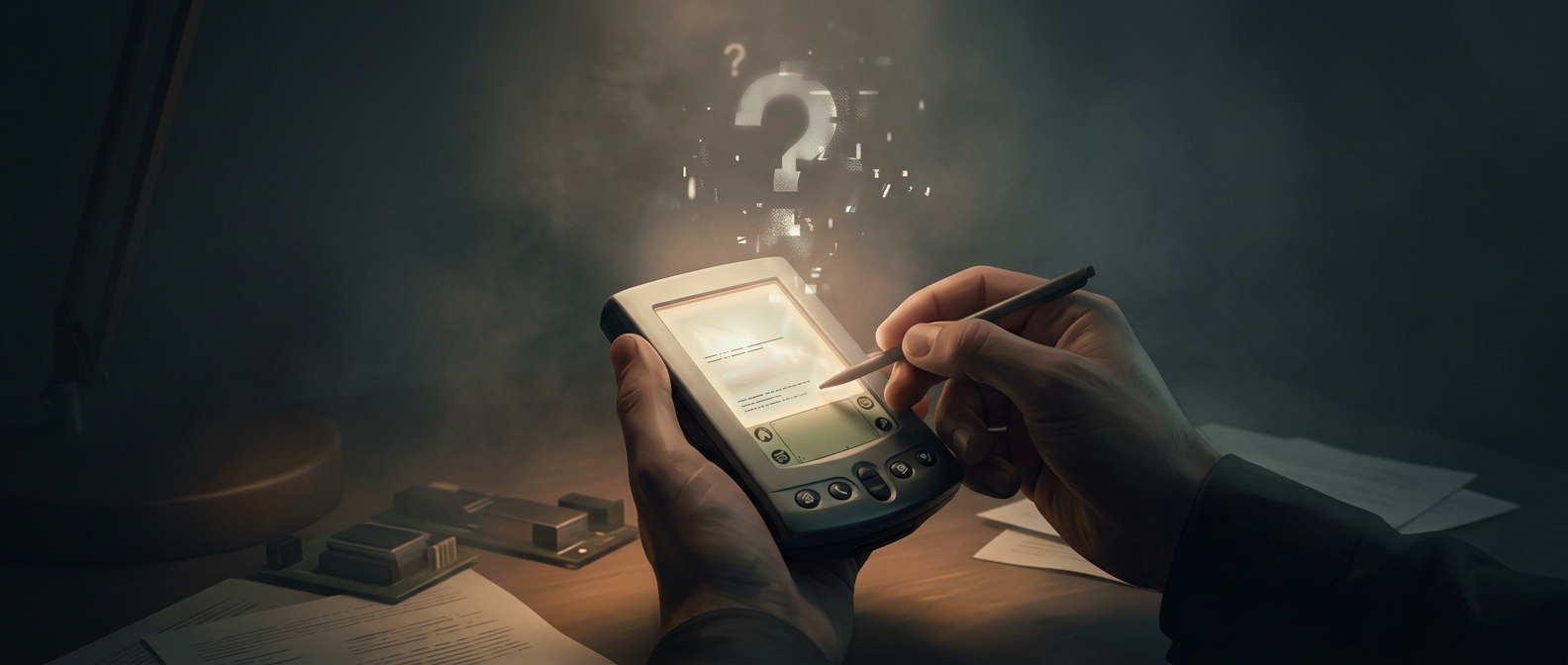
The Newton MessagePad asked a handheld computer to do something that sounds simple but is technically demanding: read ordinary handwriting as it is written. Its screen recorded the path of the stylus, and software had to infer which letters those strokes represented, where one letter ended and the next began, and what word the writer intended.
Unlike a keyboard, handwriting offers no clean boundaries between characters. Letters can be joined, compressed, or formed differently by each person. A recognizer therefore has to make a best guess from imperfect clues—and a small change in a stroke can change that guess.
Why the promise outran the experience
The MessagePad arrived when portable computers had limited memory and processing power. Recognition had to work on the device, quickly, without the resources available to later systems. The Newton tried to accommodate natural handwriting rather than forcing users to print in a rigid, machine-friendly style. That made the idea appealing, but also left the software with a harder interpretation problem.
When a guess was wrong, users could correct it, but correction interrupted the very convenience handwriting was supposed to provide. A device that occasionally misunderstood a note could feel less like a paper replacement and more like a conversation in which the reader kept mishearing you.
A feature becomes a punchline
The mismatch between the Newton’s ambitious promise and its visible mistakes made the technology unusually easy to parody. A keyboard error can pass unnoticed; a handwriting device displaying the wrong word puts its failure right in front of the user. The joke on The Simpsons helped turn a complicated engineering challenge into a simple cultural shorthand: the tablet that could not read its owner’s writing.
The lasting lesson is that handwriting recognition is not just about detecting shapes. It must cope with personal variation while making fast, useful guesses—without asking the writer to change how they write.