How Simon Turns a Simple Pattern Into a Memory Test
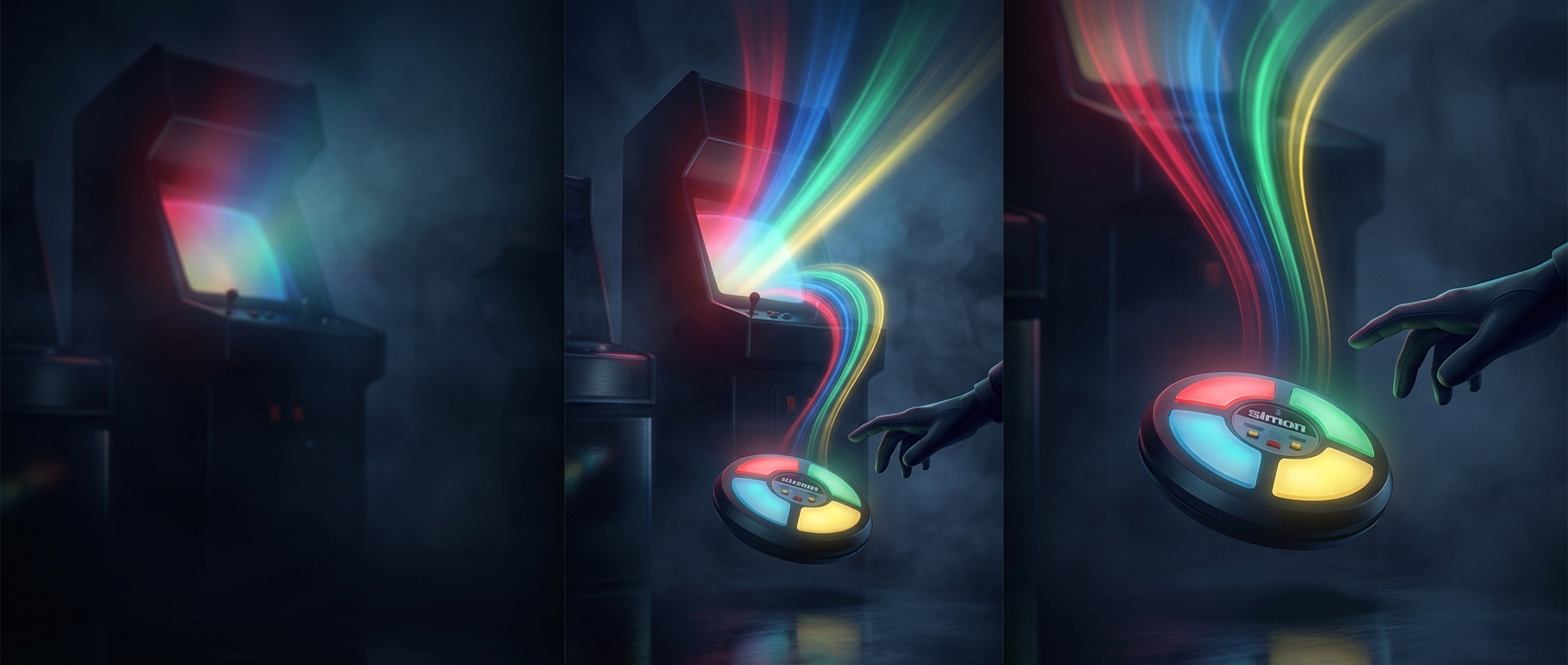
Simon replaces spoken commands with a sequence of button presses. The device lights one of its four colored buttons and plays its matching tone; the player must reproduce the pattern in the same order. Each successful turn adds another cue, so the task shifts from remembering one signal to keeping an expanding sequence intact.
Why the Lights and Tones Work Together
Each cue has two forms: a color to see and a tone to hear. That gives players more than one way to notice and remember what happened. The lights also make the sequence visible as it unfolds, while the tones help distinguish one button from another. The player still has to preserve the order—remembering which cues appeared is not enough if they are entered in the wrong sequence.
The game’s challenge comes from a clear feedback loop. Simon presents a pattern, the player responds, and the device shows whether the response was correct. A mistake ends that attempt, making the limit of short-term memory immediately tangible rather than hidden behind a score or a complex rulebook.
A Small Design With a Rising Difficulty Curve
The four-button layout keeps the possible signals easy to learn. The difficulty comes not from adding new controls, but from extending the sequence. That lets the game begin with an accessible task and become demanding through repetition alone: every new cue must be held alongside the earlier ones.
The result is a compact electronic version of a familiar call-and-response game. Its memorable trick is that the rules stay fixed while the amount the player must remember keeps growing.