Why a Hotel-Room Cup Can Taste Bitter
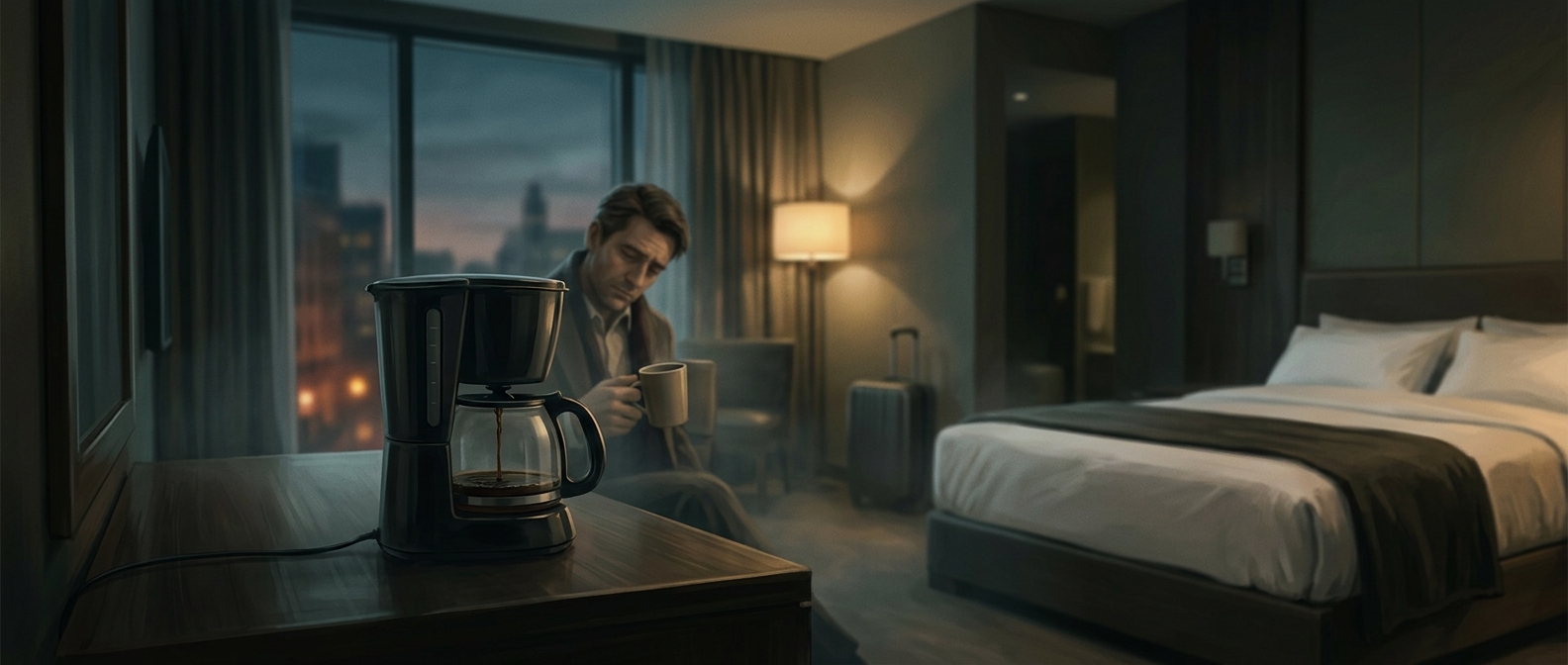
A compact room coffee maker has to turn a small amount of water into a cup with very little equipment. In many designs, water sits in a small reservoir before heating and passing through the grounds. If the machine is used only occasionally, that reservoir may be harder to rinse thoroughly than a removable kettle, while mineral deposits and coffee residue can build up on surfaces that are awkward to reach.
That matters because flavor depends on more than the beans. Old coffee oils can leave stale, harsh notes, and mineral scale can interfere with how water moves through the machine. Meanwhile, hot water extracts bitter compounds from grounds, especially when the brewing process gives them too much contact with the water. A simple machine offers little control over that process.
The Tradeoff Behind the Convenience
For a traveler, the appeal is immediate: coffee without leaving the room. The tradeoff is that a small appliance designed for occasional use may be less forgiving than a regularly cleaned machine at home. A quick rinse of the visible parts does not necessarily clean the reservoir or internal water path, and the next cup can inherit flavors from previous use.
That does not mean every room machine is dirty or every cup will be bitter. It helps explain why these brewers can produce such inconsistent results: the same compact design that makes coffee convenient also leaves little room for easy cleaning or precise brewing control.