The Nile Was Both Runway and Rest Stop
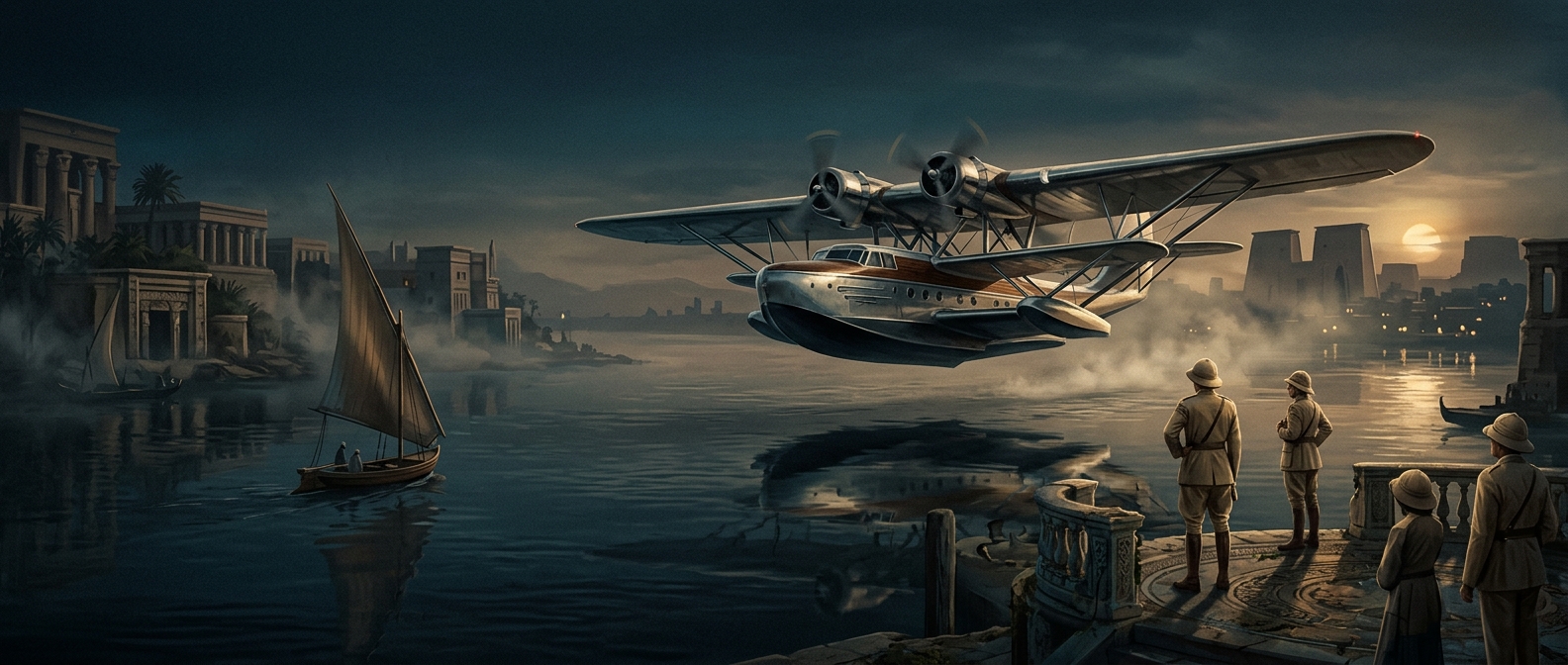
A flying boat did not need a runway: its boat-shaped hull let it settle onto water, then float while passengers and crew came ashore. On Imperial Airways’ Nile trips in the 1930s, that made the river more than scenery. It could serve as a landing surface along a long journey through a region where conventional airfields were not always the practical choice.
The pause was part of the operation, not simply a sightseeing break. While passengers drank tea on land, mechanics could prepare the aircraft for its next leg. A water landing avoided the hard, dusty impact of a rough strip, but it brought its own demands: the aircraft had to be positioned for departure, and its engines and other equipment needed attention before it could continue.
A Journey Built Around Staging
Early long-distance air travel depended on breaking a route into manageable stages. Each stop gave the crew a chance to check the aircraft and passengers a chance to rest. Using the river linked those two needs in one memorable scene: the plane floated nearby as the people it had carried stepped ashore and the mechanics worked.
That arrangement also made the aircraft’s limits visible. A flying boat could use water instead of a prepared runway, but it still needed suitable conditions and careful handling. The tea break was therefore a small window into the larger logistics of air travel: even a luxury journey moved at the pace of its machines and the work required to keep them flying.