Why a night in the air can show in your eyes
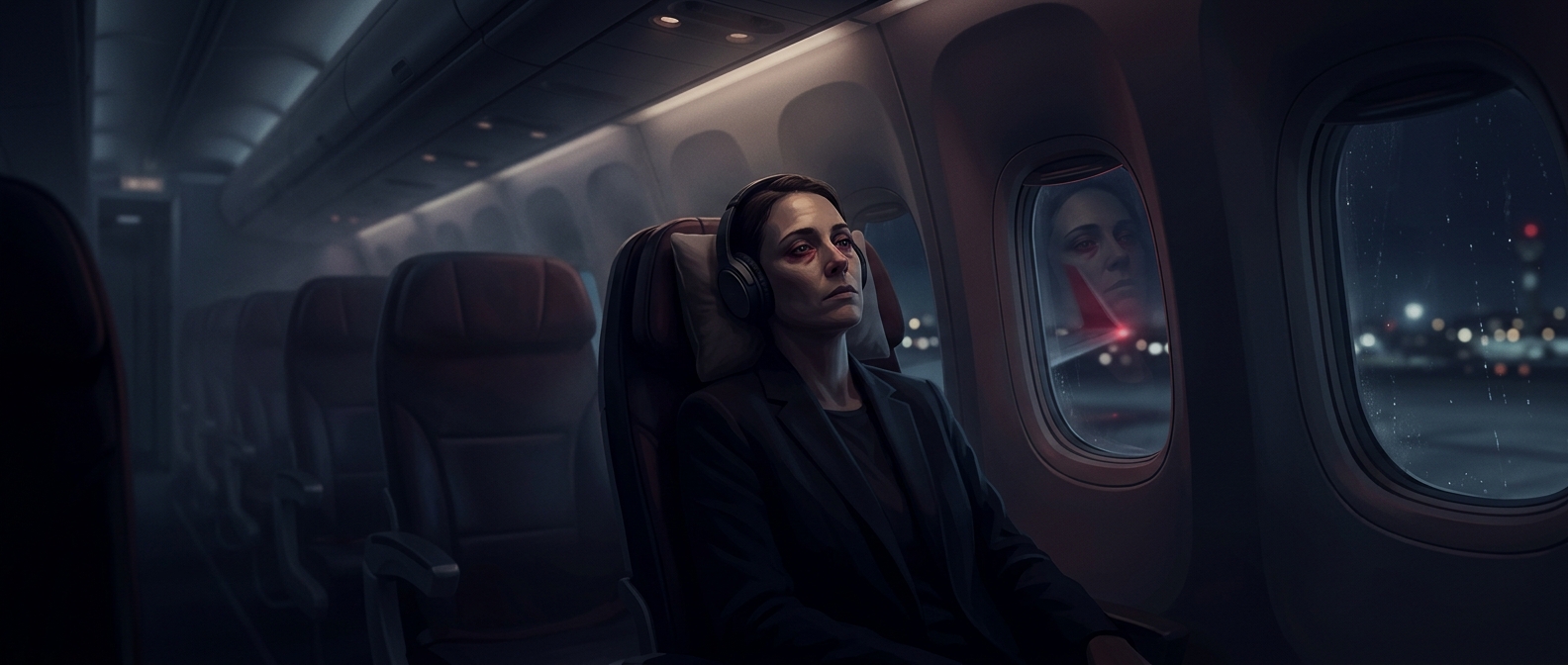
An overnight flight compresses travel and sleep into the same stretch of hours. Passengers may spend much of the night awake in a cramped seat, then step off in the morning without having had the restorative sleep their bodies expect. That tired, worn-out arrival is the image behind “red-eye.”
The redness has a physical explanation, too. The eye’s surface is covered by a thin film of tears that keeps it comfortable and clear. Dry air, irritation, and prolonged wakefulness can make that surface feel gritty; small blood vessels in the white of the eye may become more visible, giving it a bloodshot look. Aircraft cabins can add to the discomfort because their air is dry, while passengers may blink less when they are tired or focused on a screen.
A name shaped by the morning arrival
The term points to what other people can see after the journey: passengers arriving at a time when they would normally be asleep, with fatigue—and sometimes irritated, reddened eyes—showing on their faces. It is not a medical diagnosis, and not every person on an overnight flight will have red eyes. But the combination of lost sleep, dry cabin air, and an early-morning arrival makes the description easy to recognize.