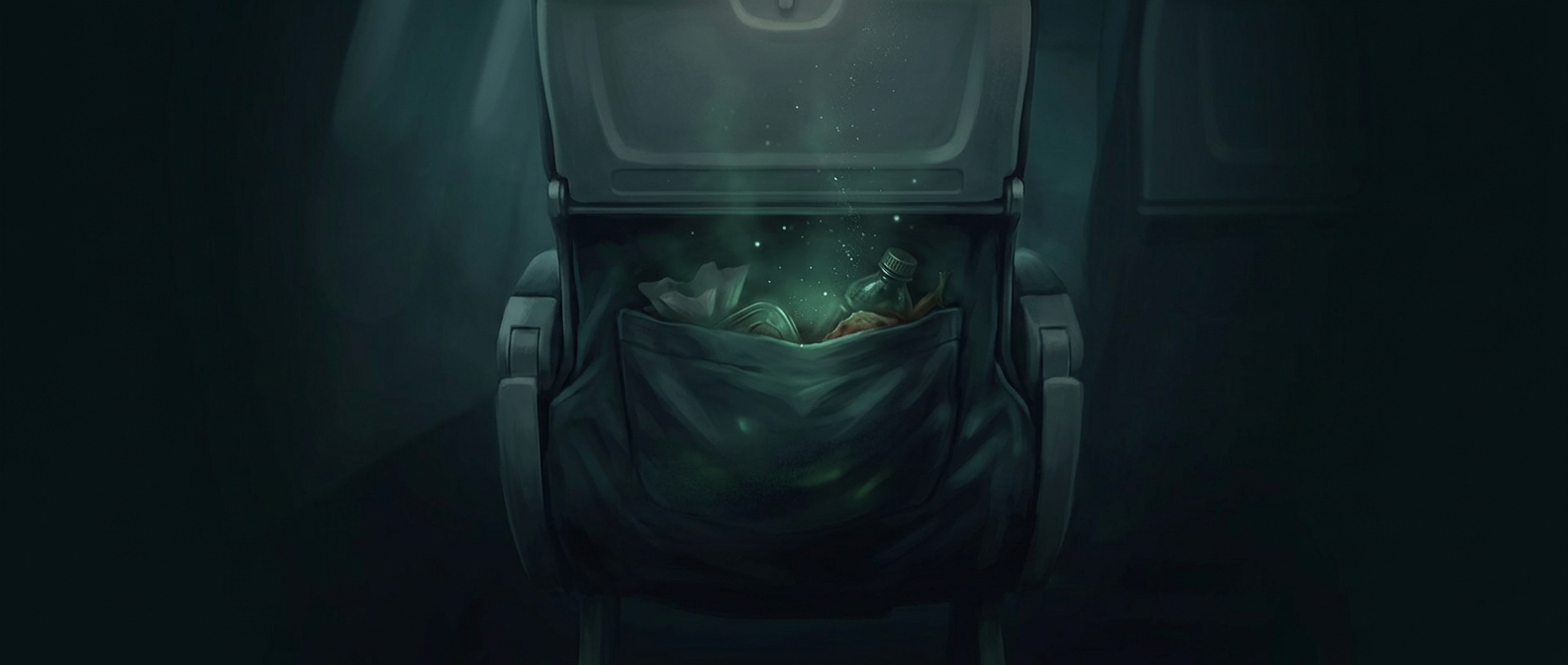
Why the Seatback Pocket Gets Messy
A seatback pocket looks like a handy bin: it is open, easy to reach, and large enough for wrappers or a used tissue. But it is meant to hold items passengers may need during the flight, such as reading material and travel documents—not to collect waste. With no lid or divider, whatever one passenger leaves behind can sit directly beside the next passenger’s belongings.
The pocket’s fabric also makes it less like a hard, wipeable surface. Crumbs can lodge in folds, and a spill or leak may be harder to spot than rubbish left in plain view. That matters especially for food or diapers: other passengers may have to handle or move what was left there before the pocket can be used again.
A Small Choice With a Turnaround Consequence
After a flight, cabin crews have to reset the aircraft for its next passengers. Waste tucked into pockets can take extra attention to find and remove, particularly when it is partly hidden. A pocket that looks empty at a glance may still contain something, so treating it as a trash can shifts the cleanup burden to the people preparing the cabin.
For passengers, the practical rule is simple: use the proper waste collection or hand rubbish to a crew member, and keep phones and other valuables out of a pocket that may be cleared or inspected during cleanup. The seatback pouch is convenient precisely because it is shared and easy to reach—which is also why it is a poor place to leave anything important.