Why a Flight Can Feel Like the Start of a Cold
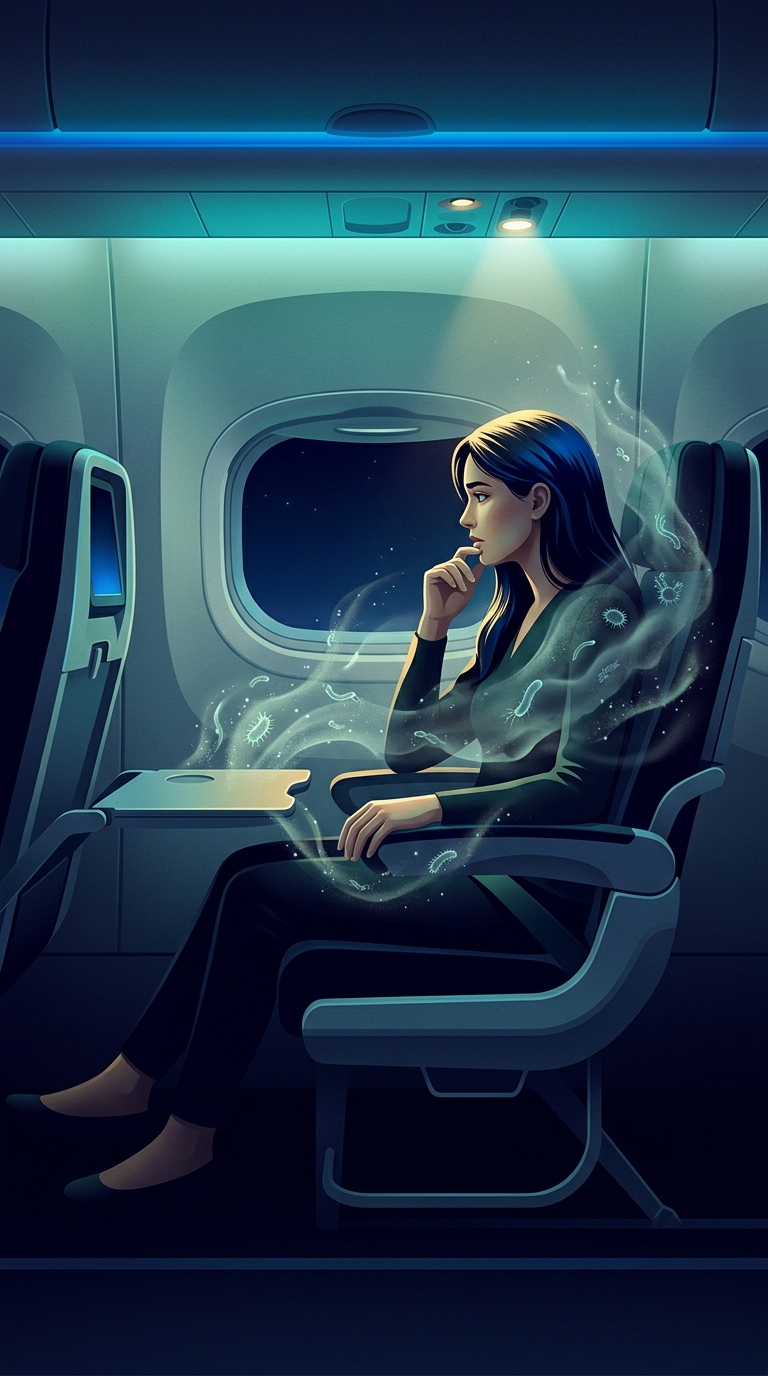
The recycled-air explanation is usually misleading. On modern commercial aircraft, cabin air is generally a mix of outside air and recirculated air passed through high-efficiency filters. The airflow is designed to move through the cabin and remove many airborne particles; it does not simply carry every passenger’s germs from one end of the plane to the other.
A cold, however, requires a virus. The more plausible risk is spending hours near other people in a crowded cabin—and time in busy airports—where someone may be breathing, coughing, or touching shared surfaces while infectious. Filtering and ventilation reduce some exposures, but they cannot eliminate every chance of infection, especially at close range.
Dry Air Can Mimic the Feeling of Being Sick
Aircraft cabins have low humidity. That dry air can irritate the nose and throat, leaving them scratchy or congested during or just after a flight. Irritation is not the same as an infection: a virus causes a cold, while dry air can make the airway feel uncomfortable without causing one.
Timing can also mislead. Cold symptoms typically take time to develop after infection, so feeling ill after landing does not prove the plane was where the virus was picked up. Exposure could have happened earlier, in the airport, or during the flight; dry air may simply make irritation noticeable sooner.
The practical distinction is simple: a dry, scratchy throat may ease after leaving the cabin and drinking fluids, while a viral cold develops as the infection takes hold. The cabin’s recycled air is not a germ-free guarantee—but it is not, by itself, the usual cause of a post-flight cold.