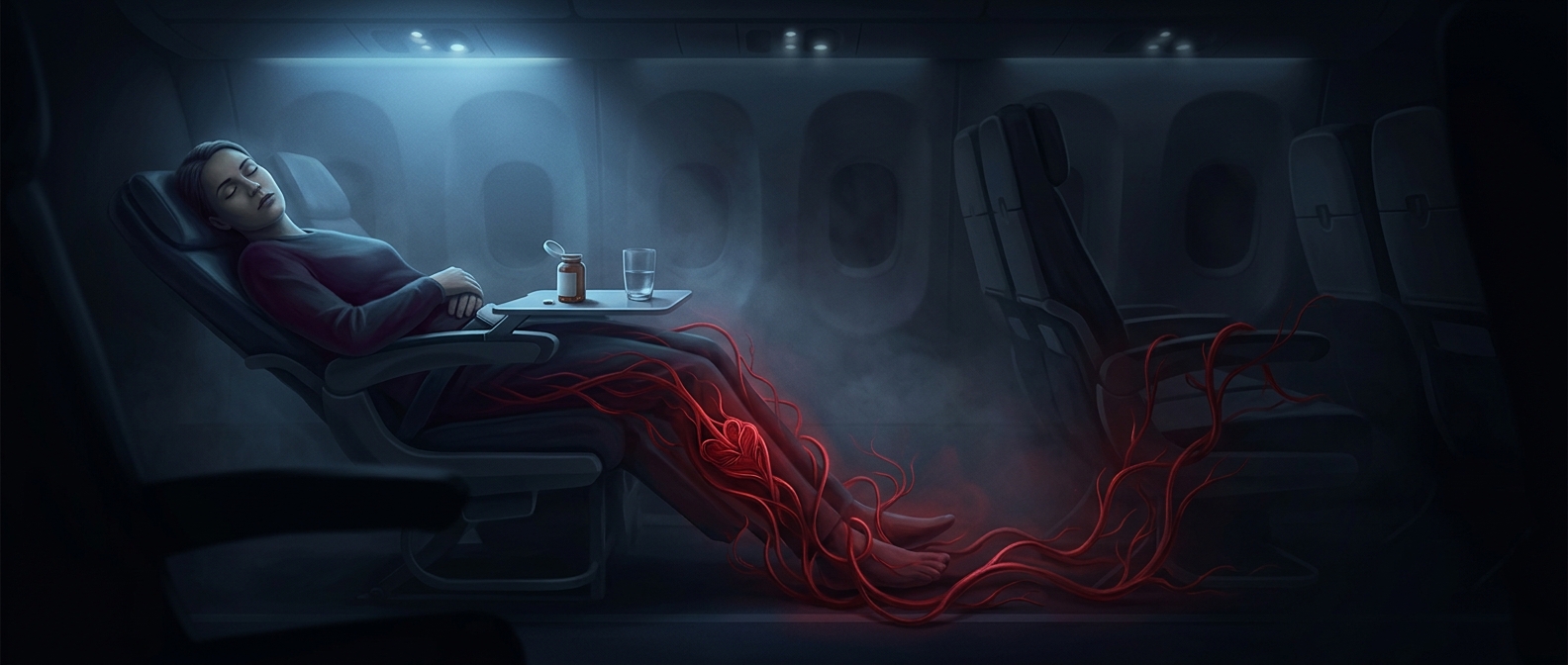
How a clot can form during a flight
Deep-vein thrombosis (DVT) is a blood clot that forms in a deep vein, often in the leg. When you sit still for hours, your calf muscles contract less. Those contractions normally help push blood back toward the heart; with less movement, blood can flow more sluggishly in the legs. In some circumstances, that contributes to a clot forming.
Why sedation can change the risk
A sleeping pill does not directly create a clot. The concern is what it may do to your behavior: if it leaves you deeply drowsy, you may shift position, flex your ankles, or get up less often than you otherwise would. In a cramped seat, that can extend an already long stretch of limited movement.
The effect varies by person and medication. Alcohol or other drugs that cause drowsiness can intensify sedation, and a pill taken for the first time may affect someone unpredictably. That makes it sensible to ask a clinician or pharmacist about a specific medication before using it on a flight, especially if you have other clot risk factors.
Movement is the practical safeguard
For most travelers, the useful takeaway is not that every sleeping pill is unsafe, but that sleep should not mean being immobile for the entire journey. When it is safe and practical, change position, move your ankles and calves while seated, and get up periodically. A medication that makes those small movements less likely can turn an ordinary comfort choice into a decision worth considering carefully.