The mind compares reality with an imagined path
A mistake gives regret something definite to work with: a decision, an outcome, and often a clear sense of what went wrong. A missed chance is harder to settle. Because it never happened, there is no real outcome to inspect—only a possibility to picture.
That leaves room for counterfactual thinking: mentally constructing an alternative to what actually occurred. After turning down a job, for instance, someone might imagine the new city, the satisfying work, and the friendships that could have followed. The imagined story can become unusually smooth because it contains no ordinary setbacks to complicate it.
What makes the alternative so persistent
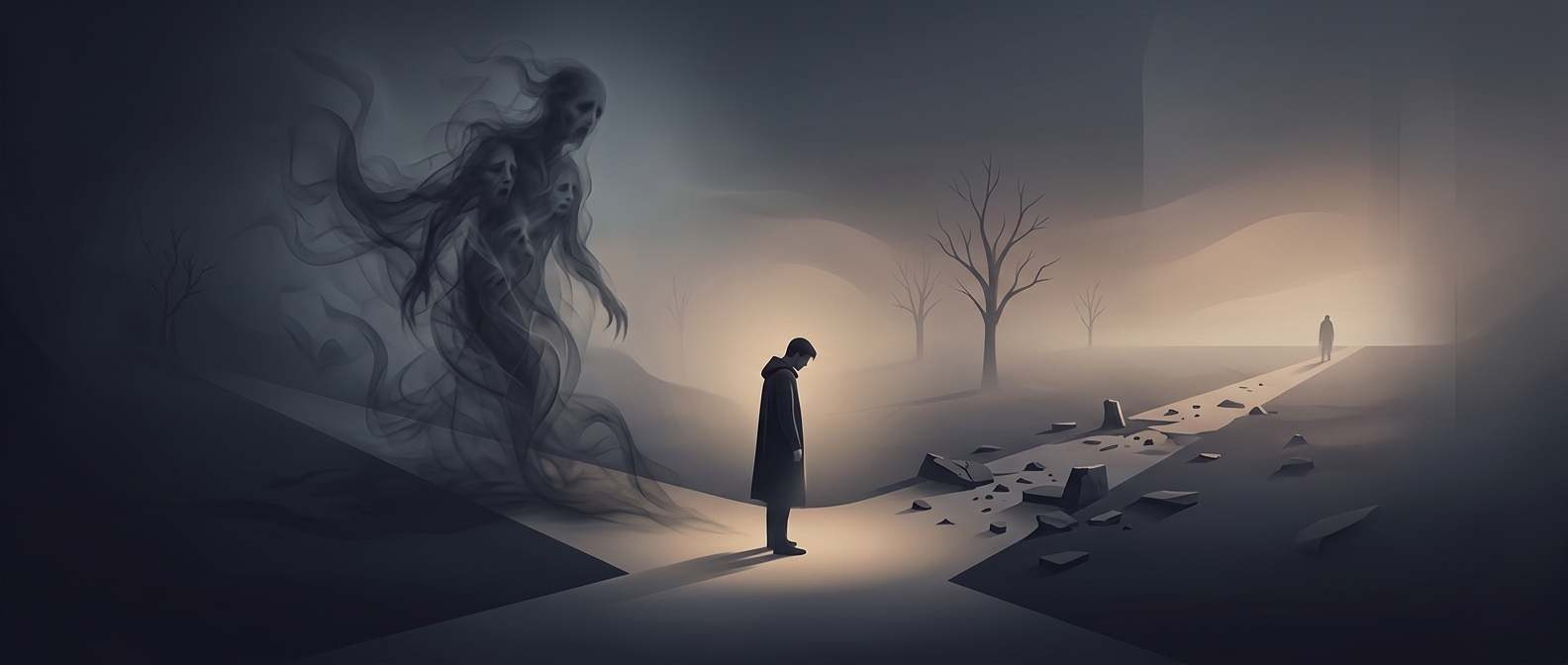
The mind can compare a real experience, with all its mixed consequences, against an imagined one that highlights what was desired. It is an uneven comparison: reality is detailed, while the alternative is unfinished and can be revised whenever regret returns. The unanswered question—“What would have happened?”—cannot be resolved by replaying the decision, so the thought may keep circling.
This does not mean the missed opportunity would actually have worked out. It means uncertainty lets the mind supply a favorable version without having to test it against events. A mistake may hurt, but its consequences can eventually become familiar; the unchosen path remains open to idealization.
Turning the blank space into a decision
A useful response is to separate what was genuinely known at the time from what is being imagined now. The choice may have involved real risks, limits, or competing priorities that the fantasy leaves out. Naming those constraints does not erase disappointment; it makes the comparison fairer.
The missed chance can still teach something concrete—perhaps what matters in future choices—without being treated as proof that the other path would have been better. Its most haunting feature is also its limit: the imagined outcome feels vivid, but it can never be checked against the life that actually unfolded.