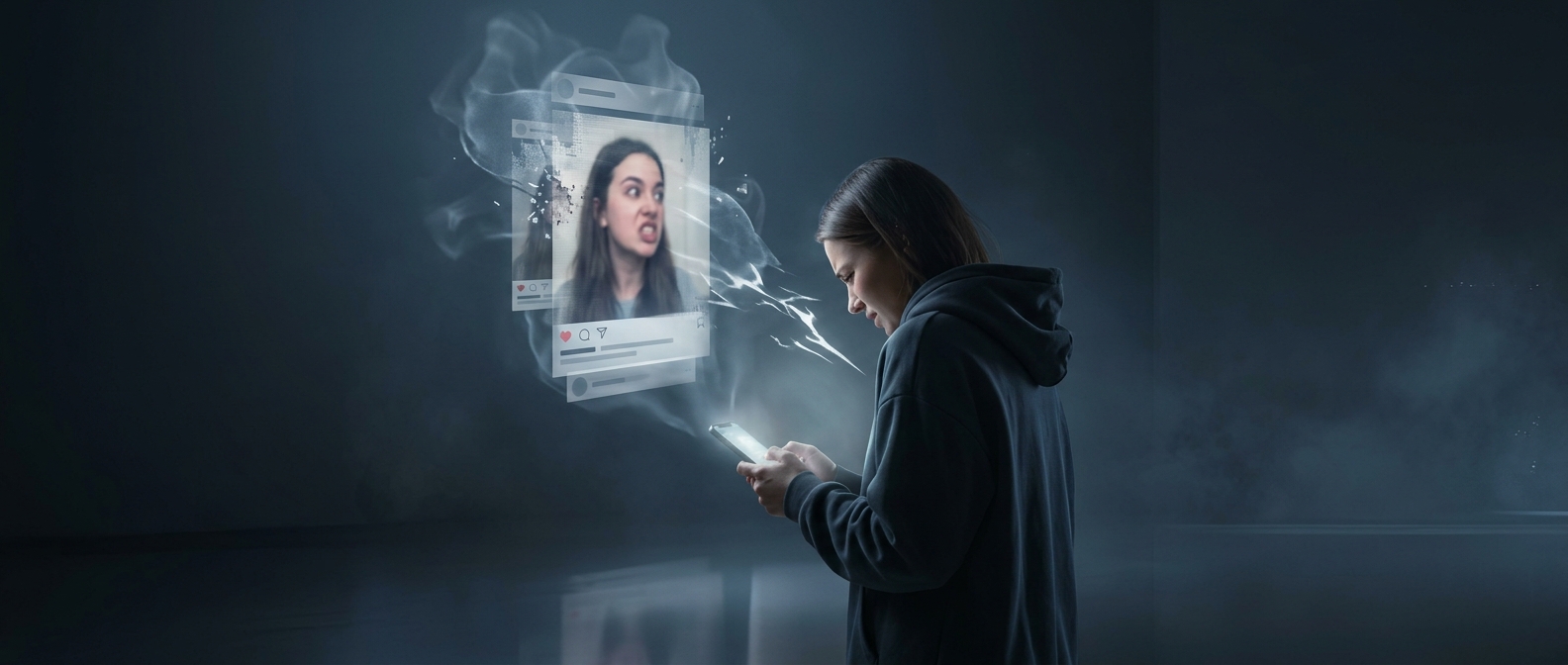
Why your old posts feel like someone else’s
An old post preserves a moment that your memory has since edited. You can still see the words, but you no longer inhabit the assumptions that made them feel natural: what you knew, what you found funny, or how you expected other people to react. The post stays fixed while you change.
That mismatch makes rereading feel less like remembering and more like judging. Your present-day standards supply the verdict, but the version of you who wrote the post is harder to reconstruct. You may notice a joke’s awkward timing or a confident claim’s missing nuance without remembering how reasonable either seemed at the time.
The context disappears faster than the words
Posts are unusually good at preserving what you said and unusually poor at preserving why. A caption may outlast the conversation, mood, audience, or private reference that gave it meaning. Without those cues, an earnest message can look self-important, and a playful one can seem careless.
There is also a visibility gap: you now know how the post aged, while the original poster could only guess how it would land. That hindsight can make an ordinary misjudgment feel obvious, even though it was not obvious to you then.
Cringe is evidence of a changed standard
The discomfort often points to growth. You can recognize a gap between your past judgment and your current one because your expectations, knowledge, or sense of humor have shifted. The post is unchanged; the audience inside your head has changed.
That does not mean every old post deserves approval, or that feeling embarrassed proves you have matured. But the next time one makes you wince, try to recover the situation around it before treating it as a complete portrait of who you were. A post captures a choice you made—not the whole person who made it.