How the Nechung Oracle Advises the Dalai Lama
The Nechung Oracle is not a written text or a fortune-telling device. It is a Tibetan institution in which a monk, known as the oracle’s medium, enters a ritual trance and is understood by devotees to serve as a channel for a protective deity. The Dalai Lama has consulted the oracle on religious and political questions, giving the practice a role beyond private spiritual guidance.
From trance to counsel
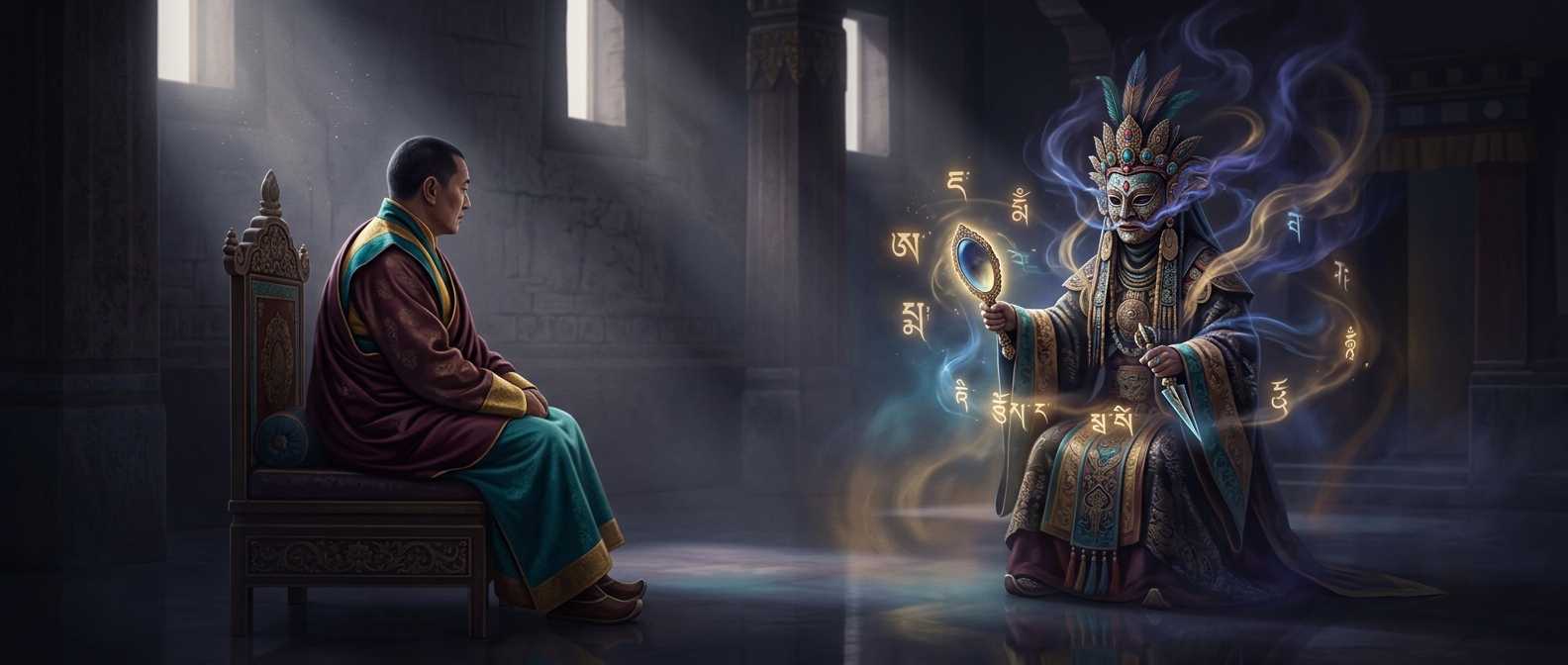
During a consultation, the medium wears elaborate ceremonial clothing and a heavy headdress. The ritual is physically demanding: the costume adds weight, while the trance is understood within the tradition as the deity’s presence acting through the monk. The medium’s words are then treated as the oracle’s response—not as the monk’s ordinary personal advice.
That response still has to be interpreted. An oracle’s pronouncements may be cryptic or prophetic, so they do not function like a clear-cut government order. The Dalai Lama and other listeners weigh them alongside judgment and circumstances. In this way, the oracle can inform a decision without replacing the leader’s responsibility for making it.
A religious voice in public life
Nechung’s importance reflects a Tibetan view in which spiritual and political life can overlap. Seeking the oracle’s counsel recognizes a protective deity as a source of guidance, while the ritual gives that guidance a formal place in the leader’s deliberations. Its significance lies not in proving that a prophecy predicts events, but in showing how religious authority can shape the questions a political leader asks—and the counsel he considers before acting.