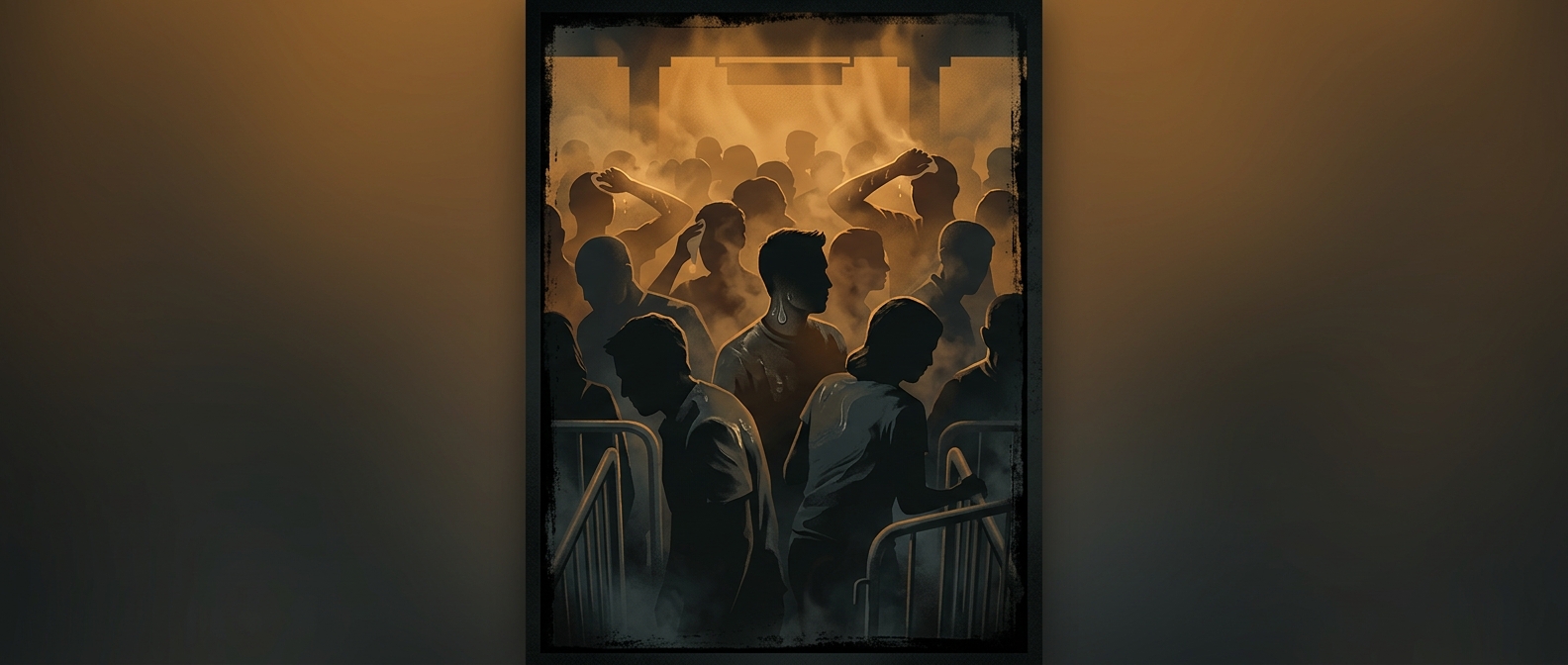
A Queue Designed to Feel Like Part of the Ride
At Hogwarts Castle, the wait for Harry Potter and the Forbidden Journey is staged as a visit to the school, not just a walk toward a loading platform. Rooms, props, portraits, and character appearances give guests things to notice as the line winds through the building. That changes the experience of waiting: instead of watching only the people ahead, visitors can follow a sequence of details that makes the queue feel like part of the attraction.
This is more than decoration. A themed queue can direct attention, reveal the setting, and build anticipation while guests move through the space. Its scenes also have to accommodate a practical constraint: the line must keep advancing. Moments of spectacle therefore work best when guests can take them in briefly, without stopping the whole queue.
How a Pepper’s Ghost Illusion Works
One technique associated with theatrical effects such as Musion Eyeliner adapts Pepper’s Ghost, a stage illusion developed in the 19th century. Light from an image is reflected off a carefully angled, nearly transparent surface, making the image seem to occupy the space beyond it. The result can look like a figure appearing among physical scenery, though it is a reflection—not a free-floating hologram.
The effect depends on controlling the viewer’s angle and the surrounding light. In a designed environment, those constraints can be managed with fixed viewing positions and set pieces. The illusion can then make a recorded character seem present in a room without placing an actor there.
The Payoff Is in the Journey
Used within a queue, an effect like this gives waiting guests a small scene to watch while they inch forward. The technology is only one part of the design: the surrounding architecture and the timing of each moment help sell the fiction. The queue’s job is not merely to hide the wait, but to turn the slow approach into the first chapter of the ride.