Turning Finger Motion Into Text
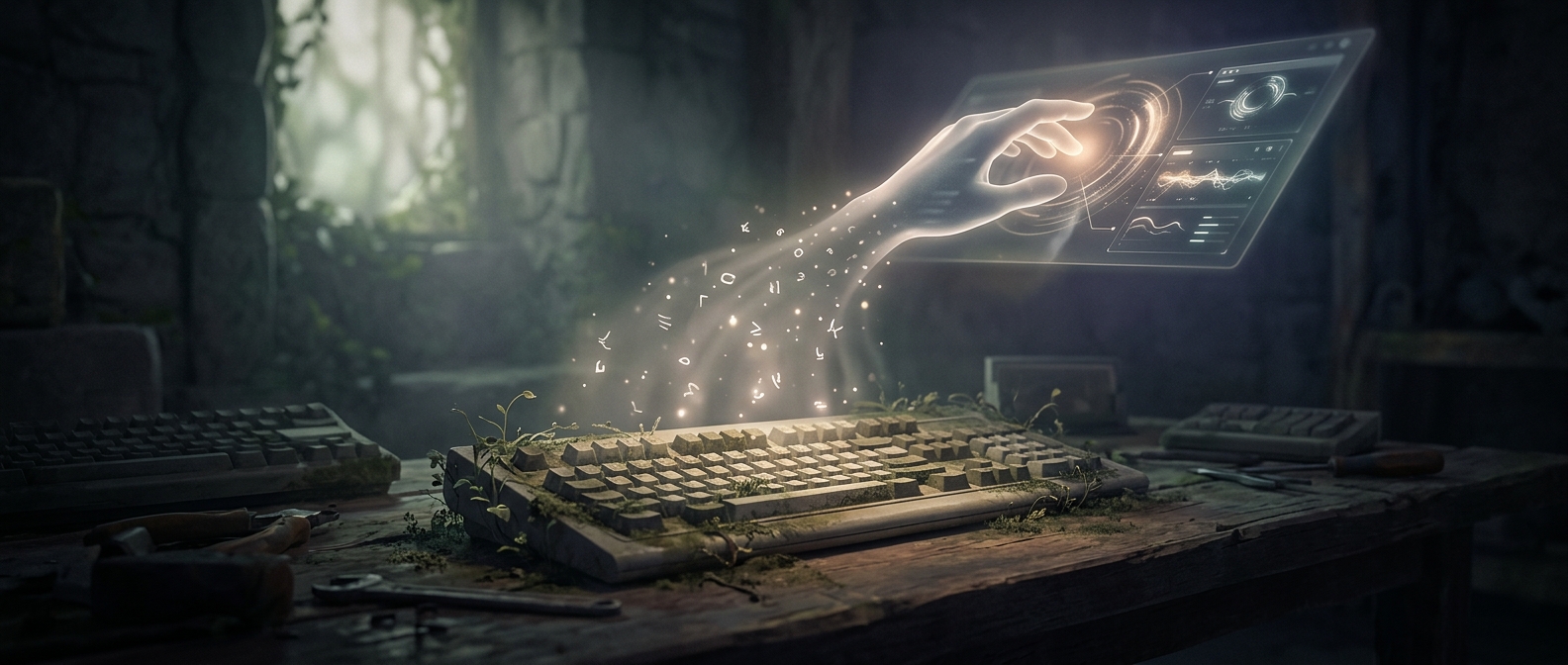
A gesture keyboard has to solve a translation problem: a camera sees movement, but a computer needs discrete characters. Software tracks visible points on the fingers and interprets their changing positions as intentional inputs. A tap-like motion might stand for a key, while a sequence of movements could spell a word.
The key challenge is separating a deliberate command from ordinary hand motion. Fingers shift as a person reaches, rests, or adjusts posture, and camera angle or lighting can make the same movement look different. A usable system therefore needs to recognize gestures consistently, not merely detect that a hand is present.
The Keyboard Still Needs a Layout
Physical keys provide fixed targets and a clear sensation when pressed. In midair, there is no surface to guide a fingertip or confirm a keystroke. A gesture system must replace those cues with some combination of visual feedback, learned motions, or software that infers likely words from imperfect input.
That creates a tradeoff: gestures can avoid carrying or touching a keyboard, but they may demand practice and careful movement. The most practical designs would need to make common actions easy to remember and mistakes easy to correct. Removing the keys does not remove the keyboard’s job; it shifts that job to cameras, recognition software, and feedback.