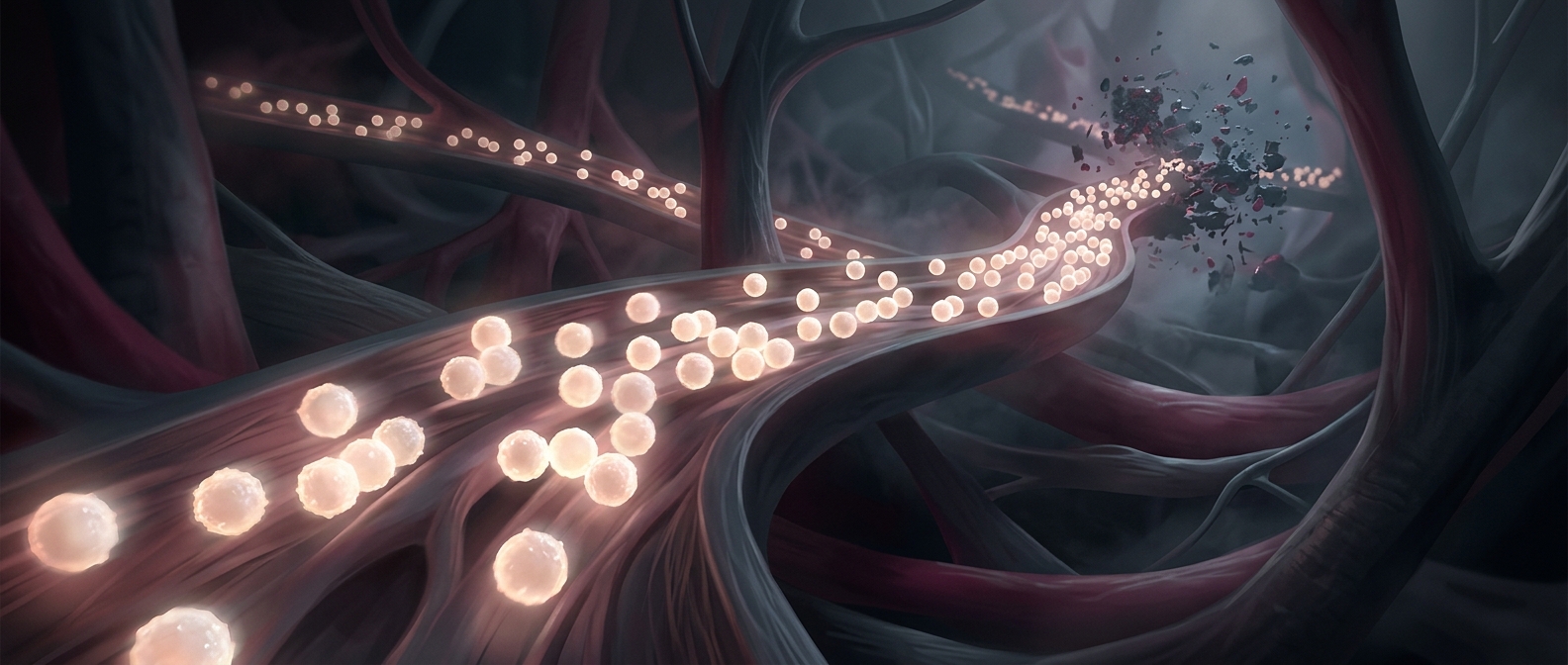
How infection turns vessel walls into exit ramps
At an infected site, immune cells and damaged tissue release chemical signals. Some travel to nearby blood vessels and change the behavior of the cells lining their walls. The lining becomes a kind of landing surface: white blood cells can slow down, attach, and leave the bloodstream where they are needed.
The exit happens in stages. Molecules called selectins help white blood cells catch and roll along the vessel wall instead of rushing past. Stronger bonds then form, allowing the cells to stop. They squeeze between the lining cells—a passage called transmigration—and follow a trail of chemical signals through the tissue toward the infection.
More cells join the route
Meanwhile, inflammatory signals can prompt the bone marrow to release additional white blood cells, including cells that were not yet fully circulating. This helps replenish the pool available for recruitment. The blood count may rise, but the increase and the mix of cell types depend on the infection and the body’s response.
The result is not simply a larger number of cells floating through the body. It is a coordinated change in supply and traffic: more defenders become available, while signals at the affected tissue help direct them to the right exit. A vessel that normally keeps blood moving can, for a time, become a targeted route into the body’s frontline.