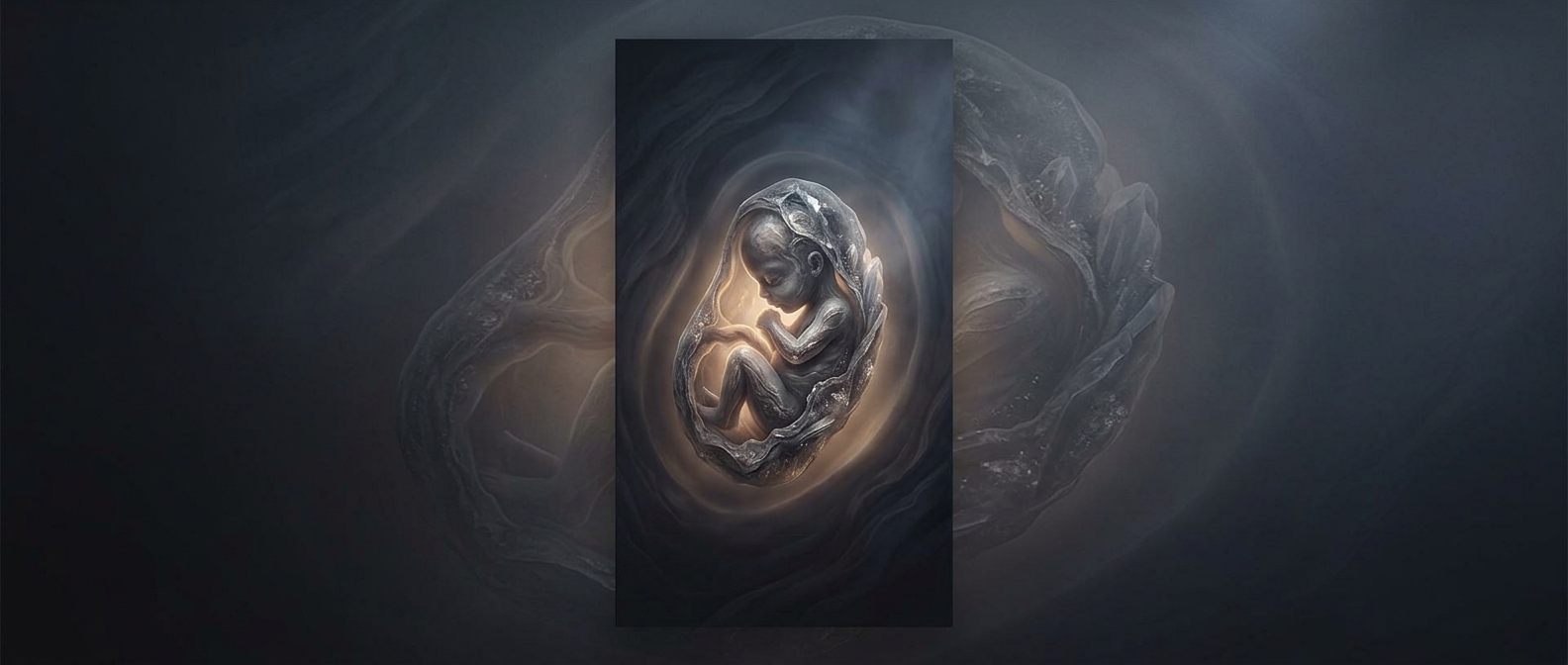
When a pregnancy develops outside the uterus
An abdominal pregnancy is a rare form of ectopic pregnancy: the embryo implants and grows in the abdominal cavity rather than inside the uterus. If the pregnancy ends and the fetal remains are not expelled or removed, they may stay in the body. Unlike tissue inside the uterus, they have no direct route out, and a large, organized mass can be difficult for the body to break down and clear.
How the remains become stone-like
Over time, the body may wall off the remains with surrounding tissue. Calcium salts can then build up in that tissue and in the remains themselves—a process called dystrophic calcification, in which damaged or dead tissue accumulates calcium. It does not mean the fetus turns into rock all at once; gradual deposits can harden the mass, sometimes over many years. The result is called a lithopedion, from Greek words meaning “stone child.”
Why the mass can go unnoticed
A lithopedion is exceptionally rare. It may cause symptoms, such as abdominal discomfort, but sometimes it is discovered only when imaging is done for another reason. Its hard, calcified shell can help preserve its shape and limit contact with nearby tissues, but it does not make the condition harmless: retained tissue can still cause complications, and clinicians assess it individually.
The striking part is the body’s response: when it cannot readily clear a pregnancy that has ended, it may isolate the remains and gradually mineralize them instead.