Turning a Kitchen Routine Into an Input
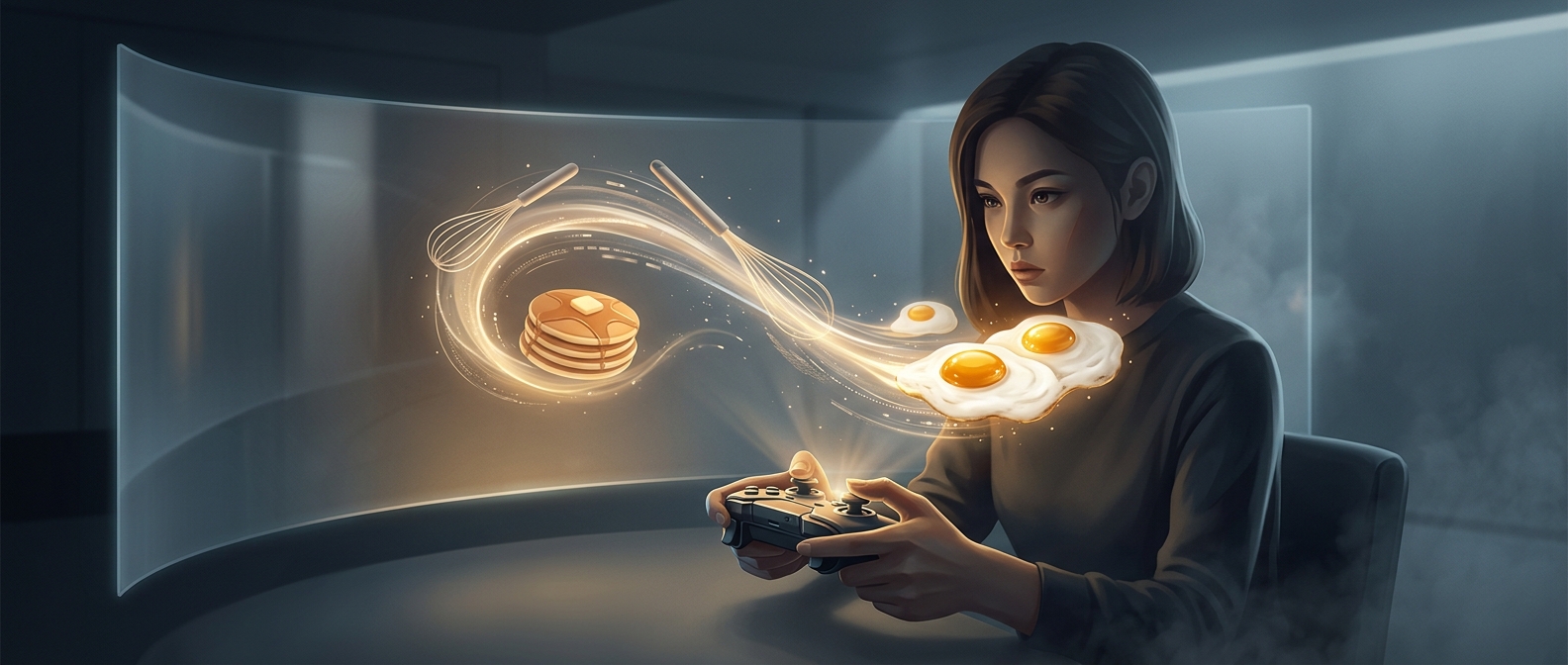
In Heavy Rain, preparing breakfast was not reduced to a button press that instantly completed the task. The player moved the joystick through specific arcs, matching the pace and shape of an action on screen. That made the controller feel less like a menu and more like a tool for guiding a body through a routine.
The design tradeoff was immediacy versus involvement. A single button could have kept breakfast moving, but it would have made the character’s actions feel automatic. Requiring a careful half-circle made each small step take time—and gave the player a chance to interrupt, rush, or mishandle it.
When the Gesture Becomes the Challenge
These motions asked players to translate a visible action into an unfamiliar movement with their thumb. That translation could make an ordinary task feel newly deliberate, but it also created room for friction: if the joystick arc did not register as expected, the result could feel like a control mistake rather than an in-game cooking mishap.
That tension suited a game built around directly guiding a character through scenes, yet it exposed a limit of gesture-based controls. The more precisely a game asks players to imitate an action, the more its success depends on the controller recognizing what they meant. A breakfast routine could therefore become a small test of the game’s interface as much as of the character’s coordination.